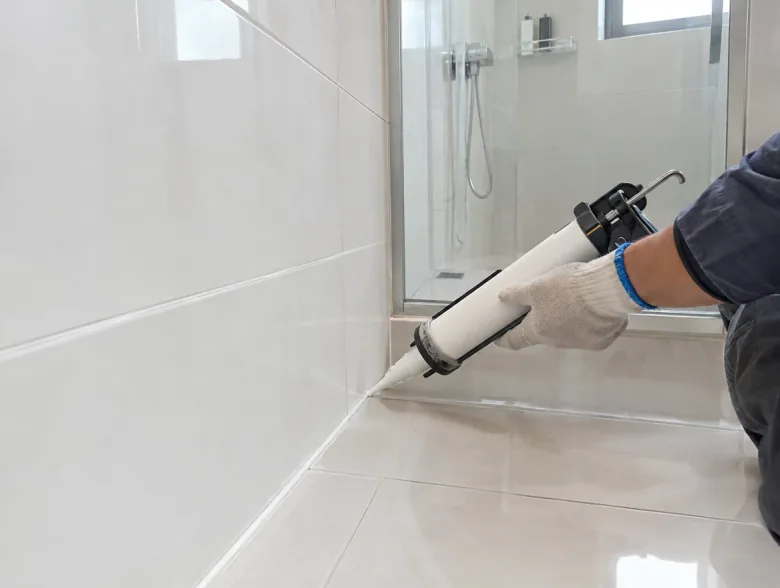
What bathroom waterproofing after tiling includes
- Inspecting the joints between tiles and the corners at the wall base to find where water enters
- Checking the openings where drain and water pipes pass through the floor or wall
- Assessing whether treatment is possible without lifting tiles or requires it
- Preparing the surface by removing worn and loose material before any treatment is applied
- Treating the joints, corners and openings with the material suited to each, such as epoxy or a flexible sealant
- Sealing the corners with a flexible material that absorbs movement and prevents water re-entering
From your call to the treatment
- 1
Tell us what you see
Call or message us on WhatsApp and describe the stain, where it is, and whether it appears only after the bathroom is used or all the time.
- 2
We inspect the entry point
We check the joints between tiles, the corners at the floor and wall, the drain opening and the pipe entries to find where the water is getting in.
- 3
We assess what can be treated without lifting tiles
When the damage is limited to joints, openings and corners, these can be treated directly. If the layer under the tiles has failed widely, lifting the tiles becomes necessary to lay a new layer.
- 4
We treat and seal
We treat the joints, openings and corners with the material suited to each, and surfaces are prepared before any treatment, because working on a dirty or loose surface produces no real result.
The problem can be treated
- We find the water source before any work
- We treat joints, corners and openings
- We inspect the floor, walls and drain
- We use epoxy and appropriate materials
- We take your request by phone call or WhatsApp message
The service in UmmTali
In a village like UmmTali, homes usually have one or two bathrooms, so protecting the bathroom from moisture is important. Water enters through joints between tiles, corners and wall-floor junctions. If the leak goes unchecked, water moves into walls and foundation, causing subsurface dampness and structural weakness. The team inspects the surface and joints closely to find exactly where water enters, then applies waterproof seal to cracks and joints. The first inspection decides the scope of work.
UmmTali is a village in Al-Ahsa governorate in the Eastern Province, close to 'Uray'irah, Umm al Hamam and Umm Rubay'ah.
Open joints between tiles and around water pipes are the main moisture entry points in bathrooms.
Our portfolio















What our customers say
- ★★★★★
شركة ممتازة تستحق التعامل معها بشكل مستمر
- ★★★★★
شكراً لخدمتك الجميلة
- ★★★★★
شركه ممتاز شغلهم كويس ويعطيهم العافيه
Reviews are shown as the customers wrote them, in Arabic.
Questions about Bathroom waterproofing after tiling in UmmTali
Treating the joints means removing worn grout, refilling the joints and sealing the corners and openings. It suits cases where the damage is limited to those areas. Full re-waterproofing means lifting the tiles and laying a new layer, and is only needed when the original layer has failed across a wide area or was never there.
In some cases it is possible to reach the joints or cracks from the other side, that is from the ceiling or wall below or beside the bathroom, and inject a sealing material from there. Whether this is suitable depends on where the water enters and how wide the damage is, and it does not suit every case.
Epoxy is a resin that hardens into a solid water-resistant layer, and it is used to fill joints, seal openings and corners. It needs a clean, dry and sound surface before it is applied. If the tiles are poorly bonded or the floor beneath them is crumbling, epoxy alone is not enough and lifting the tiles may be necessary.
The corner between the floor and the wall is the area most exposed to structural movement and to pooling water. Even when a waterproof layer is laid before tiling, the corner needs an additional seal with a strip or a flexible material that absorbs movement. When tiles are laid directly without a layer or without sealing the corner, this becomes the first point where water enters.
If the damp appears in a specific spot tied to a joint, corner or opening, and the tiles are firm and the floor beneath them is sound, treating the joints directly is a reasonable option. But if stains appear across wide areas that do not match any particular joint, or if tiles are hollow or moving, the layer beneath them has likely failed across an area that sealing joints alone cannot fix. An inspection is what determines this accurately.
Yes, seeping water moves through walls and foundation, weakening them. Persistent dampness causes rot and cracks in the structure. Close inspection shows whether the leak has reached the foundation.
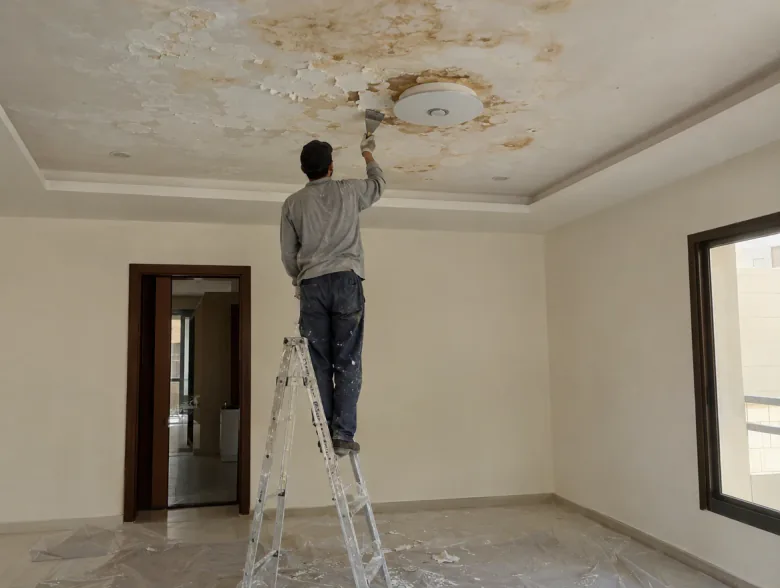
Say exactly where you see the moisture, whether on the bathroom ceiling or on the ceiling and wall below it, and whether it is recent or long-standing. A photo of the stains on WhatsApp helps.
More services in UmmTali