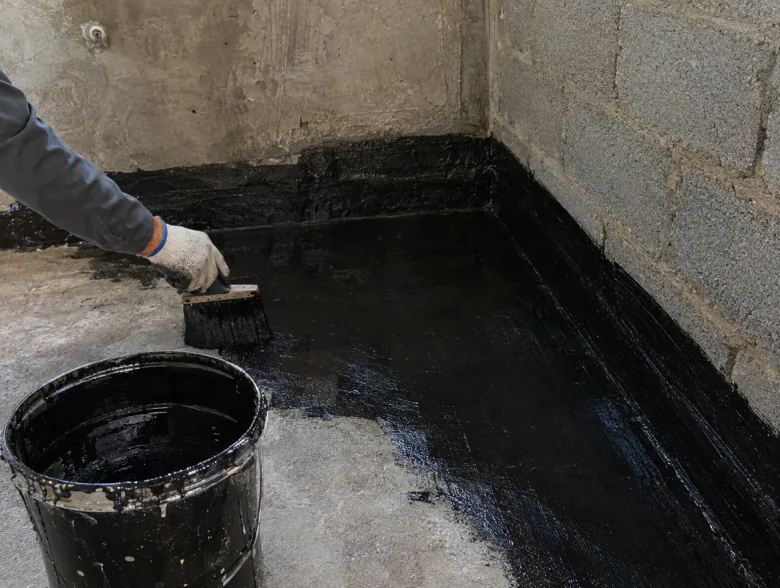
What bitumen bathroom waterproofing includes
- Assessing the condition of the bathroom floor and wall bases before any work begins
- Treating cracks and loose sections in the surface so the base is sound
- Laying the bitumen roll or brushing the bitumen coating over the full floor area
- Turning the layer up the wall bases to a height that covers the wet zone
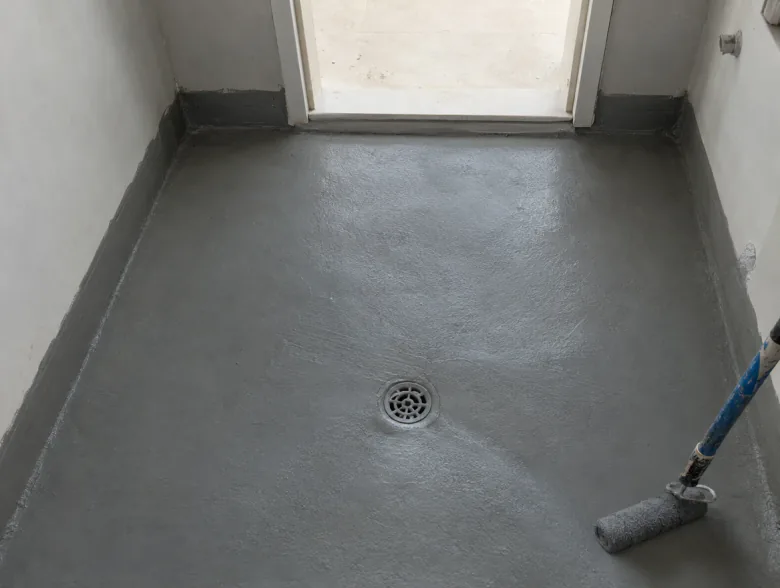
- Treating the corners and drain joints carefully as the most vulnerable points
- Checking the layer after application to make sure there are no gaps or uncovered areas
From your call to the finished layer
- 1
Tell us the situation
Call or WhatsApp us and tell us whether the bathroom is under construction or finished, and whether the tiles are already in place.
- 2
Surface preparation
Before any material is laid, the floor must be clean, dry and free of cracks or loose sections, because any flaw under the layer weakens how well it holds.
- 3
Laying the bitumen layer
The roll is bonded or the coating is brushed over the full floor area and turned up at the wall bases. The corners and the joints around the drain are treated carefully, as these are usually the most vulnerable points.
- 4
Protecting the layer before tiling
Once the layer is ready it is left to settle, then work continues over it. Any hole or damage in it before tiling is in place will cancel its purpose entirely.
The bitumen layer is worth getting right
- Bitumen is an established material for waterproofing wet surfaces
- The roll covers the full floor without gaps when bonded correctly
- The coating reaches corners and irregular shapes easily
- Drain joints and wall bases are treated as part of the same job
- We take your request by phone call or WhatsApp message
The service in Al Badriyah District
In a home in Al Badriyah District, the bathroom experiences daily water at the shower, drain, toilet and pipes, each a weak point where water might enter the slab. Seepage weakens the structure and dampens lower walls. The surface is cleaned and dried, then the bathroom floor and walls are painted with one continuous bitumen layer that fills every crack and joint and reaches the tile height and above. Before painting, any active leak needing prior repair is identified.
Al Badriyah District is a district in Al-Ahsa governorate in the Eastern Province, close to Imam Muhammed Ibn Saud Islamic University District, Al Majidiyah District and Al Quds District.
The joints between tiles are where water enters most, because the old bitumen dries and leaves the joint empty.
Our portfolio















What our customers say
- ★★★★★
شركه ممتازه
- ★★★★★
شكرا على التواصل السريع
- ★★★★★
شركه ممتازه واشتغلنا معاهم اكثر من مره وجود عاليه ما شاء الله بارك الله فيهم واعمله
Reviews are shown as the customers wrote them, in Arabic.
Questions about Bitumen bathroom waterproofing in Al Badriyah District
The roll is a ready-made membrane cut to size and bonded to the surface with heat or adhesive; it suits flat, open floors. The coating is a liquid brushed on that reaches corners, irregular shapes and drain openings easily. The choice between them depends on the condition of the surface and the shape of the area to be waterproofed.
Bitumen is normally used on the floor and on the wall bases to a useful height above floor level, covering the area most exposed to water. The full walls around a shower area may call for a different waterproofing material better suited to a vertical surface and the way tiles are fixed above it.
No. The roll needs a clean, dry surface free of loose sections or cracks, otherwise it will not bond correctly and water will find its way under it. If the floor is already tiled, whether it is a suitable base needs to be assessed before work begins.
Because these areas have joints and changes in surface direction, and they are where water finds a path faster than anywhere else. A flat roll is hard to lay without gaps at a corner or around a drain edge, so these points usually need extra treatment with a coating or reinforcing strips before the main roll goes down.
Tell us whether the bathroom is under construction or finished, whether the tiles are in place, and where damp shows if it is visible. If you know what earlier work was done on the floor, that helps us assess the situation. The more clearly you describe it, the better we can judge what is needed.
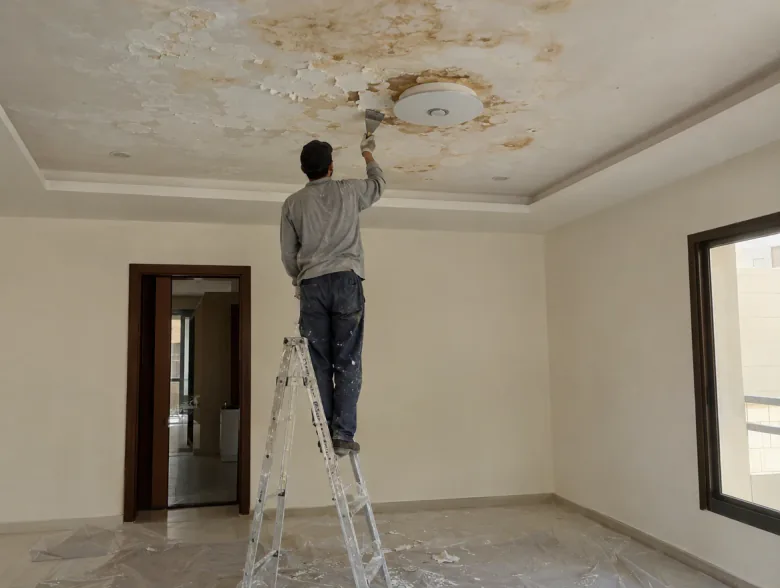
A musty smell from the bathroom or the room below, damp stains on the ceiling or lower walls, and changes in tile colour or cracking all show there is a leak in the slab.
Bitumen stops new water from entering. If the leak is active, its source must be fixed first, then bitumen is applied to prevent future leaks.
More services in Al Badriyah District
Bitumen bathroom waterproofing in nearby areas
