From your call to the right waterproofing
- 1
Tell us what you see
Call or message us on WhatsApp and describe the bathroom: is it under construction or finished, and where does the damp appear.
- 2
We assess the condition
We check the floor, the walls, the corners, the pipe openings and the drain level, to know exactly what this bathroom needs.
- 3
We prepare the surface and waterproof it
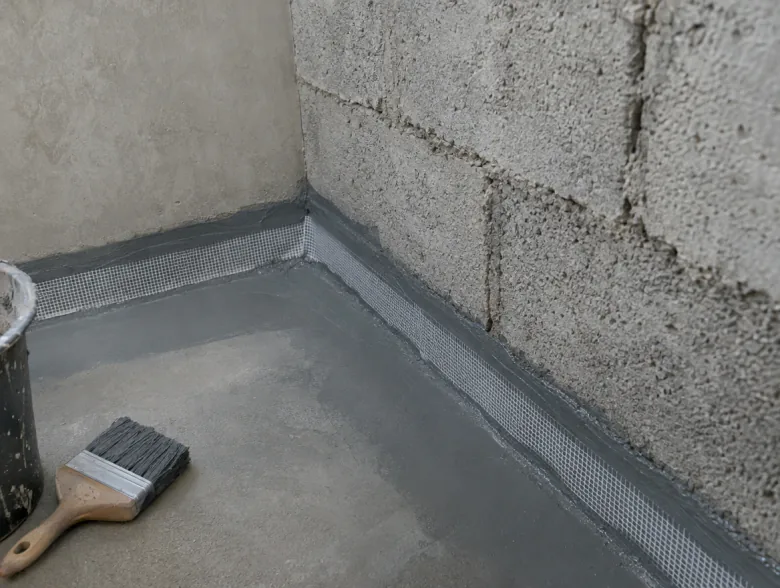
Surface preparation is essential: it is cleaned, levelled and cracks are treated before the waterproof layer goes on the floor, walls and corners.
- 4
We seal the edges and openings
The junctions between the floor and the walls, the pipe openings and the drain edges are where waterproof layers fail first, and they are treated with care before the job is done.
Every bathroom has its own condition
- We waterproof bathrooms at different construction stages
- We treat the floor, walls, corners and pipe openings
- We trace a stain on the ceiling back to its real source
- We waterproof after tiling when tiles cannot come up
- We take your request by phone call or WhatsApp message
The service in UmmTali
In a village like UmmTali, bathrooms often sit close to the base of the house or directly above rooms below, and moisture easily finds its way through cracks and joints to those spaces. Water from bathing and drainage gathers around pipes and corners, and if not sealed, it slowly seeps downwards. Al Raya inspects the bathroom inside and out, looking for any cracks, openings or damp areas, then prepares and cleans the surface and applies waterproof material to the entire floor, corners, drain and pipes.
UmmTali is a village in Al-Ahsa governorate in the Eastern Province, close to 'Uray'irah, Umm al Hamam and Umm Rubay'ah.
Fine cracks and joints around the drain and pipes are the main paths for water leakage in village bathrooms.
Our portfolio















What our customers say
- ★★★★★
شكرا على التواصل وصلو في اسرع وقت ممكن
- ★★★★★
شكرا على التواصل السريع
- ★★★★★
شركه ممتاز شغلهم كويس ويعطيهم العافيه
Reviews are shown as the customers wrote them, in Arabic.
Questions about Bathroom waterproofing in UmmTali
Before tiling, the waterproof layer is put straight onto the prepared floor and walls, then tiled over, which covers the whole surface. After tiling, the joints, cracks and corners are treated, and tiles may have to come up if the problem is deeper. Each stage has its own approach.
Water follows the slope of the floor and gaps inside the slab, and it pools at a point away from where it entered. So the repair point is not set by the stain alone; the whole bathroom floor above it is checked.
In some cases yes: if the problem is in the joints, the corners or around the drain it can often be treated without lifting the tiles. If the waterproof layer under the tiles is missing or has fully failed, the tiles may need to come up to reach the floor. This is decided after inspection.
Dark stains or damp on the ceiling of the room below, peeling paint on the wall next door, salt appearing on the walls, or a mouldy smell with no visible source. All of these point to water leaving the bathroom into the surrounding structure.
The principle is the same: protect the floor, walls, corners, pipe openings and drain. But a small toilet room can have a limited area and many corners that need careful sealing. Both need a waterproof layer under the tiles to do their job.
Tell us whether the bathroom is under construction or already tiled, and where the damp appears: on the ceiling below, on the wall next door or inside the bathroom itself. If you know when the problem started, that helps us decide what to check first.
Yes, and the work usually covers treating the joints, corners, pipe openings and drain without major changes to the bathroom. If the case needs tiles removed or the floor prepared again, that is agreed after inspection.
Call Al Raya and tell them exactly where the damp patch is, whether in the ceiling, wall or floor. Send a photo on WhatsApp if you can, as this helps identify the cause of the leak.
They look for cracks in the floor and walls, open grout joints, leaks around the drain and pipes, and any signs of old damp on neighbouring walls or ceilings.
More services in UmmTali