Bitumen & membrane insulation in Ibn Dihman
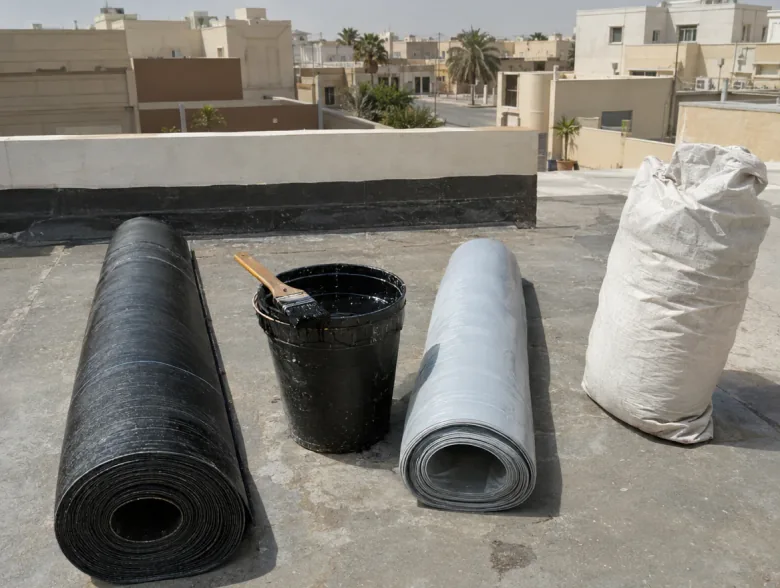
Bitumen and membrane insulation in Ibn Dihman stops moisture and water from the ground before it damages the foundation and walls. Al Raya inspects the home, chooses the right method for each location, and carefully applies it to the points where water enters.
From your call to the work
- 1
Describe what you see
Call or message us on WhatsApp and tell us where the damp or leak is and what surface needs waterproofing: a roof, a foundation or a damp wall.
- 2
We identify the right system
Based on the surface type, its position and its exposure to water, we direct you to the system that suits it, whether bitumen rolls, a membrane or a cementitious coat.
- 3
Preparing the surface
The quality of any waterproofing layer depends on what lies under it: the surface is cleaned, dried and its cracks and joints are sealed before any material is applied.
- 4
Application and the critical details
Joints, edges, the parapet and the drain outlets are where water enters first. Careful work at these points is what separates waterproofing that holds from waterproofing that has to be redone.
Relax, the right surface gets the right system
- Bitumen rolls, membranes and cementitious coats for each situation
- We start with surface preparation before any waterproofing layer
- We give joints and edges the full attention they need
- We take your request by phone call or WhatsApp message
- The cost depends on the surface condition and area
The service in Ibn Dihman
Homes in a small settlement like Ibn Dihman face challenges from ground moisture and nearby groundwater, common in Al-Ahsa. Water usually enters through the foundation or gaps between ground and wall, causing gradual harm to tiles, walls and furniture. Work begins with a full inspection to find the water source, extent of the problem and any cracks or gaps letting moisture in. The surface is then prepared, cracks repaired, and membrane laid or bitumen applied to the foundation and lower walls.
Ibn Dihman is a small settlement in Al-Ahsa governorate in the Eastern Province, close to Muraytibah, Sudah and Al Jishshah.
The first inspection focuses on the base of external walls and joints between the foundation and ground, because water seeps from there first.
Our portfolio















What our customers say
- ★★★★★
شغلهم كويس وناس ممتازه في اسرع وقت
- ★★★★★
ممتاز والخدمة ان شاء الله تكون قد التوقعات
- ★★★★★
شكرا على التواصل وصلو في اسرع وقت ممكن
Reviews are shown as the customers wrote them, in Arabic.
Questions about Bitumen & membrane insulation in Ibn Dihman
Bitumen rolls are made from a tar-based material reinforced with fibres, fixed by heat or adhesive, and are most common on flat concrete roofs. Plastic membranes are sheets stretched across a surface and joined at edges and seams. The choice depends on the shape of the surface, its heat exposure and how much it moves.
Bitumen rolls suit flat and slightly sloped concrete roofs, tanks and bathrooms. Cold-applied bitumen suits foundations and places where a flame is not practical, as well as smaller areas.
The flat area in the middle of a roof rarely fails first. Water finds its way at the seam between two rolls, at the edge where the layer meets the parapet or at the drain outlet. Those points need a different fixing method and greater care in the work.
Yes. A cementitious waterproof coat is mixed as a slurry and applied to concrete and masonry, blocking water through the pores. It suits tanks, concrete walls, bathrooms and surfaces that do not move significantly. It is not suited to surfaces that expand and contract noticeably, as it can crack under that movement.
Foundations and buried walls face moisture from the ground and water pressure from outside. If the waterproofing is applied to a dirty, wet or uneven surface, the layer detaches from behind over time and water returns. Preparing the surface and treating cracks before application is what makes the layer bond and stay.
Some materials overlap, such as cold bitumen and cementitious coats, but a bathroom floor has its own demands: strong adhesion to tiles and concrete in a small area under constant moisture. A roof faces heat and thermal expansion. So even when materials overlap, the system choice changes with the location and its conditions.
Tell us where the surface is: a roof, a foundation, a bathroom or a tank. Describe its condition: visible damp, cracks or an existing old layer. These details help us guide you to the right system and explain what the cost depends on. The more clearly you describe it, the clearer the answer we can give.
Stains show water is entering from the ground, and if left they may weaken the wall and cause mould. Count the stains and send Al Raya a photo on WhatsApp so they can judge if insulation is needed.
Usually the lower part of the external wall and foundation are insulated, and the sealant may extend a metre or more up the wall depending on groundwater level and stain location. The technician decides after the first inspection.
More services in Ibn Dihman
Bitumen & membrane insulation in nearby areas
