What roof crack repair includes
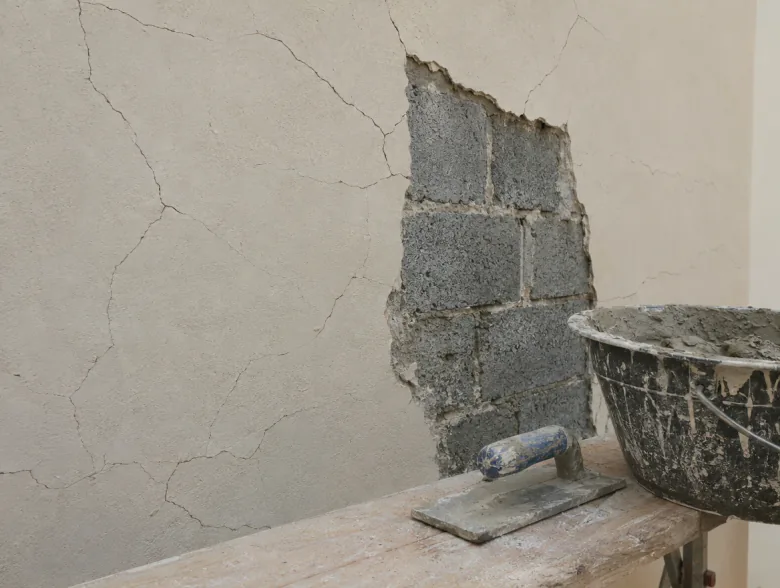
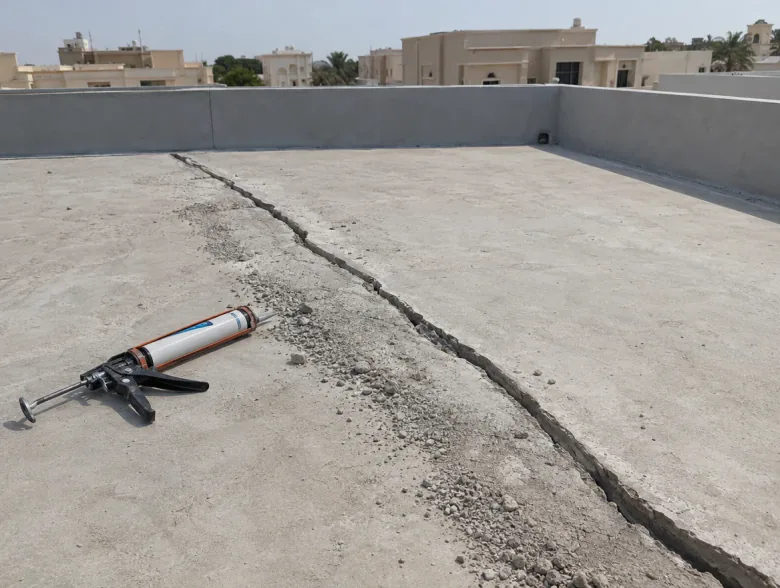
- Checking visible cracks in the roof slab for depth and direction
- Checking expansion joints across the roof and their condition
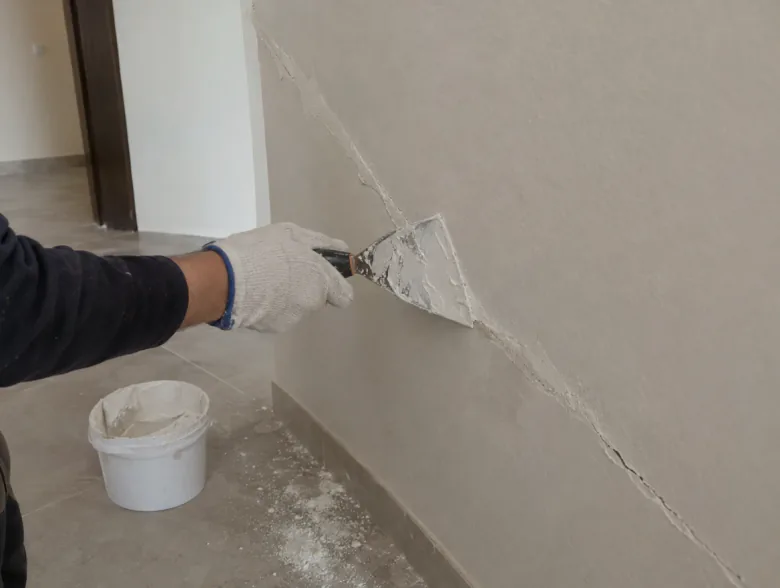
- Opening the crack evenly and cleaning its edges and the dust inside
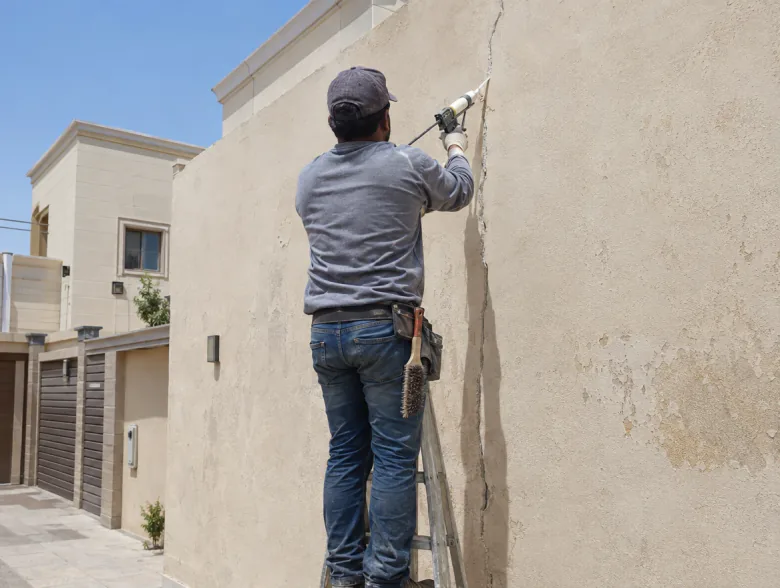
- Filling the crack with a flexible material that handles concrete expansion and contraction
- Preparing the surface around the crack before waterproofing is applied over it
- Waterproofing the crack area and its surroundings to stop rainwater entering
From your call to the repaired crack
- 1
Describe what you see
Call or message us on WhatsApp and tell us where the crack is on the roof and whether damp is showing on the top-floor ceiling.
- 2
Checking and assessing the crack
We check the crack for depth, direction and whether it sits at a joint or across the slab, because that guides the repair method.
- 3
Opening the crack and preparing the surface
The crack is opened evenly to remove dust and broken edges from inside, and the surrounding surface is cleaned before any treatment.
- 4
Filling and waterproofing
The crack is filled with a flexible material that moves with the concrete without cracking, then the surface is waterproofed to stop rainwater entering.
A proper repair starts from the crack itself
- We open and clean the crack before any filling
- The flexible material handles concrete expansion and contraction
- Treating the crack first protects the waterproofing layer above
- We take your request by phone call or WhatsApp message
- We explain the problem to you before we start work
The service in Ash Shuruq
On roofs in a district like Ash Shuruq, cracks form from concrete expanding in heat and contracting in cool. Cracks usually start at joints, corners and weak spots in the slab. In Al-Ahsa, ground damp and salts make concrete weaker and cause cracks faster. Water seeping through cracks leaves stains on the ceiling and weakens the steel inside the concrete. The technician inspects the cracks first to find the cause, then cleans out dust and loose material and fills with suitable epoxy or bitumen.
Ash Shuruq is a district in Al-Ahsa governorate in the Eastern Province, close to Al Muruj, Al Yasmin and Ar Rabie.
Cracks at joints and the parapet widen faster, because these areas move more than the rest of the roof.
Our portfolio















What our customers say
- ★★★★★
شركه ممتازه واشتغلنا معاهم اكثر من مره وجود عاليه ما شاء الله بارك الله فيهم واعمله
- ★★★★★
شغلهم ميه ميه يشكرو عليه
- ★★★★★
شغلهم كويس وناس ممتازه في اسرع وقت
Reviews are shown as the customers wrote them, in Arabic.
Questions about Roof crack repair in Ash Shuruq
A hairline crack usually stays on the surface of the slab and often comes from repeated expansion and contraction or from early concrete shrinkage. A deeper crack goes through the slab and lets rainwater pass inside. Both need repair, because a hairline crack widens with every rainy season if it is left untreated.
The intense heat expands the concrete surface by day and contracts it at night and in winter. This repeated movement stresses the concrete and opens cracks over time, even without rain. Expansion joints are designed to absorb this movement, but they also need regular maintenance.
Filling the crack closes the visible gap, but the slab surface around it stays exposed to rain. Rainwater finds other paths through the concrete pores or at the parapet edges. So the repair is complete only when the surface is waterproofed after the crack is filled, not before.
A damp patch on the ceiling appears or grows after rain and dries out in dry summer months. It is often below a visible crack on the roof or close to the parapet wall. If the damp appears at any time regardless of rain, the source may be something else and it is worth checking.
Tell us where the crack is on the roof, whether it is in the middle of the slab, near the parapet or at a joint, and whether damp shows on the ceiling below. If the crack is old and was repaired before, let us know that too. It helps to describe it clearly so we can assess what the job needs before we visit.
Very fine cracks may not let water in immediately, but water finds its way through them over time. Wide and long cracks need quick treatment, and small cracks need regular checks to see if they are widening.
Serious cracks are long or deep or have water flowing in or from them. If you see brown damp stains on the ceiling directly below the crack inside, water is already entering and the crack needs prompt treatment.