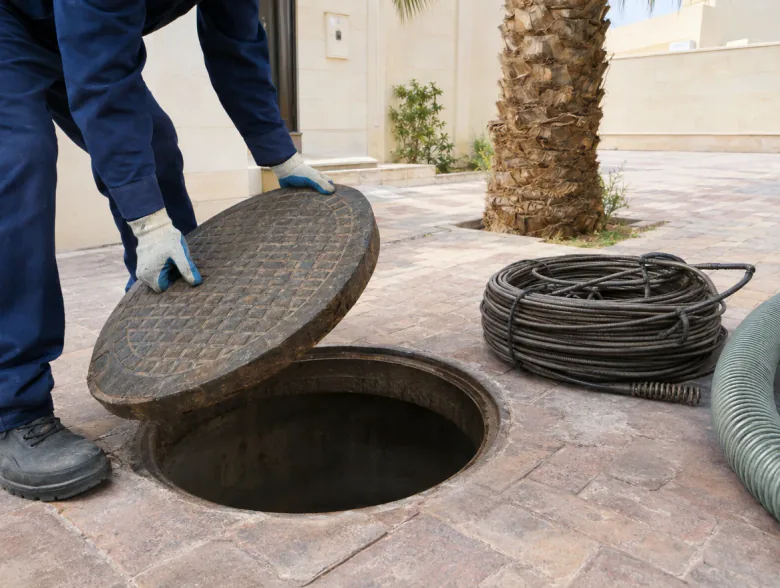
From your call to a clear drain
- 1
Describe what you see
Call or message us on WhatsApp and tell us where the problem shows: kitchen, bathroom, floor drain or septic tank, and whether water is backing up or just draining slowly.
- 2
We find where the blockage is
The blockage may be in the trap close to the drain, in a long run of pipe, or in a full septic tank. Each has its own method of clearing.
- 3
We unblock or pump out
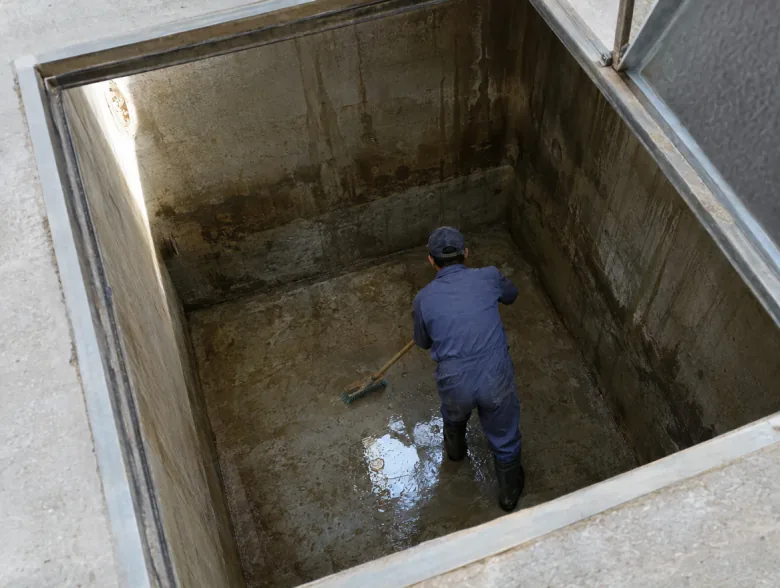
We clear the pipe with rods or high-pressure water jetting depending on the blockage, or pump the septic tank with a tanker until it is emptied.
- 4
We confirm the flow
After clearing or pumping we check that water flows properly and does not back up, and that the level in the septic tank is back within its normal range.
Trust the right treatment
- We tell a pipe blockage apart from a full septic tank
- We use high-pressure jetting for deep or stubborn blockages
- We take your request by phone call or WhatsApp message
- We choose clearing or pumping after the inspection
- The price depends on the case, message us with what you see
The service in Al Olaya District
In a residential district like Al Olaya, the drainage system has pipes from the kitchen, bathroom and yard, and an underground septic tank. Old pipes collect grease, sediment and salts, especially as Al-Ahsa groundwater is often salty. When water slows, stops or smells bad, the system is checked from entry to tank, the blockage is found, and the pipe is cleared without breaking floors if possible.
Al Olaya District is a residential district in Al-Ahsa governorate in the Eastern Province, close to Al Uwaimiriyah District, Al Thulaythiyah District and Ar Rawdah District.
Blockages often occur where pipes from multiple sources join or at the septic tank inlet.
Our portfolio















What our customers say
- ★★★★★
شركة ممتازة تستحق التعامل معها بشكل مستمر
- ★★★★★
شركه ممتازه
- ★★★★★
شغلهم ميه ميه يشكرو عليه
Reviews are shown as the customers wrote them, in Arabic.
Questions about Drain cleaning & septic pumping in Al Olaya District
If more than one drain in the house is slow at the same time, or the inspection cover is rising or has a strong smell, the tank is likely full rather than a single pipe blocked. If only one drain is slow, the blockage is usually in the pipe close to it.
In the kitchen, grease combines with food waste and hardens on the pipe wall over time. In the bathroom, hair, soap scum and scale build up together and slowly narrow the pipe. In both cases the blockage starts slow and gets worse without clearing on its own.
Yes. Wet wipes do not dissolve in water the way toilet paper does. They catch on the inner surface of the pipe or gather at bends and form the start of a larger blockage. No solid material, however small, should go into the drain.
Rods suit a blockage close to the drain opening or a fresh one that has not hardened. Old grease built up over a long run of pipe, or hard scale on the pipe wall, needs high-pressure jetting, which scours the inner wall rather than just punching a hole through the blockage.
Drain unblocking restores flow when a pipe is blocked or too narrow to drain properly. Drain cleaning usually means removing deposits from inside the pipe before a blockage forms. In practice, high-pressure jetting covers both at once because it removes the build-up and restores full flow together.
Tell us whether water drains slowly, backs up, or overflows from the drain or the inspection cover, whether the problem is in one place or several, and whether there is a smell. These details help us decide whether the job is unblocking a pipe or pumping a tank.
You need to make sure the tanker can reach the inspection cover, and to know where the cover is if it is buried under sand or concrete. Beyond that, no preparation is needed on your side.
Say which sink or toilet has the problem, whether water drains slowly or has stopped, and whether you smell anything from the drains or the yard. Send a photo of any part of the system you see pooling water.
Water is traced from each sink and bathroom through the pipes, the line that will not flow is identified, then the junction and tank are inspected. Salts, sediment and grease are the most common causes.
More services in Al Olaya District
Drain cleaning & septic pumping in nearby areas
