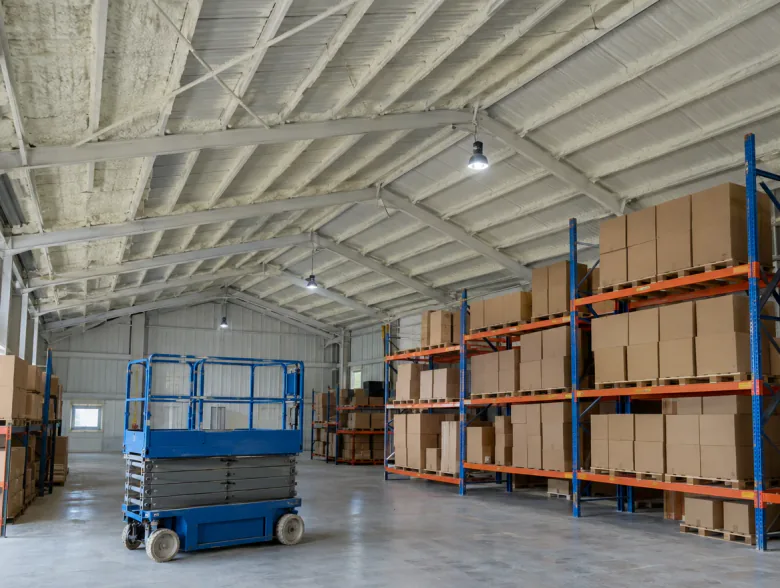
What hangar and warehouse insulation includes
- Inspecting the metal sheets, laps and fixing points before work begins
- Cleaning the surface of dust, rust and grease to prepare it for spraying
- Spraying polyurethane foam onto the inner face of the metal sheets
- Treating the laps, edges and weak points in the metal roof
- Applying a protective top coat over the foam to shield it from rays and wear
- Treating condensation and damp in the walls and roof of the building
From your message to an insulated building
- 1
Tell us about the building
Message us on WhatsApp or call and tell us the type of building, the approximate area and what you notice: heat, damp or condensation.
- 2
We inspect the roof and sheets
We check the condition of the sheets, the laps, the fixing points and the areas where condensation collects or water enters before any work begins.
- 3
Preparing the surface
Cleaning the sheets of dust, salts and grease is essential so the foam bonds to the surface and forms an even layer with no gaps.
- 4
Spraying the foam and the protective coat
Foam is sprayed onto the inner face of the sheets and over the laps and weak points, then a protective top coat is applied to shield it from rays and wear.
Your warehouse deserves a real treatment
- We insulate large metal sheets with polyurethane foam
- We treat condensation that damages stored goods
- We inspect laps and fixing points before spraying
- A seamless layer with no gaps protects the full area
- We take your request by phone call or WhatsApp message
Our portfolio















What our customers say
- ★★★★★
شركه ممتازه واشتغلنا معاهم اكثر من مره وجود عاليه ما شاء الله بارك الله فيهم واعمله
- ★★★★★
شركه ممتازه
- ★★★★★
شكرا على التواصل السريع
Reviews are shown as the customers wrote them, in Arabic.
Questions about Hangar & warehouse insulation
A hangar or warehouse uses wide metal sheets, not concrete, and sheet metal heats and cools far faster than concrete. The areas are larger, the height is greater and the laps and fixing points are often the weakest point in the insulation. So the preparation and spraying method differs from a normal house roof.
Metal sheet cools quickly at night and drops below the temperature of the humid air inside, so water vapour condenses on its inner face. That condensation drips onto goods and machinery and causes rust and damage over time. Foam raises the temperature of the inner surface and reduces this difference.
Yes, polyurethane foam is sprayed onto any accessible surface regardless of height, though working at great heights requires different access arrangements. The foam itself bonds to the sheet in any position and forms a continuous layer, which makes it suited to wide, high surfaces.
The metal roof is the largest source of heat in most hangars because it faces the sun directly, and insulating it alone makes a large difference. Metal walls also contribute to the heat, especially west and south-facing ones. What is insulated first depends on inspecting the building and finding where the main problem lies.
Tell us the type of building, whether it is a hangar, warehouse or workshop, the approximate area, what covers the roof, and what exactly you notice: intense heat, condensation or water leaking. The more specific your description, the easier it is to assess what the job needs.
Related services
Hangar & warehouse insulation by area
