From your call to finding the source
- 1
Tell us what you smell or hear
Call or message us on WhatsApp and tell us where the smell or sound is, and whether the flame is weak or absent.
- 2
Ventilate and close the valve
Open the windows and close the cylinder valve or the gas meter, and stay away from any source of sparks or flame while you wait for the inspection.
- 3
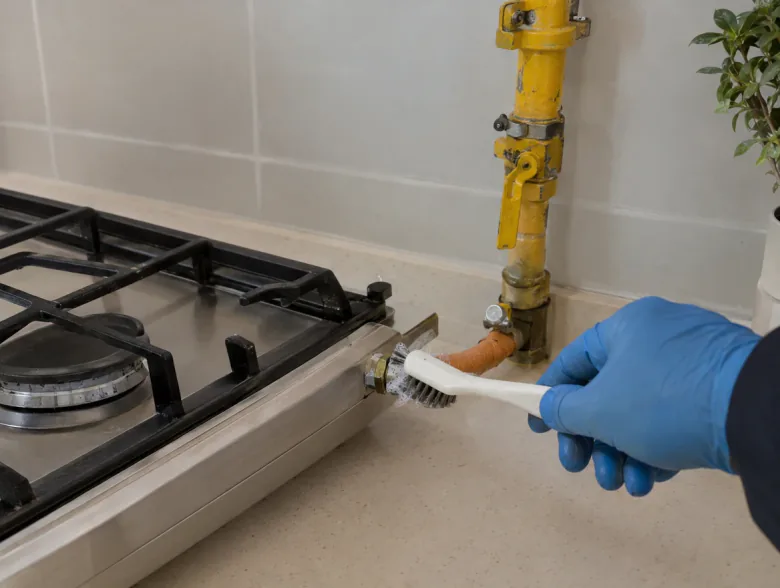
We check with detection instruments
We inspect the hose, the fittings, the regulator and the indoor pipes with specialist instruments, and pinpoint the real source without cutting or breaking anything.
- 4
We identify the source and explain the cause
After the inspection we tell you where the leak is and what caused it, whether a cracked hose, a loose fitting or a broken pipe in the wall.
The leak can be found safely
- We find the source with instruments, without breaking anything
- We check the hose, fittings and indoor pipes
- We tell a fitting leak apart from a pipe leak inside the wall
- We take your request by phone call or WhatsApp message
- We inspect central networks and home cylinders
The service in At Tuhaymiyah
In a settlement like At Tuhaymiyah, homes depend on gas networks and equipment for cooking and heating. Leaks usually occur at joints between pipes and appliances, and at bends and seams in older pipework. Precise inspection detects a gas smell and locates its source before serious signs appear. Detection requires calibrated instruments and skill in reading the network and equipment.
At Tuhaymiyah is a small settlement in Al-Ahsa governorate in the Eastern Province, close to Al 'Uthmaniyah, Udhailiyah and Imam Muhammed Ibn Saud Islamic University District.
Detection focuses on appliance connections, pipes and old seams, because these are where leaks most often occur.
Our portfolio















What our customers say
- ★★★★★
شكراً لخدمتك الجميلة
- ★★★★★
شغلهم نظيف وسريعين ومحترمين الله يعطيهم العافيه
- ★★★★★
شركه ممتاز شغلهم كويس ويعطيهم العافيه
Reviews are shown as the customers wrote them, in Arabic.
Questions about Gas leak detection in At Tuhaymiyah
A passing smell fades quickly after you ventilate, and usually appears when you light or turn off the hob. A leak smell returns after ventilation and stays even when the hob is off, and may come with a faint hiss at the fittings. Any smell that returns after ventilation needs instrument checking.
A weak flame without a smell usually comes from low pressure in the cylinder, a faulty regulator, or a blocked burner nozzle. But it may also come from a small leak that loses pressure before the gas reaches the hob. Inspection tells the two apart.
A rubber hose hardens and cracks over time in the heat and dry air, and is a cause that gas inspection specialists encounter often. But loose fittings and a worn regulator also cause leaks. That is why a full inspection covers all of these points, not the hose alone.
Open the windows and doors, close the cylinder valve or the gas meter, and do not touch any electrical switch or light a match. Leave the house if the smell is very strong, and let us know the situation on WhatsApp so we come prepared for the inspection.
A visible fitting can sometimes be heard or smelt when you get close. A pipe inside the wall cannot be found without specialist instruments. If the visible fittings are checked and nothing is found, the inspection moves to the indoor pipes.
Yes. A central gas network runs from a tank or meter through pipes in walls and ceilings to several points of use, so the whole route must be checked with instruments rather than a single point. A kitchen cylinder inspection starts with the hose, the regulator and the fittings directly attached to it.
Tell us where the smell or sound is in the house, whether you use a cylinder or a central network, whether the flame is weak or absent, and whether you have closed the cylinder valve. The clearer your description, the better we prepare with the right instruments for your type of network.
An odd gas smell in the kitchen or near appliances is a clear sign. You may also see bubbles in soapy water on pipes, which indicates a local leak.
Say exactly where you smell gas, whether there are old appliances or exposed pipes, and whether a similar problem happened before. A photo of the equipment or pipes on WhatsApp helps with the initial assessment.
More services in At Tuhaymiyah
Gas leak detection in nearby areas
