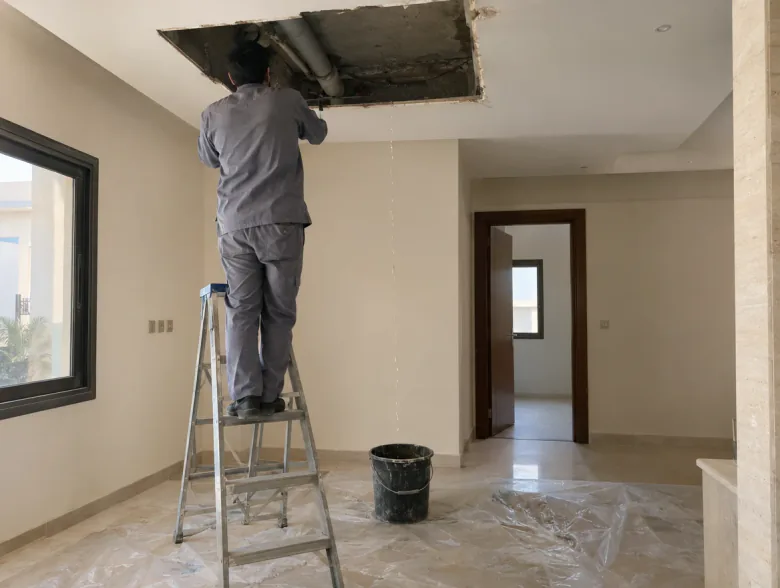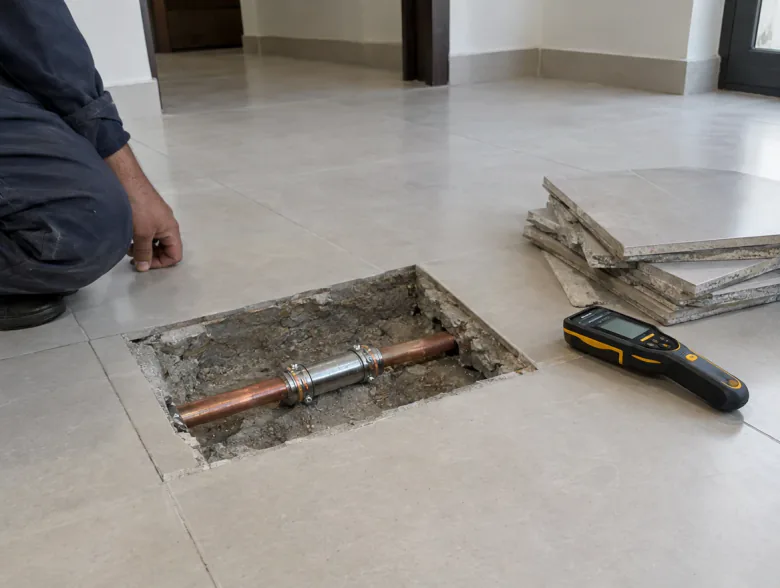
What detect-and-repair includes
- Checking the affected area and its surroundings to trace the water path and find the actual source
- Telling apart a pipe leak, a joint leak and a surface or wall leak
- Checking pipes, connections and visible joints in the identified area with instruments
- Deciding the right type of repair for each source before treatment begins
- Treating the leak point with the right material: epoxy, bitumen or polyurethane foam
- Explaining to the homeowner what was found and what was treated after the work is done
How the work goes from the start
- 1
Describe what you see
Call or message us on WhatsApp and tell us where the damp appears, and whether it shows constantly or after rain or use.
- 2
We find the source with instruments
We check the affected area and what is above and around it to tell apart a pipe leak, a joint leak and a surface or wall leak.
- 3
We decide the right repair
The repair differs with the source: a crack in concrete needs different treatment from an open joint or a broken pipe.
- 4
We treat the leak point
We treat the identified point with the right material, whether epoxy, bitumen or polyurethane foam, according to the surface and the source.
Why homeowners feel at ease with us
- We find the source before any repair
- We inspect without breaking or demolishing
- The repair is at the actual leak point, not where it appears
- We treat pipes, joints, cracks and surfaces
- We take your request by phone call or WhatsApp message
The service in Al Shagaibiyah District
A home in a district like Al Shagaibiyah may be in a densely populated area where water networks are complex and pipes may be old or under strain. Walls and floors may have damp whose source is hard to trace. Al Raya's team checks tanks, pipes, joints and cracks with specialist instruments, then pinpoints the leak and treats it: by repairing the pipe or tank, sealing cracks or improving waterproofing. The first check guides the choice of treatment method.
Al Shagaibiyah District is a district in Al-Ahsa governorate in the Eastern Province, close to Al-Hofuf, Al Muallimeen District and Historical Center Hafuf District.
In homes near densely built-up centres, leaks may come from shared pipes or raised tanks, which need systematic checking.
Our portfolio















What our customers say
- ★★★★★
شكرا على التواصل وصلو في اسرع وقت ممكن
- ★★★★★
شكراً لخدمتك الجميلة
- ★★★★★
شركة ممتازة تستحق التعامل معها بشكل مستمر
Reviews are shown as the customers wrote them, in Arabic.
Questions about Detect-and-repair package in Al Shagaibiyah District
Water moves inside the wall or ceiling before it shows on the surface, so the stain often appears lower than the source or on a different side. That is why repairing only where you see it is not enough unless the actual source is found first through inspection.
This approach suits leaks whose source is unknown, when you cannot tell whether the water comes from a pipe, a joint, a wall crack or the roof. Larger leaks that need extensive repair work may call for a separate assessment.
Common materials include epoxy, a resin coating that hardens, used on surfaces and cracks; bitumen, a rolled membrane that suits horizontal surfaces; and polyurethane foam, a sprayed foam that fills gaps. The choice depends on the surface, the leak point and the type of source.
If the source is a crack or open joint in the exterior wall, treatment can usually follow detection straight away. However, some walls carry damp from several sources, and in that case the scope of repair is set after the full inspection.
No demolition or breaking is needed from your side. Keep the affected area as accessible as possible, and note whether the damp worsens at certain times or after certain use, as these details shorten the inspection and help pinpoint the source.
Yes, we use instruments to locate the leak without breaking surfaces, then treat the problem in place. We may reach the pipe from another point, seal a joint or improve waterproofing from the other side.
It may be from ground seepage, from pipes above it, or from a nearby tank. Checking determines whether the source is inside or outside, and guides treatment.