What pool renovation includes
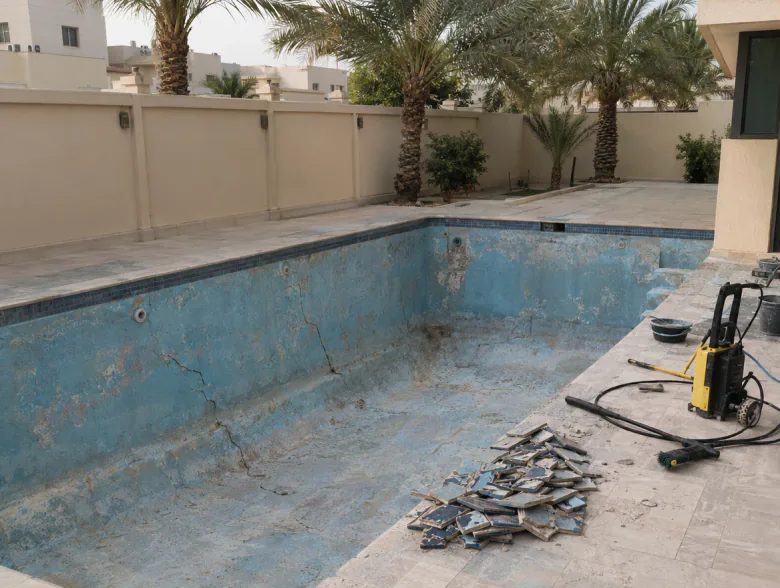
- Emptying the pool and inspecting the full shell: walls, floor and edges
- Locating cracks, areas of tile separation and points of water loss
- Repairing cracks in the concrete shell and treating the surrounding area
- Renewing tile joints or replacing broken and separated tiles
- Preparing the surface and applying new lining, plaster or epoxy
- Filling the pool and checking for water loss once renovation is complete
From your call to a renewed pool
- 1
Describe what you see
Call or WhatsApp us and tell us about the pool surface: visible cracks, separated tiles, water loss or worn plaster.
- 2
Empty and inspect the shell
The pool is emptied to expose the full shell, then the walls, floor and edges are checked to locate every crack and every area of damp before work starts.
- 3
Repair the shell and joints
Cracks are filled and the surrounding area treated, damaged tile joints are renewed or broken tiles replaced, and the surface is treated with the appropriate material before lining.
- 4
Line and test the pool
Once the surface is ready, the new lining, plaster or epoxy is applied according to the shell type, the pool is filled and checked for water loss.
Sound renovation starts from the shell
- We inspect the full shell before any new layer
- Treating cracks and joints is essential before any new surface
- We use epoxy and plaster according to the surface type
- We take your request by phone call or WhatsApp message
- The cost depends on the pool's condition and size
The service in Al Olaya District
Swimming pools in a district like Al Olaya endure heavy water pressure and heat year-round, and cracks appear in the floor, walls and corners. Leaks may be slow, showing only after days, or obvious with water dropping faster than normal. Full renovation starts with thorough inspection, then cleans the pool, removes damaged old layers, treats every crack and joint deeply, and ends with new water-resistant layers. There may be small cracks hidden under old paint that only show after cleaning.
Al Olaya District is a district in Al-Ahsa governorate in the Eastern Province, close to Al Uwaimiriyah District, Al Thulaythiyah District and Ar Rawdah District.
Fine cracks in the pool finish may look minor but let water seep gradually into layers below, widening the damage.
Our portfolio















What our customers say
- ★★★★★
شكرا على التواصل وصلو في اسرع وقت ممكن
- ★★★★★
شغلهم ميه ميه يشكرو عليه
- ★★★★★
شغلهم كويس وناس ممتازه في اسرع وقت
Reviews are shown as the customers wrote them, in Arabic.
Questions about Pool renovation in Al Olaya District
Patching treats a single crack without looking at the whole shell, and it is right when the problem is limited and recent. Renovation means emptying the pool, inspecting the full shell and repairing all cracks and joints before a new surface is applied. When cracks return or the pool loses water in several places, renovation is the right choice.
Yes, full emptying is necessary. The shell cannot be inspected, cracks repaired or the surface prepared while it is under water. Emptying is what first lets you see the real problems in the walls, floor and edges, and without it any repair stays incomplete.
The material depends on the shell condition and surface type. Plaster is the traditional layer that lines a concrete shell. Epoxy is a hard resin applied over a prepared surface and resists moisture. Polyurethane foam is a sprayed foam layer used for thermal and waterproofing work. The choice between these materials depends on assessing the pool's condition.
Yes, re-tiling is part of renovation when tiles are broken or have separated from the wall. Separated tiles usually point to a problem in the joints or the layer behind them, so that layer is treated first before new tiles are laid, otherwise the new tiles will separate in turn.
Tell us the pool's approximate age and describe the current surface: whether the plaster is worn or cracked, whether tiles are separated or broken, and whether you have noticed the water level dropping. The clearer your description, the better we can identify what is needed before the visit.
Yes, removing old and damaged layers is essential to renovation, because flawed finish may hide deep cracks, and the new layer is applied on a clean surface.
Say when you first noticed the leak, whether water drops slowly or fast, whether you see damp patches around or beneath the pool, and whether you have tried to fix the leak before.