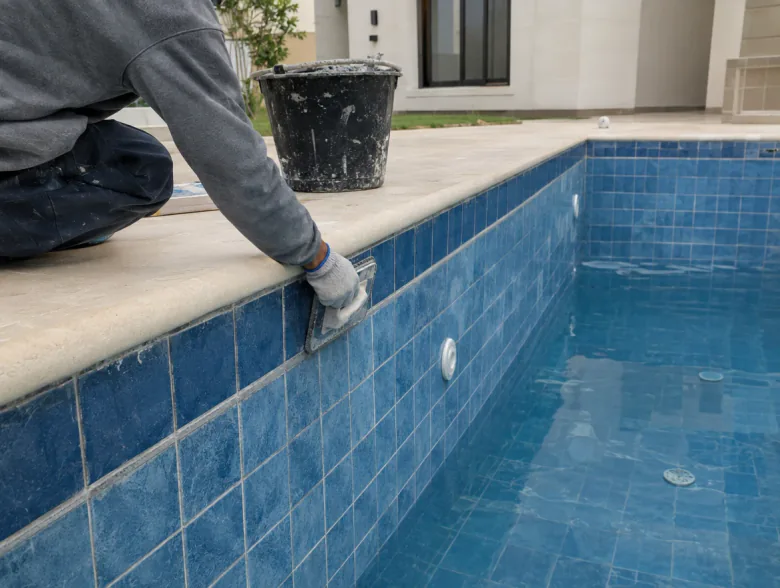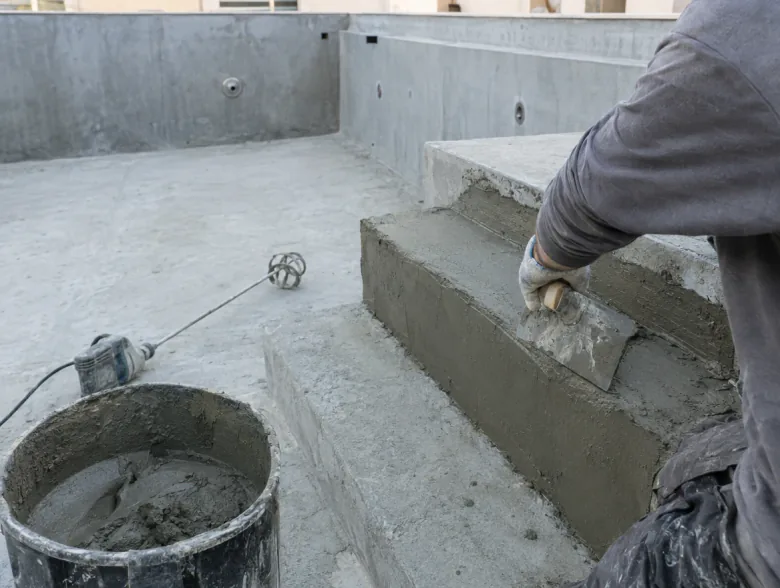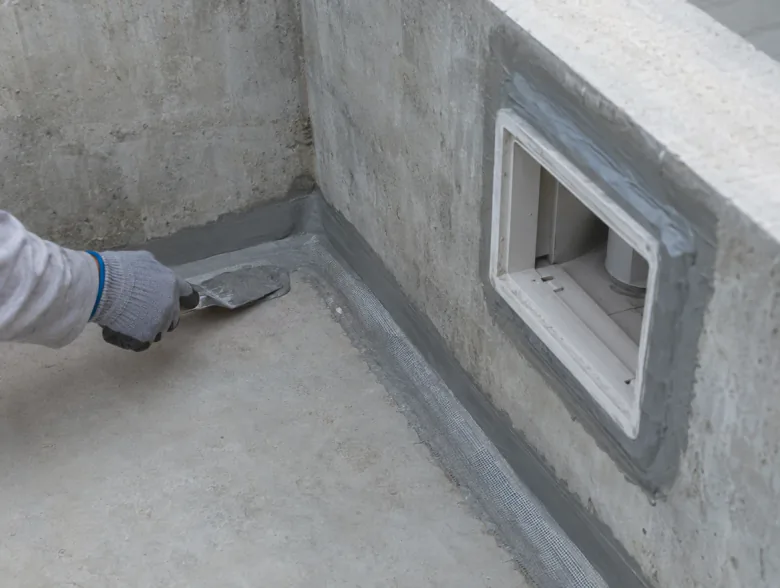
What pool waterproofing before tiling includes
- Inspecting the concrete surface and identifying cracks and spots that need prior treatment
- Preparing the walls and floor by cleaning the surface and removing loose material or oils
- Treating corners and concrete joints with a material that can absorb movement
- Sealing pipe openings, inlets and fittings set into the pool walls and floor
- Applying the waterproof layer across the walls and the floor to cover the full pool area
- Handing over the pool ready for tiling once the waterproof layer is complete
From your call to the start of the work
- 1
Tell us the pool's condition
Call or message us on WhatsApp and tell us whether the concrete is finished and whether pipe openings or fittings are in place, so we know what the job involves.
- 2
Preparing the concrete surface
The surface is cleaned of dust, oils and any loose material. Small cracks are treated before the layer goes on, because a waterproof coat on an unsound surface cannot do its job.
- 3
Sealing joints and openings
Corners between the wall and floor, concrete joints and every pipe opening are treated carefully, as these are the points most exposed to leakage under water pressure.
- 4
Applying the waterproof layer
Once the surface is ready, the waterproof material is applied across the walls and the floor to cover the full area, and tiling can then go ahead.
This is the right time to waterproof
- The concrete surface is exposed and ready to treat
- No tiles to lift and no breaking later
- Joints and openings are sealed before the tiles cover them
- The waterproofing sits in the right layer between the concrete and the tiles
- We take your request by phone call or WhatsApp message
The service in Al Kilabiyah
A town like Al Kilabiyah has homes with private pools, and often the pool sits unfinished without tiles. This is the ideal time to waterproof, because access is easy and surfaces are dry. Waterproofing must cover every crack in the shell and the joints at corners, and around any pipe or drain openings. The surface is dried, cracks are filled, then protective coats are applied to walls and floor together without gaps.
Al Kilabiyah is a town in Al-Ahsa governorate in the Eastern Province.
Water that seeps through joints and cracks weakens the pool foundation in the ground quickly.
Our portfolio















What our customers say
- ★★★★★
شغلهم ميه ميه يشكرو عليه
- ★★★★★
شركة ممتازة تستحق التعامل معها بشكل مستمر
- ★★★★★
شكرا على التواصل السريع
Reviews are shown as the customers wrote them, in Arabic.
Questions about Pool waterproofing before tiling in Al Kilabiyah
The work is possible but very different: the waterproof layer will not sit between the concrete and the tiles where it belongs, and the walls may need treatment from inside or tiles lifted in the damaged areas. This is why waterproofing before tiling is simpler and less complicated than any later option.
Flexible cement-based coats or epoxy resins are commonly used, and the right material depends on the nature of the concrete, the pool's shape and its size. Each material has its own preparation and application method that affects how well it holds water under pressure.
Because water presses in two directions at once in a corner, and it is where two different concrete sections meet. Any slight movement in the structure opens the corner before anywhere else, so it needs extra treatment with a filler that can absorb movement before the main waterproof layer goes on.
Yes, new concrete needs to finish curing before the waterproof material is applied. Applying it to concrete that has not fully set affects how well the material bonds to the surface and weakens the layer. The time needed varies with the thickness of the concrete and the weather conditions.
Tell us the approximate dimensions of the pool, whether the concrete is finished and the pipe openings cast, and whether there are any visible cracks in the walls or the floor. These details help us judge the nature of the work and which waterproofing materials suit your pool.
Right after building is done and the shell is ready, before any tiles go down. If you wait, water may enter small cracks and cause bigger problems in the foundation and walls.
Send photos of the empty pool from different angles, and mention any cracks you see in the floor or walls, or any damp around the pool from ground water.