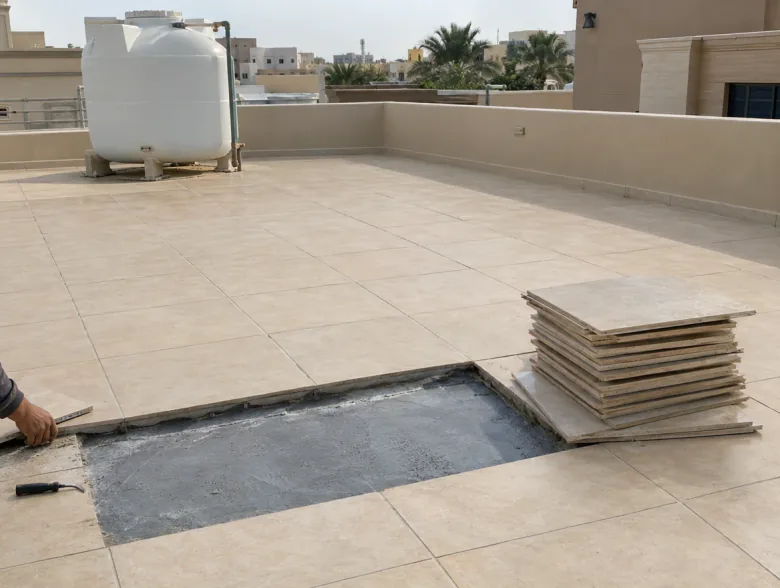
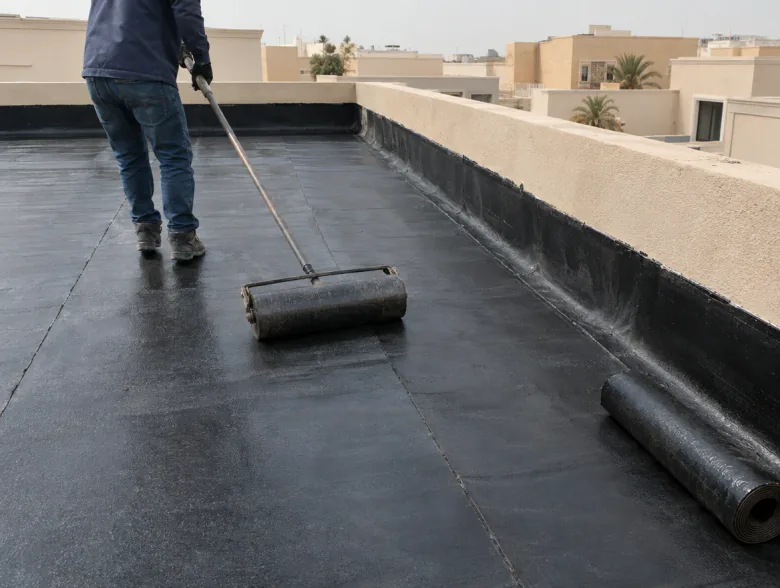
What roof rain-proofing includes
- Checking hairline cracks and the joints between the roof and the parapet wall
- Checking drain bases, pipe openings and the spots where rainwater collects
- Finding the low areas that do not shed water toward the drains
- Repairing cracks and joints and preparing the surface before the waterproofing layer is applied
- Applying the right waterproof layer for the roof's condition, covering edges and joints fully
- Checking that drain bases and parapet edges are completely covered after the work is done
From your call to a sealed roof
- 1
Tell us what you see
Call or message us on WhatsApp and describe where the stains appear and whether they come back with every rain or only after heavy rain.
- 2
We inspect the roof and read its weak points
We check the hairline cracks, the joints at the parapet, the drain bases, the pipe penetrations and the low spots where water sits instead of draining away.
- 3
We seal the entry points and waterproof the roof
The cracks and joints are filled first, the surface is prepared, then the right waterproof layer is applied, with attention to the fall toward the drains.
- 4
We check the coverage is complete
After laying the layer we make sure the joints, edges and drain bases are fully covered, because edges are often where a leak comes back if they are missed.
A treated roof protects everything below
- We find the entry points before laying any layer
- We treat cracks, joints and drain bases
- The layer is applied only after the surface is ready
- We take your request by phone call or WhatsApp message
- Reach us by call or WhatsApp message
The service in Al Kilabiyah
In a town like Al Kilabiyah, homes often have several storeys, and each roof typically carries a parapet, drains and water tanks. When rain comes, it finds its way through seams between sections and through small cracks that are hard to spot. The team inspects the roof to trace the water's path, then cleans and treats each weak point with water-resistant materials, paying special attention to corners and joints.
Al Kilabiyah is a town in Al-Ahsa governorate in the Eastern Province.
Initial inspection uses instruments to trace water without breaking surfaces, because repair must target the real cause.
Our portfolio














What our customers say
- ★★★★★
شركه ممتازه
- ★★★★★
شركه ممتاز شغلهم كويس ويعطيهم العافيه
- ★★★★★
شغلهم كويس وناس ممتازه في اسرع وقت
Reviews are shown as the customers wrote them, in Arabic.
Questions about Roof rain-proofing in Al Kilabiyah
Not always. Water can enter far from where the stain appears; it may come in through a parapet joint or a low spot and travel inside the concrete before showing up somewhere else. That is why we inspect the whole roof, not just the area above the stain.
A hairline crack may not let water through at first, but it widens with heat, cold and repeated water contact. A crack that reaches the concrete or sits at the joint between two materials is usually more serious because water finds a wider path. Inspecting the roof tells you which ones need prompt treatment.
Because a narrow crack or joint lets only a small amount of water through; light rain evaporates or drains away before enough builds up to pass through. Heavy rain fills the low spot and pushes against the crack until water finds its way in. This does not mean the crack does not need treating.
Sometimes one isolated crack is the only source and filling it is enough. But if the roof has several cracks or the old layer has worn in more than one place, waterproofing the whole roof protects against the problem coming back from another point. We decide that after inspecting the roof.
Tell us where the stain is on the ceiling, whether it appears with every rain or only heavy rain, whether you have seen any visible cracks on the roof or parapet, and when you first noticed the problem. These details help us know where to start. Send us a photo on WhatsApp if you can.
A team arrives to inspect, examining the roof and tracing cracks, joints and drains with precise tools, identifying exactly where water enters. Repair is then planned based on what is found.
Water may seep from far away or very nearby; the stain does not appear directly above the entry point. Inspection reveals the actual path water takes from the roof into the home.
More services in Al Kilabiyah