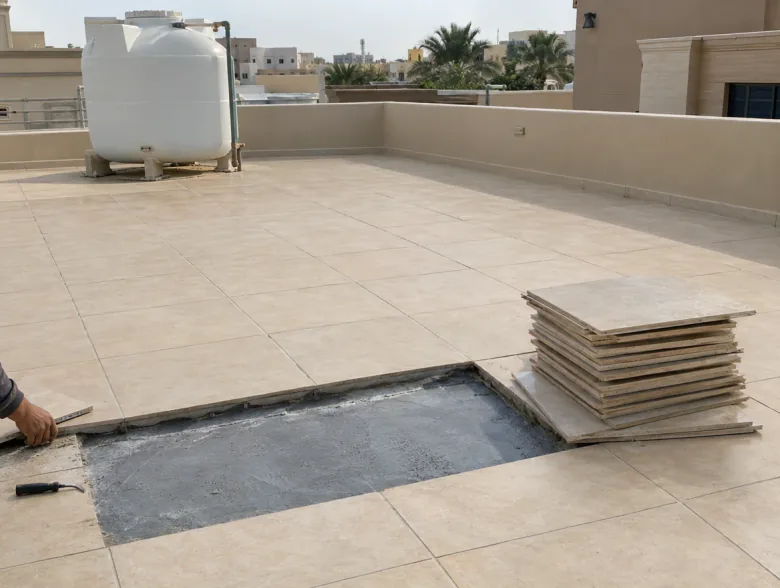
Tiled roof waterproofing in Al Jishshah
In Al Jishshah, homes and villas with tiled roofs stay cool, but water can seep through the joints before you notice anything until it reaches the room. Al Raya detects the leak with instruments first, then waterproofs the roof to protect the home from water and damp.
What tiled roof waterproofing includes
- Checking the joints between tiles and identifying those that are widened or cracked
- Checking cracked tiles to see whether the crack has reached the layer beneath
- Checking the waterproof layer under the tiles in areas suspected of damage
- Treating and sealing the joints and renewing the bonding material between them
- Repairing the waterproof layer under the tiles in the damaged areas
- Checking the roof edges and parapet where they meet the tiles
From your call to treating the leak
- 1
Tell us what you see
Call or message us on WhatsApp and describe the stain on the ceiling or damp on the wall, and whether the roof is fully or partly tiled.
- 2
We inspect the roof carefully
We check the joints between tiles, cracked tiles, the parapet edges and any area where water may collect.
- 3
We find where water gets in
Water usually enters through a widened joint, a cracked tile or the edge at the parapet, and travels some distance before it drops to the ceiling.
- 4
We treat the waterproof layer
The work includes sealing the joints, treating cracked tiles and repairing the waterproof layer under the tiles in the affected area.
Inspection first, then treatment
- We find the entry point before any tile is lifted
- We check joints, cracked tiles and parapet edges
- We treat the waterproof layer under the tiles where needed
- We take your request by phone call or WhatsApp message
- We describe what we found and explain why treatment is needed
The service in Al Jishshah
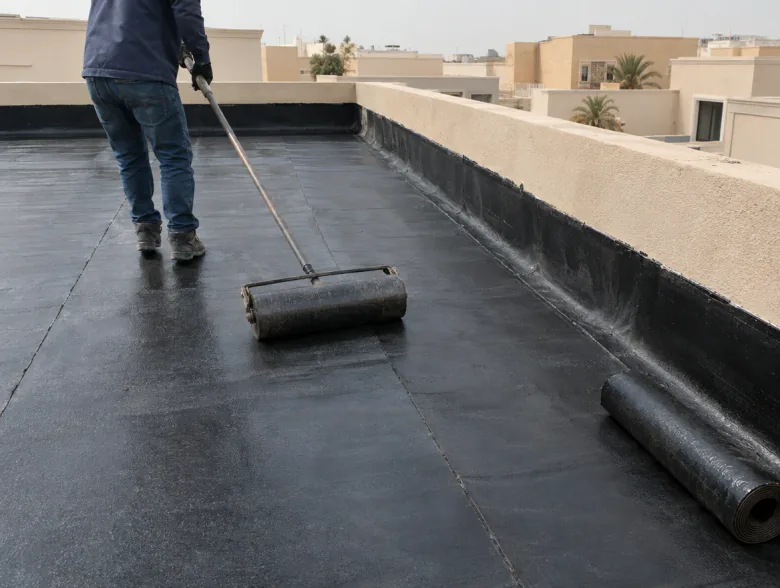
Roofs on homes and villas in a district like Al Jishshah are often tiled, and the tiles cover lower layers that may be damp. Water usually enters through the joints between tiles, around the parapet and drains, or at seasonal cracks. The technician checks the roof with instruments that detect moisture through the tiles without damage, and pinpoints the exact leak source. The surface is then prepared by cleaning and removing any pooled water, and waterproofed with a suitable material based on the nature of the leak and the surface.
Al Jishshah is a district in Al-Ahsa governorate in the Eastern Province, close to Al Markaz, Al Jafr and As Sabat.
The joints between tiles and the seals around the parapet and drains are the most vulnerable to leaks, and instrument inspection pinpoints them precisely.
Our portfolio















What our customers say
- ★★★★★
شركة ممتازة تستحق التعامل معها بشكل مستمر
- ★★★★★
شكرا على التواصل السريع
- ★★★★★
شركه ممتاز شغلهم كويس ويعطيهم العافيه
Reviews are shown as the customers wrote them, in Arabic.
Questions about Tiled roof waterproofing in Al Jishshah
The stain usually appears in the middle of the ceiling or near the wall that borders the roof. If it worsens after rain or in summer when tiles expand and joints widen, the roof is most likely the source. Confirmation only comes from inspecting both the roof and the wall directly.
Yes in many cases. If the layer under the tiles is sound and the leak comes only from the joints, sealing and renewing the joints is enough without lifting all the tiles. But if the layer beneath is damaged or missing in an area, lifting the tiles in that part may be needed to treat what is below.
Because once water enters through a joint or cracked tile it travels horizontally under the tiles or over the concrete layer, sometimes a considerable distance before it finds a way down to the ceiling. So the point where it appears on the ceiling is a clue, not the exact location of the leak.
Not necessarily. Tiles crack sometimes from heat expansion without the crack reaching the layer below. But if the crack is left untreated, rainwater seeps through it over time and begins to damage the waterproof layer beneath. Early inspection tells whether the crack is surface-only or has reached below.
Tell us where the stain appears on the ceiling, whether it comes after rain or in summer or is constant, and whether you have noticed cracked tiles or wide joints when you go up to the roof. The more detail you give, the more precisely we can focus the inspection.
No, we use specialized instruments that detect leaks through the tiles and underlying layers directly, so we pinpoint the location precisely without needing to lift any tiles or cause damage.
It means water has penetrated from above and accumulated in the layers, usually because of open joints between the tiles or around the parapet and drains, and instrument inspection will pinpoint the exact location.
More services in Al Jishshah
Tiled roof waterproofing in nearby areas
