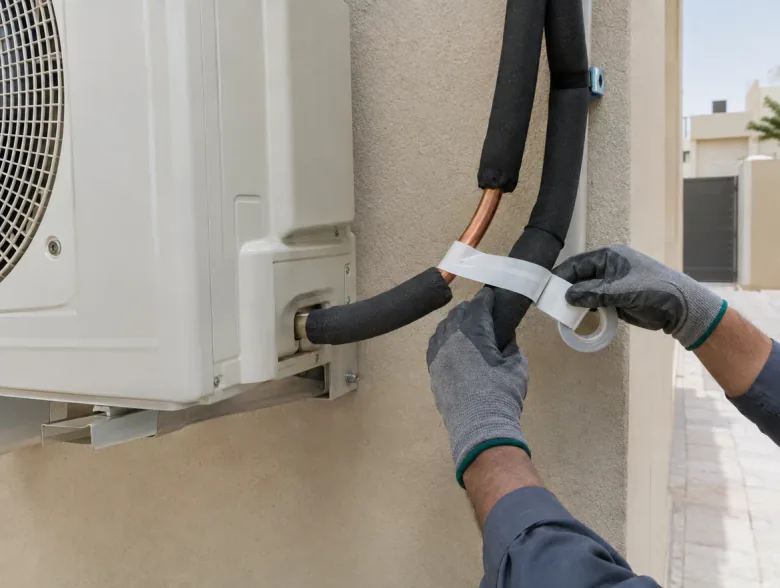
What AC pipe insulation includes
- Checking the copper pipe run from the indoor to the outdoor unit and finding every bare section
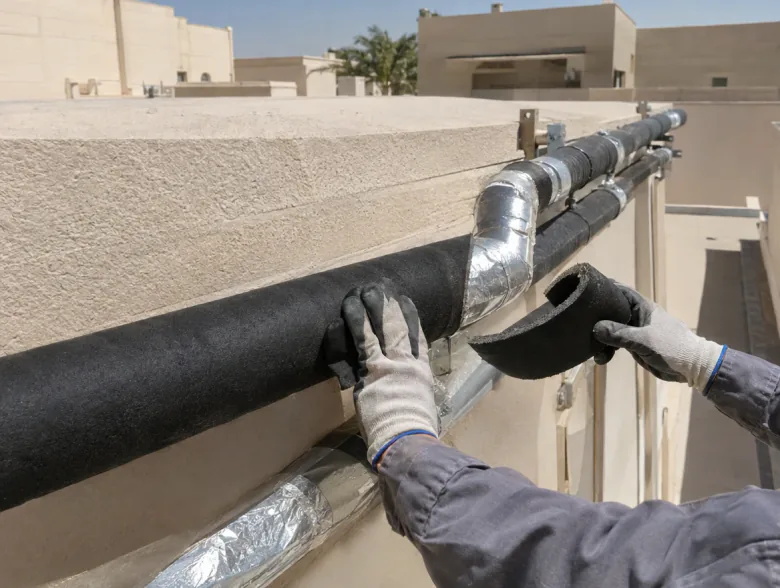
- Fitting foam insulating sleeves in a thickness suited to the pipe diameter along the full run
- Treating bends and the points where the pipe enters the wall so no section is left uncovered
- Sealing the joints between insulating sleeves at every connection along the run
- Treating the entry points at both the indoor and outdoor units to close the ends
- Noting any part of the run that needs extra protection from direct sun
From your call to insulated pipes
- 1
Tell us what you notice
Call or message us on WhatsApp and tell us whether the pipes are bare or have broken sleeves or drip water, and where the pipes run inside and outside the building.
- 2
We check the full run
We trace the pipe from the indoor to the outdoor unit and find which sections have lost their insulation or were never insulated, especially on sun-exposed runs.
- 3
We sleeve the pipe
We fit foam sleeves sized to the pipe's diameter along the whole run, paying attention to every joint and bend so no bare section remains to drip or waste cooling.
- 4
We seal joints and ends
We close the sleeve joints and seal the ends at both units, because a joint is often the first place where moisture starts or warm air enters.
An insulated pipe does its job fully
- We insulate the full run from unit to unit
- We seal every joint and bend carefully
- We choose a sleeve sized to the pipe's diameter
- We take your request by phone call or WhatsApp message
- Reach us by call or WhatsApp message
The service in Ash Shi’bah
In a residential district like Ash Shi'bah, homes usually have outdoor AC units and pipes running indoors through walls or along the home front. Intense summer heat and high damp from salt and groundwater in Al-Ahsa increase condensation on pipes. Water collecting in them drips onto indoor ceilings and floors, or seeps beside the pipe and damps walls. Old insulation exposed for years to heat and salt may be cracked or displaced from its place. The technician first checks visible pipes and the openings they pass through, then carefully removes old insulation and fits new insulation sealed to the surface so no gaps remain for water to enter.
Ash Shi'bah is a district in Al-Ahsa governorate in the Eastern Province, close to Al Qurayn, Julayjilah and Ash Shuqayq.
Water seeping from AC pipes shows a visible mark on the ceiling or wall before it causes deeper damage.
Our portfolio















What our customers say
- ★★★★★
شركة ممتازة تستحق التعامل معها بشكل مستمر
- ★★★★★
شركه ممتاز شغلهم كويس ويعطيهم العافيه
- ★★★★★
شكراً لخدمتك الجميلة
Reviews are shown as the customers wrote them, in Arabic.
Questions about AC pipe insulation in Ash Shi’bah
Yes. Moisture that condenses on a bare pipe drips constantly, damping the wall or ceiling the pipe runs over and leaving stains that can damage paint or plaster over time. Proper insulation stops condensation at the source because the pipe's outer surface no longer gets cold enough to attract moisture.
Any bare section weakens the whole pipe's performance, since even a short unsleeved stretch is enough to gain heat or condense moisture. That is why a proper job covers the run from the indoor unit to the outdoor unit without a gap.
When refrigerant reaches the indoor unit at its original temperature without picking up heat along the way, the air-conditioner works more efficiently. A bare pipe causes the refrigerant to lose part of its cooling energy before it arrives, which is why the room may not reach the set temperature even with the unit running.
Tell us how many units have pipes you want insulated, whether the run is exposed to the sun, inside the wall or both, and whether there are old cracked sleeves or visible dripping. These details help us understand what the visit will involve.
Stop running the AC continuously if you can, and watch exactly where the water appears. Call Al Raya and tell them where the leak is and which pipe is affected, and send a clear photo on WhatsApp to help with the assessment.
Pipes on the outer wall are exposed to sun, heat and salt in the air, so they need strong, tight insulation. The technician chooses the right type based on how much exposure and heat the location gets.
More services in Ash Shi’bah