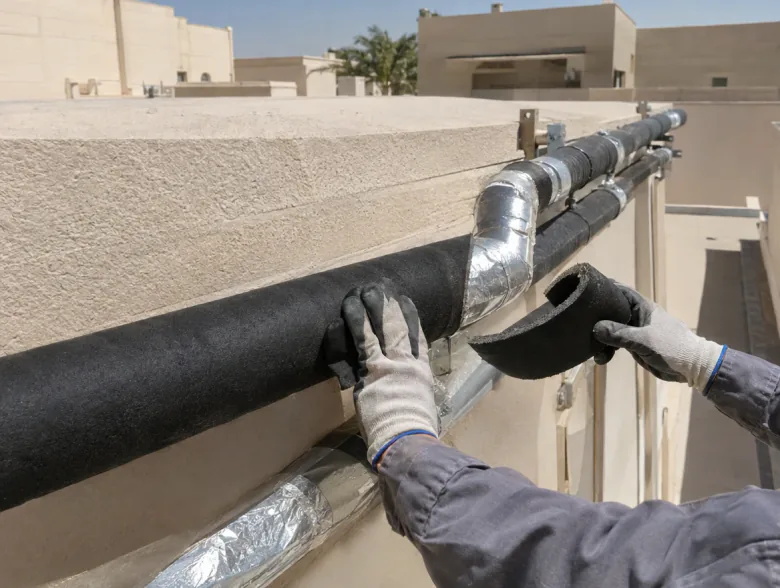
What water pipe insulation includes
- Checking cold and hot water pipes and assessing their exposure to heat or condensation
- Preparing the pipe surface and treating any open joint before fitting the insulation
- Fitting the right insulation on roof pipes exposed to the sun
- Insulating hot-water pipes to reduce heat loss before water reaches the tap
- Securing joints, bends and ends so no open spot is left to break the insulation
- Answering your questions about pipe insulation before the work starts
From your call to insulated pipes
- 1
Tell us what you notice
Call or message us on WhatsApp and describe where the pipes are and what you notice: water arriving warm, sweating on the pipes, or pipes exposed on the roof.
- 2
We check the pipes and their position
We see the pipes on the roof or inside the building, and we assess how exposed they are to sun and heat, and which insulation suits each position.
- 3
Preparing the pipes before insulation
Preparing the pipe surface is a key part of the job; any exposed joint or damaged spot is dealt with before the wrap goes on, so no moisture is sealed in underneath.
- 4
Fitting and securing the insulation
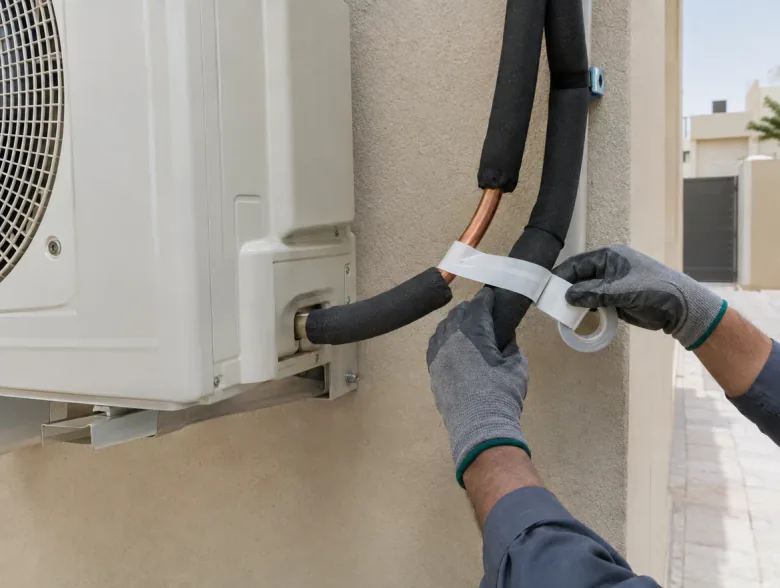
The pipe is wrapped with the right insulating material, and the joints and ends are secured so no spot is left open that would let heat transfer through again.
Insulation solves a real pipe problem
- Protects cold-water pipes from heating up on the roof
- Reduces heat loss in hot-water pipes
- Prevents condensation on cold pipes in winter
- We treat roof pipes and internal pipes
- We take your request by phone call or WhatsApp message
The service in ’Uray’irah
In a village like 'Uray'irah, homes usually have flat roofs with water tanks on top, and pipes run on the roof or through walls. Exposed roofs face intense summer heat, and pipes inside warm quickly. Ground near fields and wells means high moisture and salt in soil, so lower pipes may be affected. Before insulation, the roof and walls are checked to find pipe condition and surroundings, because existing leaks will not be cured by insulation.
'Uray'irah is a village in Al-Ahsa governorate in the Eastern Province, close to UmmTali, Umm Rubay'ah and Umm al Hamam.
Pipes on exposed roofs in villages heat faster because air moves around the pipe from all sides, so they need good insulation.
Our portfolio















What our customers say
- ★★★★★
شركة ممتازة تستحق التعامل معها بشكل مستمر
- ★★★★★
شكراً لخدمتك الجميلة
- ★★★★★
شركه ممتازه واشتغلنا معاهم اكثر من مره وجود عاليه ما شاء الله بارك الله فيهم واعمله
Reviews are shown as the customers wrote them, in Arabic.
Questions about Pipe insulation in ’Uray’irah
Cold-water pipes need insulation that stops surrounding heat from warming the water inside, which matters most for roof pipes in summer. Hot-water pipes need insulation that holds the heat inside the pipe and reduces what is lost before the water reaches the tap. The problem is different in each case, and the right material depends on the position and the purpose.
In most cases the reason is pipes that run across the roof or in an exposed position without insulation. Metal and plastic pipes absorb heat and raise the temperature of the water inside them quickly in summer heat. Insulating these pipes cuts off that heat transfer to the water.
Yes, over time. Water droplets that form on a cold pipe collect and drip onto the nearby wall or ceiling, causing damp patches that have nothing to do with an actual pipe leak. Insulation stops the condensation because it keeps the pipe surface from getting cold enough to cause moisture in the air to condense.
Common materials include cylindrical foam sleeves that slide onto the pipe, and insulating wraps that are wound around it and secured. The choice of material depends on the pipe's position and whether it is exposed to sun, inside a wall or in a damp place. In all cases the material must cover the joints and bends, because any open spot breaks the insulation.
Tell us where the pipes you want insulated are, and what you notice: cold water arriving warm, condensation on the pipes, or pipes exposed on the roof with no cover. If you know the pipe material, metal or plastic, tell us that too. These details help us decide what suits your situation before we visit.
Insulating pipes reduces heat loss from the water heater to the tap, so you use less water before hot water arrives, saving both water and energy.
Say where the main pipes are on the roof or in walls, whether you see any leaks or damp stains around them, if hot water cools quickly, and send a photo of the roof if you can.
More services in ’Uray’irah