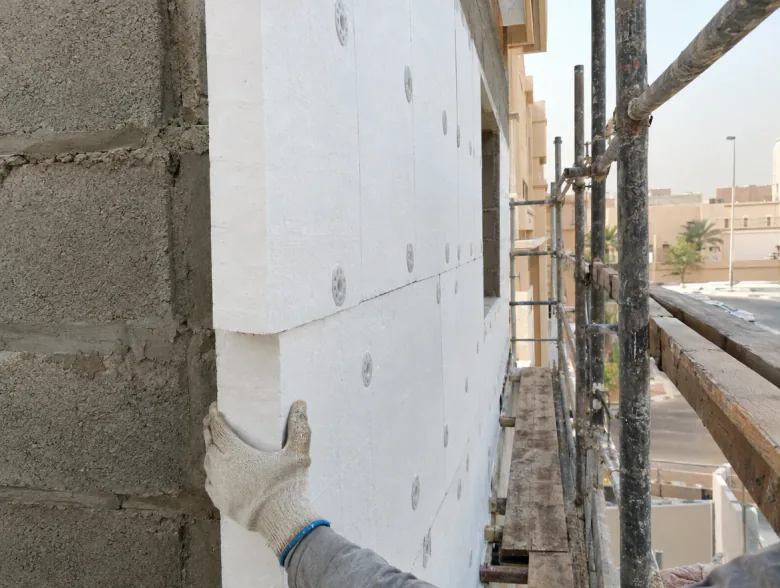
Wall insulation in Government Departments Complex 2nd District
Wall insulation in Government Departments Complex 2nd District reduces the heat that passes through outer walls and keeps the inside cooler. Al Raya applies insulation to sun-exposed walls, cutting off heat transfer from outside to the rooms.
What wall thermal insulation includes
- Checking the outside walls and identifying the faces most exposed to the sun
- Treating cracks and loose areas before the insulation layer is applied
- Fitting boards or spraying polyurethane foam on the outside face of the wall
- Taking care at edges, corners and board joints to close the heat paths
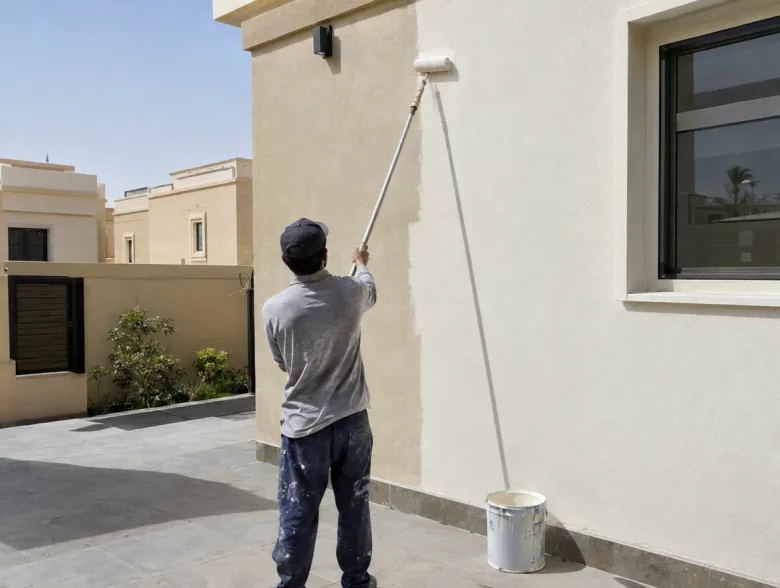
- Applying a finish coat to protect the insulation material from the weather
- Answering your questions about wall insulation before the work starts
From your call to an insulated wall
- 1
Describe your walls
Call or message us on WhatsApp and tell us which side faces the sun and whether the building is finished or still under construction.
- 2
Surface preparation
Before any material goes on, the walls are cleaned and any cracks or loose areas are treated, because an insulation layer only works on a sound surface.
- 3
Applying the insulation
Boards are fixed or foam is sprayed on the outside face, with care taken at the edges, corners and joints between boards where they are used.
- 4
The finish coat
Over many materials a finish coat is applied to protect the insulation from the weather and give the wall its final appearance.
An insulated wall, a different room
- We take your request by phone call or WhatsApp message
- We work on existing buildings and buildings under construction
- We use boards and polyurethane foam to suit the wall
- We take care at edges and joints, the first points of failure
- We describe the situation and suggest what suits your wall before starting
The service in Government Departments Complex 2nd District
In a district like Government Departments Complex 2nd District, east and west walls take direct sun for very long periods. The first inspection determines whether the wall suffers from damp, salt or cracks, because all these faults affect insulation performance. After the surface is prepared and visible cracks are repaired, the technician applies an insulating layer according to the wall's nature, sun exposure and surrounding damp.
Government Departments Complex 2nd District is a district in Al-Ahsa governorate in the Eastern Province, close to Al Hamra 1st District, Al Aziziyah 1st District and Al Hamra 2nd District.
Walls facing east and west absorb heat faster than others, and the inner wall surface is where damp signs appear first.
Our portfolio















What our customers say
- ★★★★★
شركه ممتاز شغلهم كويس ويعطيهم العافيه
- ★★★★★
شكرا على التواصل السريع
- ★★★★★
شغلهم نظيف وسريعين ومحترمين الله يعطيهم العافيه
Reviews are shown as the customers wrote them, in Arabic.
Questions about Wall insulation in Government Departments Complex 2nd District
Boards are pre-made panels fixed to the wall and they suit flat surfaces, but they need careful joining at edges and seams. Polyurethane foam is sprayed and expands to fill cracks and corners, bonding directly to the surface. The choice between the two depends on the shape and condition of the wall.
Yes, insulating from the inside is possible and often done on upper floors or when the outside face is not accessible. Inside insulation differs in how it is applied and reduces the room area slightly, so outside insulation is preferred when available because it stops the heat before it enters the wall.
Both. In new buildings insulation is easy to include during construction. In existing buildings the outside walls are prepared and insulated without changing the structure. Most of the requests we receive are for existing buildings whose owners want to reduce summer heat.
Insulating the wall most exposed to the sun makes a noticeable difference to the room behind it, and all walls do not have to be done at once. West and south-facing walls are usually the hottest in summer, so insulating them first gives the greatest effect.
Flaking or crumbling old paint stops the insulation material from bonding to the wall properly. The job requires assessing the wall surface first and removing anything cracked or loose before applying anything. A sound surface gives the insulation layer a base to work on; a weak surface undermines it from the start.
If you notice rooms next to outer walls are hot in summer, or if you see salt or damp marks on the walls, insulation may help. The technician inspects the wall first to determine the actual need.
The technician checks for cracks, joints, damp and salt on both outer and inner surfaces, and notes how much sun the wall receives and how long it is exposed to direct rays.
More services in Government Departments Complex 2nd District
Wall insulation in nearby areas
