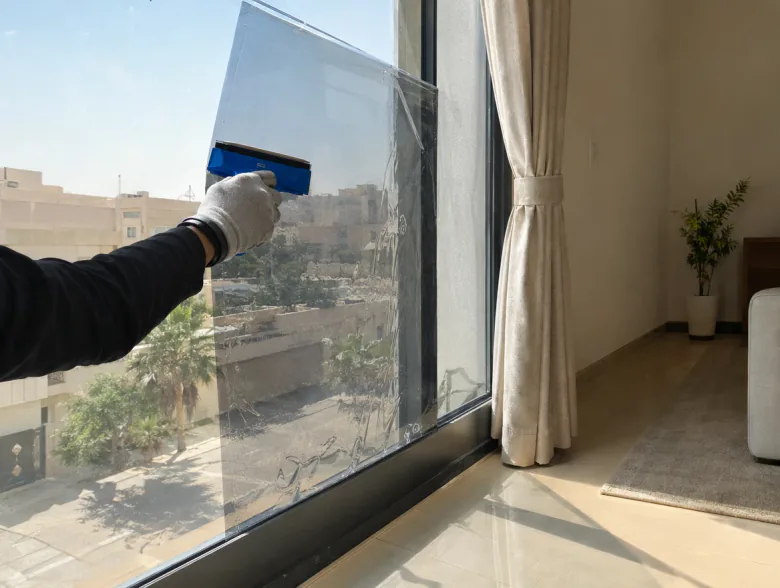
What window and glass thermal insulation includes
- Checking the direction of windows and glass doors and identifying which receives the most radiation
- Assessing the type of existing glass and how suitable it is for each kind of treatment
- Cleaning and preparing the glass surface before fixing the film or applying the coating
- Fixing a heat-insulating film to the glass or applying a heat-reflective coating
- Treating large glass doors in living rooms and sun-facing entrances
- Explaining what was treated and where, and what the homeowner can observe after treatment
From your call to the treated window
- 1
Tell us what you see
Call or message us on WhatsApp and describe the direction of the windows, their size and where you feel the extra heat in the house.
- 2
We assess the glass and the direction
We look at the type of glass, its orientation and how much radiation it receives, because west-facing windows differ from north-facing ones in what they need.
- 3
The treatment is applied to the glass
The film is fixed to the glass or the coating is applied to its surface. The job involves cleaning the surface thoroughly and preparing it before application, as any dust affects the result.
- 4
The room receives less heat
After treatment the glass reflects part of the heat radiation before it enters the room, easing the load on the air conditioning in sun-facing rooms.
Glass can be treated without demolition or replacement
- We treat the existing glass without replacing it
- Glass films reflect radiation and keep the daylight
- We check each window's direction before choosing the treatment
- Large glass doors receive the same treatment
- We take your request by phone call or WhatsApp message
Our portfolio















What our customers say
- ★★★★★
شركة ممتازة تستحق التعامل معها بشكل مستمر
- ★★★★★
شغلهم كويس وناس ممتازه في اسرع وقت
- ★★★★★
شركه ممتازه
Reviews are shown as the customers wrote them, in Arabic.
Questions about Window & glass insulation
A film is a thin layer fixed to the inside surface of the glass, reflecting part of the heat radiation while letting light through. A coating is sprayed or brushed onto the surface and forms a layer that reflects heat. Both work on existing glass without replacing it, and the choice between them depends on the glass type, the window's direction and what each case needs.
It depends on the type of film or coating used. Some are nearly transparent and do not change the room's appearance, while others give a partial tint that reduces glare along with heat. We agree with the homeowner on what suits them before application, and the view usually stays acceptable with a noticeable drop in entering heat.
Yes, large glass doors facing the sun are among the biggest heat sources in a home because their large area lets in more radiation. They are treated with film or coating exactly like windows, and surface preparation before application is just as important here as it is for smaller windows.
It depends on how much of the facade is glass and what the wall is made of. If the glass area is large, treating it makes a clear difference in the rooms it faces. But a wall passes heat differently, through its material rather than direct radiation, so each one addresses a different source. In many homes, treating both together is the better choice.
Tell us the direction of the windows or glass doors causing the problem, whether the issue is in one room or several, and whether the glass is single or double. The clearer you describe the position, direction and size, the better we can suggest the right treatment for your situation.
Window & glass insulation by area
