From your call to knowing the position
- 1
Tell us what you notice
Call or message us on WhatsApp and describe what you see: outside damp, weak pressure, a turning meter or a rising bill.
- 2
We check the network with instruments
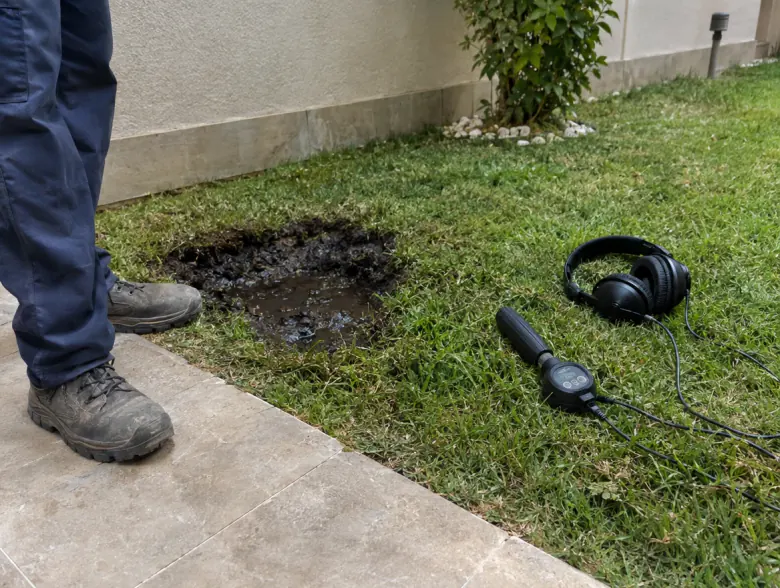
We trace the buried pipes and pass detection instruments over the suspected area without digging or breaking anything.
- 3
We pinpoint the leak
We tell natural soil moisture apart from the actual break in the pipe, because water often travels away from where it first leaves the pipe.
- 4
You receive a certified report
After inspection you receive a certified report with the leak's position and cause, and you decide the next repair step.
Know the source before you dig
- We find the leak in buried pipes without digging
- We tell soil moisture apart from an actual pipe break
- We check the network under yards, driveways and floors
- Certified report after inspection with position and cause
- We take your request by phone call or WhatsApp message
The service in Muraytibah
In a small settlement like Muraytibah, pipes run under yards and gaps, and finding a leak without advanced instruments would be frustrating. Al Raya's team first checks the meter, pressure and taps, then uses specialised instruments that detect moisture, sound and electromagnetic waves, tracing the main and branch pipes underground, pinpointing the leak precisely without unnecessary digging.
Muraytibah is a small settlement in Al-Ahsa governorate in the Eastern Province, close to Sudah, Al Ghuwaybah and At Taraf.
Leaks in buried pipes may not appear as one obvious damp patch, but as several small damp spots scattered across the yard.
Our portfolio















What our customers say
- ★★★★★
شغلهم ميه ميه يشكرو عليه
- ★★★★★
شركه ممتازه
- ★★★★★
شغلهم كويس وناس ممتازه في اسرع وقت
Reviews are shown as the customers wrote them, in Arabic.
Questions about Underground pipe & network leak detection in Muraytibah
A wall pipe usually shows its trace on a nearby surface as a damp stain or peeling paint. A buried pipe loses its water into the soil around it, so the trace appears on an outdoor surface or in the water bill rather than on walls. Instrument checks tell which one is the source.
When the meter moves with all outlets closed, water is leaving somewhere else, usually a buried pipe or a failed joint before the house. The longer it goes unchecked, the more water is wasted and the weaker the pressure inside the building.
Not necessarily. Water follows the path of least resistance through the soil and may surface far from where it leaves the pipe. That is why finding the break with instruments before digging matters: digging where the wet patch appears is often digging in the wrong place.
Weak pressure at all outlets usually points to a leak in the shared line before it branches to the rooms. But the cause can also be a supply issue or a temporary fault in the main network. Instrument checks are what tell these possibilities apart.
Yes. Detection instruments trace buried pipes and find the leak even when the homeowner does not know exactly where the pipes run. Knowing the route in advance speeds the check, but it is not a requirement.
A bill that rises clearly with no change in habits is a sign worth checking, especially when it comes with weaker pressure or outdoor damp. There may be other causes, but a buried leak is among the most common when these signs appear together.
Tell us what sign made you call: a wet patch in a particular spot, weak pressure, a meter turning with the taps closed or a rising bill. If you have a rough idea where the main pipes run in your property, mention that too, as it helps us decide where to start.
Yes, specialised instruments work efficiently even in damp and salty soil. The moisture and salinity in the ground do not impede leak detection and may actually make the leak easier to find.
Tell the meter reading and whether it runs when water is off, where the meter, tank and any outdoor taps are, where you notice damp patches or water appearing, and send a photo if you can.
More services in Muraytibah
Underground pipe & network leak detection in nearby areas
