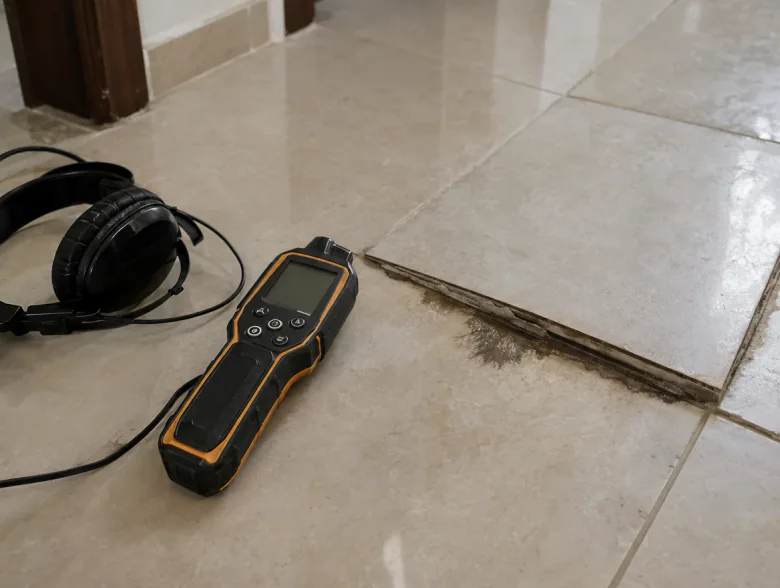
What under-tile leak detection includes
- Checking the floor with thermal instruments to detect temperature differences under the tiles
- Checking moisture with an electronic detector to identify water-saturated areas
- Tracing hidden pipes under the tiles to narrow down the leak zone
- Telling a water-pipe leak apart from a drain leak under the floor
- Pinpointing the exact leak location without lifting tiles or breaking the floor
- Giving you a certified report after inspection stating the location and cause of the leak
From your call to the exact spot
- 1
Tell us what you notice
Call or message us on WhatsApp and describe the floor: where you feel warmth or notice loose tiles, and whether your water bill has risen recently.
- 2
We check the floor with instruments
We pass thermal and electronic detection instruments over the floor to identify the area where the temperature or moisture reading differs from the surrounding surface.
- 3
We pinpoint the leak
We narrow down the suspect area until we reach the actual point where the water escapes, without lifting a single tile.
- 4
You receive a certified report
After inspection you receive the result in writing, with the location and cause of the leak, and you decide what to do next.
The spot is known before anything is opened
- We find the leak without breaking or lifting tiles
- We pinpoint the exact location, not just the area
- We check under-floor pipes with thermal and electronic instruments
- Certified report after inspection
- We take your request by phone call or WhatsApp message
The service in Az Zahrah District
Bathrooms and kitchens in homes in Az Zahrah District are often tiled, with cold water, hot water and drain pipes running underneath. If a pipe bursts or a joint leaks, water stays trapped under the tiles and causes strange warmth and damage to grout and base. Detection requires first looking carefully for any visible signs, then passing thermal and electromagnetic scanners over the surface to pinpoint the water location precisely.
Az Zahrah District is a district in Al-Ahsa governorate in the Eastern Province, close to Al Jamiyin District, Al Iskan 1st District and Al Hamra 1st District.
Water trapped under tiles rises in temperature before it shows on the surface, and this heat difference is what the thermal device detects.
Our portfolio















What our customers say
- ★★★★★
شكراً لخدمتك الجميلة
- ★★★★★
شركه ممتازه
- ★★★★★
شغلهم كويس وناس ممتازه في اسرع وقت
Reviews are shown as the customers wrote them, in Arabic.
Questions about Under-tile leak detection in Az Zahrah District
The main signs that the leak is under the tiles are warmth in part of the floor near hot-water pipes, tiles that move or sound hollow without being cracked, and a damp smell that comes from floor level rather than the ceiling. A rising bill alongside these signs strengthens the suspicion. Checking with instruments confirms the source or rules it out.
A rising bill signals a leak somewhere, but does not say where. If the visible pipes are sound and the tank is not losing water, the stronger possibility is a leak in the hidden network under the floor. Any other sign alongside it, such as warmth or a loose tile, makes that more likely.
That depends on where the leak is and how the pipe runs. Lifting before checking may open entirely the wrong area, because water sometimes travels some distance from its source before it appears. Checking with instruments first finds the exact point and reduces what needs to be lifted to the minimum.
Yes. When water accumulates under the tiles and builds up, it can work through the concrete slab and appear on the ceiling below as stains or drips. The stain then shows on the lower floor while the source is on the upper one, which is why instrument-based detection is needed to identify which floor holds the problem.
Tell us exactly where in the room or corridor you notice the sign, whether the floor is warm, has loose tiles or feels damp underfoot, and whether your bill has gone up recently. If there is a room below and its ceiling shows stains, mention that too. The clearer your description, the quicker we can focus the inspection.
No, the technician uses devices that do not touch the tiles: a thermal scanner that sees water through heat, and an electromagnetic tracer that follows the pipe, pinpointing the location precisely from above.
Say if the floor is warm in a certain spot, whether tiles or grout are cracked or loose, if you heard water dripping, whether the bill rose, and describe the problem location exactly.
Under-tile leak detection in nearby areas
