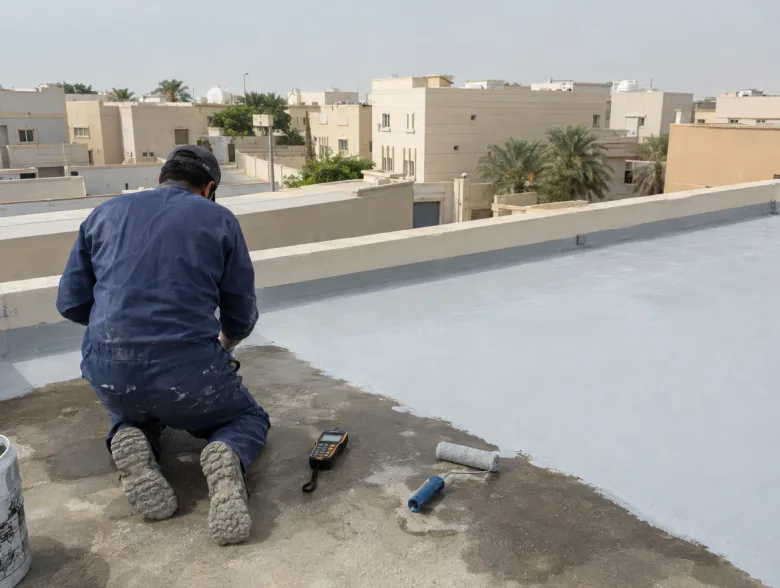
Leak detection with waterproofing in Al Jishshah
In Al Jishshah, a district with homes and villas with rooftop tanks and complex water networks, a damp patch on the ceiling may signal a serious leak creeping through the walls. Al Raya detects the leak with instruments then waterproofs the surface and pipes to stop water for good.
What leak detection with waterproofing includes
- Inspecting the suspect surface with detection instruments to locate the leak and its cause
- A certified report after inspection stating the leak's location and cause
- Preparing the surface by removing damaged material and treating cracks before the layer goes on
- Applying the appropriate waterproof layer, whether polyurethane foam, epoxy or bitumen rolls
- Sealing joints, edges and drains, as these are the most common water entry points
- Covering roof slabs, concrete surfaces, tank walls and bathroom floors
From your call to the sealed surface
- 1
Tell us what you see
Call or message us on WhatsApp and describe where the stain or damp is, and whether it changes with rain or with water use.
- 2
We inspect the surface with instruments
We pass detection instruments over the suspect surface, locate the leak and its cause without breaking anything, and give you a certified report after inspection.
- 3
We prepare the surface for sealing
A waterproof layer does not hold on a damp or cracked surface without preparation. The job involves removing damaged material, treating cracks and levelling before any layer is applied.
- 4
We apply the waterproof layer
Once the surface is ready, the appropriate waterproof layer is applied, whether polyurethane foam, epoxy or bitumen rolls, with careful sealing of joints, edges and drains.
Finding the leak first protects your investment
- We locate the leak before any work begins
- Certified report after inspection
- We prepare the surface before applying the layer
- We seal joints and edges, not the surface alone
- We take your request by phone call or WhatsApp message
The service in Al Jishshah
In a district like Al Jishshah, most homes have large tanks on flat roofs and water pipes running to bathrooms and kitchens through walls and floors. A leak from a tank or a pipe joint often causes damp patches far from the leak source. The team uses specialist instruments to find where water is actually hiding in walls, floors and roof, then waterproofs the damaged area with sealing materials suited to the leak type.
Al Jishshah is a district in Al-Ahsa governorate in the Eastern Province, close to Al Markaz, Al Jafr and As Sabat.
In the district where rooftop tanks are common, detection relies on tracing the path of water from the roof through walls and lower floors.
Our portfolio















What our customers say
- ★★★★★
شكرا على التواصل وصلو في اسرع وقت ممكن
- ★★★★★
شكراً لخدمتك الجميلة
- ★★★★★
شركه ممتازه
Reviews are shown as the customers wrote them, in Arabic.
Questions about Leak detection with waterproofing in Al Jishshah
No. Waterproofing suits a leak that comes from a surface that has lost its protective layer, such as a bathroom floor, a roof slab or a tank wall. A leak from a pipe inside a wall or floor needs the pipe repaired, not a waterproof layer. That is why detection comes first: it determines which treatment fits.
A waterproof layer does not bond well to a damp, cracked or crumbling surface. Applied directly, voids form underneath and allow water to pass along the layer or beneath it. Preparation means removing damaged material, treating cracks, drying the surface as far as possible and levelling it so the layer bonds and does its job.
Polyurethane foam is a sprayed foam layer that expands and closes fine gaps and cracks. Epoxy is a resin poured or brushed on and hardened to form a non-porous surface. Bitumen rolls are membrane sheets laid and bonded to the surface. Each has familiar uses in the trade, and the choice depends on the nature of the surface and the location of the leak.
Technically, the damaged area can be treated on its own. But if the old waterproof layer has lost its flexibility across the whole surface, treating only part leaves weak points nearby. Inspection determines how much of the surface needs treatment. The decision to extend or limit the work is built on what inspection shows, not on a prior estimate.
Tell us where the damp or stain appears, whether it is on a ceiling, a floor or a wall, and whether it grows after rain or after bathroom or kitchen use. If waterproofing was applied there before, mention that too. These details help us decide what to inspect first.
A tank leak shows on the ceiling directly below it and is usually visible in summer. A pipe leak may appear far away and can be constant year-round. Detection tells you clearly which one you have.
Not necessarily. Water may leak from the tank and travel sideways along the floor before it drips through and shows on the ceiling. That is why the full roof and floor are checked.
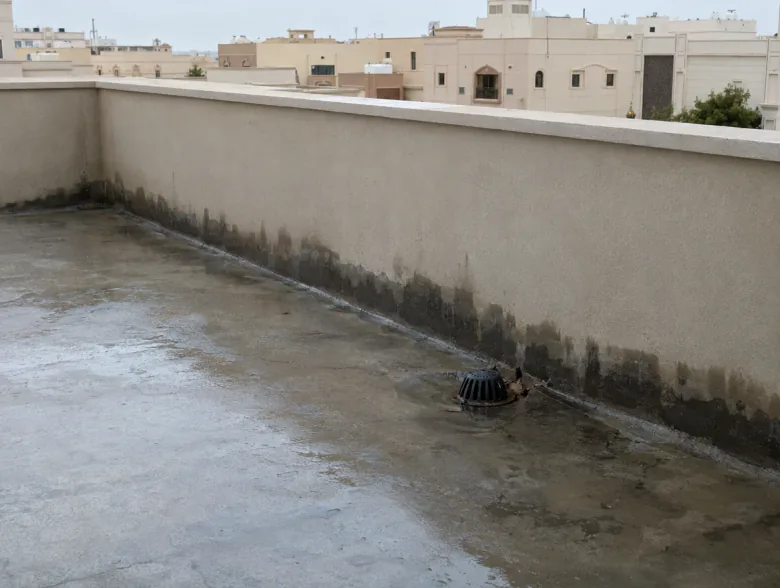
Leak detection with waterproofing in nearby areas
