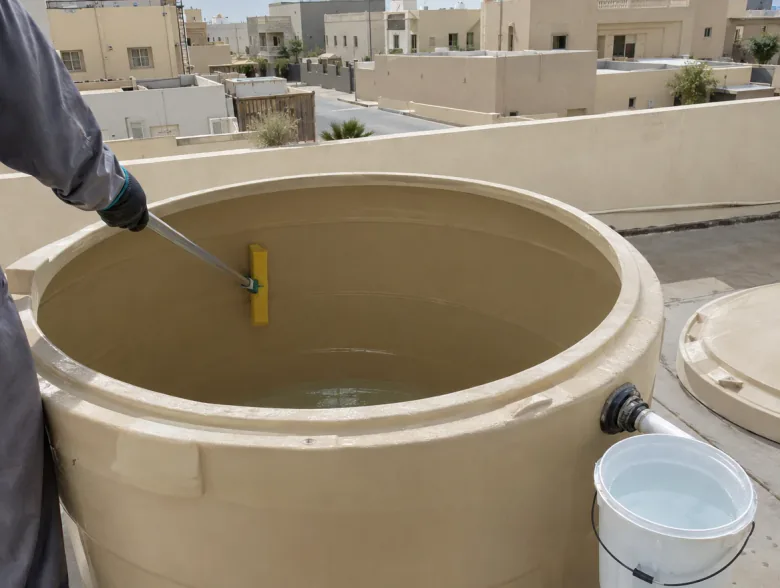
What fibreglass tank cleaning includes
- Emptying the tank and examining the fibreglass wall before cleaning begins
- Removing sediment and algae from the base and walls with tools suited to the surface
- Cleaning corners, joints and the spots where deposits collect most
- A full rinse of the tank wall after dirt and cleaning materials are removed
- Checking the resin layer and the fibreglass surface for hairline cracks or wear
- Telling the owner about any crack or deterioration found during the clean
From your message to a clean tank
- 1
Tell us what you notice
Call or message us on WhatsApp and tell us the tank size, its location, and what you see in the water or on the wall.
- 2
Emptying and inspecting
We empty the tank and examine the wall before we start, because the surface reveals more when it is empty and dry.
- 3
Cleaning with fibre-safe tools
We remove sediment, algae and grime with soft tools that do not scratch the resin, paying care to the corners and joints where deposits collect most.
- 4
Rinsing and surface check
We rinse the wall thoroughly, then check the resin layer for hairline cracks or worn areas that may need later treatment.
The tank is in hands that know its material
- Cleaning tools suited to the fibreglass surface
- We preserve the resin layer throughout the clean
- We check for hairline cracks and surface wear
- We give care to corners and joints
- We take your request by phone call or WhatsApp message
The service in Ibn Dihman
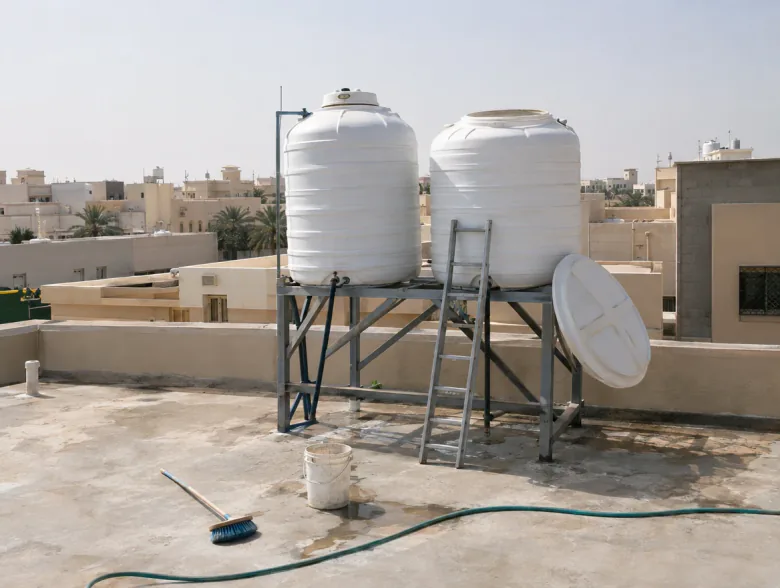
In a small settlement like Ibn Dihman, the fibreglass tank is the common choice for storing drinking and household water, and its contents build sediment and sludge over time. Fibreglass walls are thinner and weaker than concrete, and their surface has a resin coat that is very sensitive to scratching and cracking. Cleaning starts with a check of the tank inside, then clean water at the right pressure and only tools safe for fibreglass, with no hard scrubbing that harms the protective layer.
Ibn Dihman is a small settlement in Al-Ahsa governorate in the Eastern Province, close to Muraytibah, Sudah and Al Jishshah.
A fibreglass tank cannot take hard scrubbing, because its resin scratches and cracks far more easily than concrete walls.
Our portfolio















What our customers say
- ★★★★★
شركه ممتازه
- ★★★★★
شغلهم كويس وناس ممتازه في اسرع وقت
- ★★★★★
شركة ممتازة تستحق التعامل معها بشكل مستمر
Reviews are shown as the customers wrote them, in Arabic.
Questions about Fibreglass tank cleaning in Ibn Dihman
Because the fibreglass wall is covered with a thin resin layer that protects the fibres and stops water passing through them. Rough tools or abrasive materials scratch and weaken that layer, leaving the walls more prone to cracking and trapping dirt. That is why fibreglass needs softer tools and a different approach.
Common signs include a rough feel to the surface when you touch it, white or yellow patches on the inside wall, hairline marks that differ in colour from dirt, and sometimes a faint taste or smell in the water despite apparent cleanliness. Deteriorating resin needs assessment before any cleaning.
Cleaning removes visible sediment, algae and grime, but it does not treat bacteria or invisible contaminants that may remain. Sanitising is a separate step that follows cleaning and differs from it in purpose and method. It is recommended after every clean for tanks that store drinking water.
A crack found during cleaning needs assessment first: is it in the resin layer alone or does it reach the fibres? Repairing fibreglass is a separate job that uses different materials from cleaning. The clean reveals and records the crack; repair follows if needed.
Tell us where the tank is: ground level or overhead, its rough size if you know it, and what you notice in the water or on the inside wall. If you see cracks or a change in the surface colour, mention it, as that helps us prepare for what the job involves.
Yes, the tank collects water, sediment and sludge, especially if water sits in it for long periods. The check shows whether cleaning is needed now and reveals any damage in the tank walls.
A fibreglass tank has thinner walls and a sensitive protective coat, so it cannot take high pressure or hard scrubbing. Fibreglass cleaning uses special tools, lower pressure and pure water only, with no surface damage.
More services in Ibn Dihman
Fibreglass tank cleaning in nearby areas
