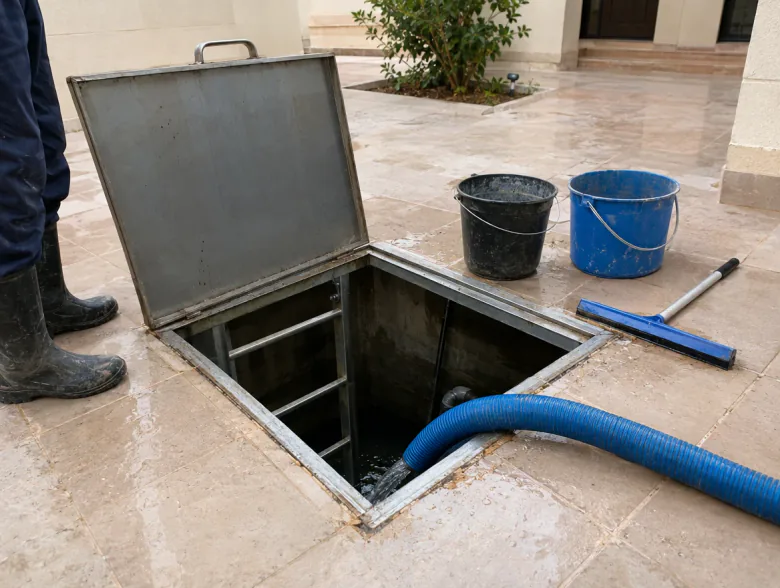
What ground tank cleaning includes
- Emptying the ground tank of its water before any work inside begins
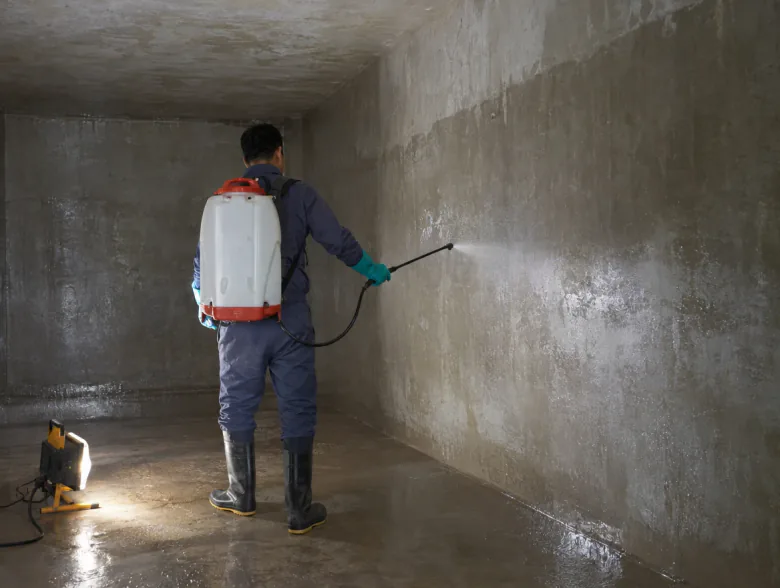
- Entering the tank through the access hatch with the care a confined space requires
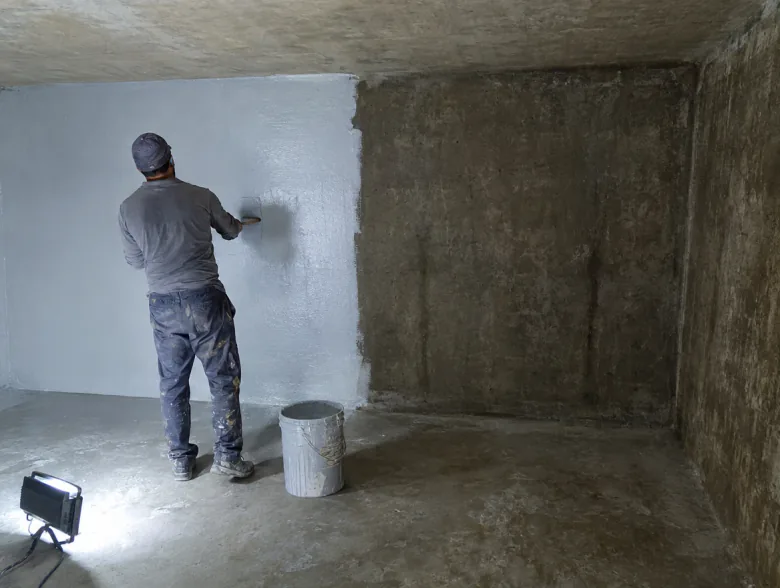
- Cleaning the tank floor and removing accumulated sediment and dirt by hand
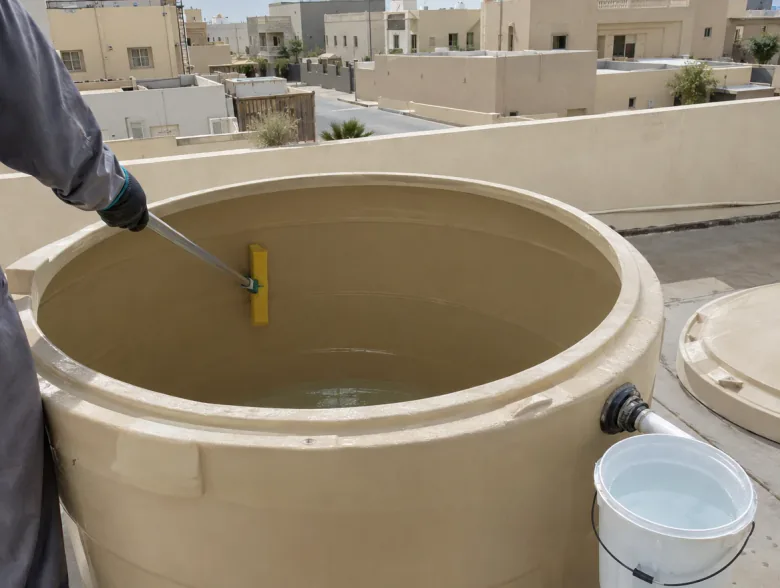
- Cleaning the interior walls and removing algae or organic matter where present
- Rinsing the entire tank until the water runs clear before the hatch is closed
- Noting the condition of the concrete walls and informing the owner of any cracks that need treatment
From your call to a clean tank
- 1
Tell us what you notice
Call or message us on WhatsApp and tell us the size of your ground tank and what you notice in the water or around the access hatch.
- 2
Emptying the tank
The tank is emptied of its water before work begins. This is necessary because the actual cleaning needs direct access to the walls and the floor.
- 3
Cleaning from the inside
The tank is entered through the hatch, with the care required when working inside a confined space. The walls and the floor are scrubbed and all accumulated sediment and dirt are removed.
- 4
Rinsing and checking
After cleaning the tank is rinsed thoroughly until the water runs clear, and the interior walls are checked before the tank is put back into use.
A ground tank needs particular care
- We enter the tank with the care a confined space requires
- We clean the entire floor and the concrete walls
- We remove sediment that a pump alone cannot reach
- We rinse the tank until the water runs clear before it is sealed
- We take your request by phone call or WhatsApp message
The service in Al Kilabiyah
In a town like Al Kilabiyah, the ground tank is usually buried underground, collecting and storing water for the home and garden. Water that sits in the tank leaves sediment and dirt at the bottom, and it may smell stale if it sits for long. Tank cleaning means emptying it fully, then washing the inside walls and floor to remove this sediment. The tank may be old, have rust inside, or have cracks, so the first inspection decides what is needed.
Al Kilabiyah is a town in Al-Ahsa governorate in the Eastern Province.
Sediment builds up quickly at the tank bottom in Al-Ahsa because the groundwater carries many minerals and salts.
Our portfolio















What our customers say
- ★★★★★
شركه ممتازه واشتغلنا معاهم اكثر من مره وجود عاليه ما شاء الله بارك الله فيهم واعمله
- ★★★★★
شكراً لخدمتك الجميلة
- ★★★★★
شركه ممتاز شغلهم كويس ويعطيهم العافيه
Reviews are shown as the customers wrote them, in Arabic.
Questions about Ground tank cleaning in Al Kilabiyah
A ground tank is usually larger, so the water inside it moves slowly and suspended particles settle at the bottom rather than being carried along. Sediment from the supply line can also enter when the pressure drops, and it stays at the bottom because nothing disturbs it.
No, because sediment sticks to the floor and the lower walls after the water drains out. Rinsing from above removes some of it but does not reach the corners or the parts far from the hatch. A full clean requires entering the tank and cleaning the floor and walls directly.
A ground tank is a confined space with limited ventilation. Gases from decomposing matter or from a nearby drain can collect inside, and the oxygen level can drop without anything being visible or smelled. For this reason no one enters it without checking that ventilation is adequate and the air inside is safe.
Yes. Concrete is a porous surface that can crack or have its inner lining wear away over time. During cleaning the condition of the walls is noted, and if cracks or deterioration appear it means the tank may need additional treatment after cleaning to line it or seal the cracks.
There is no single answer that fits every tank, because it depends on the quality of the incoming water, the size of the tank and how heavily it is used. When you notice sediment, a smell or a change in the water colour, that is a clear sign the clean cannot wait. To ask about your specific tank, message us on WhatsApp and describe what you see.
If you notice an odd smell in the water or grit and sediment when you turn on a tap after a few days, it is time to clean. The first inspection shows the tank's condition and what sediment has built up.
The tank is inspected first to check it is sound: whether there are cracks, leaks, rust or damage to the structure. If the tank is sound, cleaning from inside safely removes the sediment.
More services in Al Kilabiyah