The stages of a tank clean
- 1
Tell us your tank type
Call or WhatsApp us and tell us whether the tank is in the ground or on the roof, what it is made of, and what you have noticed in the water.
- 2
Emptying the tank fully
The clean starts by removing all the water so the floor, walls and corners can be reached, because sediment and silt cannot be properly removed without full emptying.
- 3
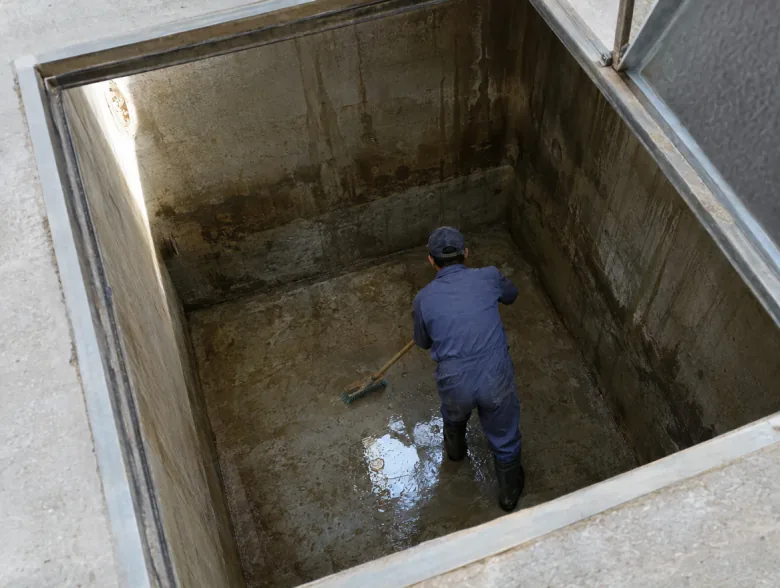
Scrubbing and removing the build-up
Algae, sediment and rust are scrubbed from the walls and floor of the tank, then removed completely from the inside before rinsing.
- 4
Rinsing until the water runs clear
The tank is rinsed with water until it runs clear with no cloudiness, and the tank is then ready to fill or to sanitise if needed.
What makes this work worth doing
- Sediment at the bottom does not clear with water changes alone
- Algae grows in any tank that gets light
- Cleaning algae from a tank needs actual scrubbing of the walls
- We take your request by phone call or WhatsApp message
- We work with ground tanks, overhead tanks and fibreglass tanks
The service in Muraytibah
In a small settlement like Muraytibah, the tank is usually on the roof or buried in the yard, and water is drawn from a borehole or local wells. Over time, sediment and algae build up inside the tank, especially with Al-Ahsa's salty waters. Signs of contamination are clear: an odd smell, a colour in the water, or particles floating in it. The technician inspects the tank inside and out, and the incoming and outgoing pipes, because a leak or crack in a joint may let contaminated water in during cleaning.
Muraytibah is a small settlement in Al-Ahsa governorate in the Eastern Province, close to Sudah, Al Ghuwaybah and At Taraf.
Standing water collects sediment and salts from groundwater, and this is the first thing checked when the tank is opened.
Our portfolio















What our customers say
- ★★★★★
شركه ممتاز شغلهم كويس ويعطيهم العافيه
- ★★★★★
شكراً لخدمتك الجميلة
- ★★★★★
شغلهم ميه ميه يشكرو عليه
Reviews are shown as the customers wrote them, in Arabic.
Questions about Water tank cleaning in Muraytibah
The clearest signs are an unusual smell from the tap, a yellow or cloudy colour, or small particles floating in a glass. If there is no obvious sign, periodic cleaning is still needed because sediment builds up even before it becomes visible.
Yes. A ground tank is usually larger, entered through a top hatch, and collects more sediment at the bottom. An overhead tank is exposed to sunlight so algae forms faster. A fibreglass tank has walls that scratch, which needs appropriate tools. Each type has its own way of working.
Cleaning removes the visible sediment and algae. Sanitising treats what may remain on the walls after cleaning. It is often a good idea to follow a clean with sanitising, especially if the smell was strong or the tank has not been cleaned for a long time.
No, emptying is part of the cleaning process itself. Just let us know the approximate size of the tank, its location, and whether it is a ground or overhead tank, and we will handle the rest when we arrive.
Cleaning is a condition for any repair because the wall must be clean and dry before treatment. If there is a leak or a lining failure, it is treated after cleaning is complete. We tell you what your tank needs when we inspect it.
The old water is fully removed from the tank before work begins, which is necessary to reach the floor and properly remove the sediment. After rinsing and the work is complete, the tank can be refilled with clean water.
Tell us the tank type, whether it is a ground or overhead tank, what it is made of as far as you know, what you notice in the water such as a smell, a colour or particles, and whether it has been cleaned before. These details help us suggest the right service for you.
Check the colour and smell of the water, and whether you see particles floating in it. An odd smell, cloudiness or sediment at the bottom are clear signs of build-up, and the tank needs cleaning.
Say whether the tank is on the roof or underground, its size if you know it, and what signs you have noticed in the water (smell, colour or particles), and whether there has been a leak or damage to the pipes before.
More services in Muraytibah