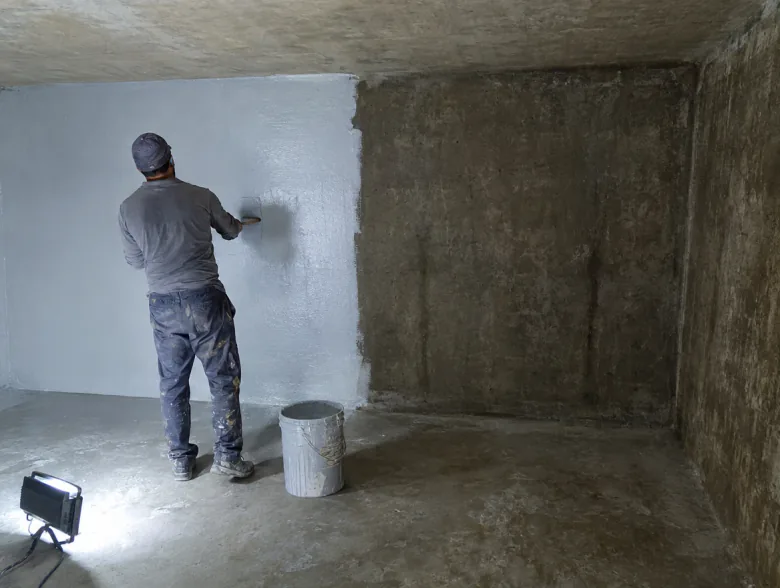
What tank cleaning and waterproofing includes
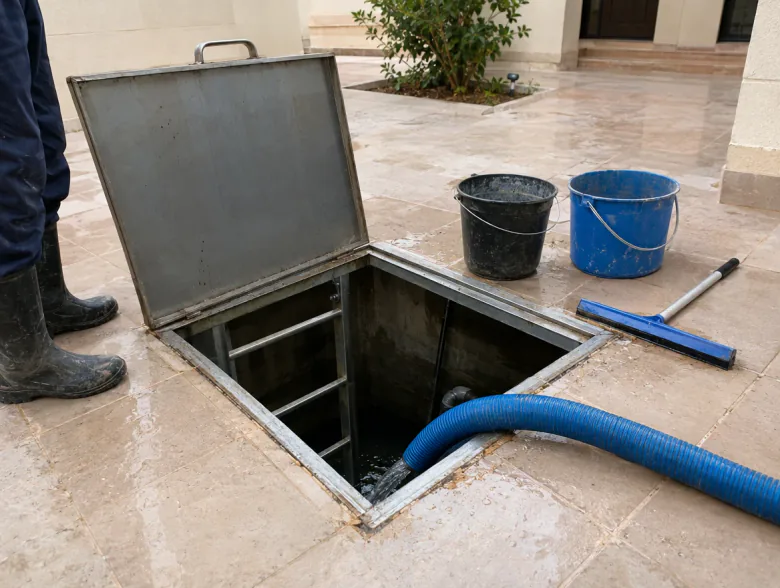
- Fully emptying the tank and removing sediment and residue from its walls and base
- Rinsing the inner walls until the surface is clean and ready for inspection
- Checking the tank walls, base and joints for cracks or damage to the inner lining
- Treating cracks and joints and preparing the surface before any waterproofing material is applied
- Applying the right waterproofing layer to the walls, base, edges and corners
- Giving special attention to the joints between walls and base, which are often the most vulnerable points
From your call to a sealed tank
- 1
Describe what you see
Call or message us on WhatsApp and tell us the tank type, where it sits and what you have noticed, whether a leak or damage to the inner surface.
- 2
Emptying and cleaning the tank
The tank is fully emptied, then the sediment and residue clinging to its walls and base are removed, and it is rinsed until the surfaces are clean and dry.
- 3
Repairing cracks and preparing the surface
Cracks and joints are treated before any coat is applied, because a waterproofing material does not bond to a cracked or wet surface. A good layer starts with a surface that is ready.
- 4
Applying the waterproofing layer
The right waterproofing material for the tank, such as epoxy or bitumen, is applied to the walls, the base and the corner joints, with careful attention to edges and seams.
Why combine cleaning and waterproofing in one job
- Waterproofing over a dirty surface separates quickly
- We treat cracks before any coat is applied
- We check all the tank walls while cleaning
- We use waterproofing materials suited to water tanks
- We take your request by phone call or WhatsApp message
The service in Ash Shuruq
Tanks in a district like Ash Shuruq are often on the roof or in upper floors, facing intense heat and seasonal changes. When the lining or joints fail, water seeps quietly towards walls and floors, causing deep damp that may appear on the opposite side of the wall. Thorough cleaning from inside removes sediment and debris that hide damage, and reveals weak points in the lining, joints and base. After cleaning, waterproofing is applied to form a strong barrier against new water.
Ash Shuruq is a district in Al-Ahsa governorate in the Eastern Province, close to Al Muruj, Al Yasmin and Ar Rabie.
Damp on walls next to the tank is often the first sign of internal leakage, and inspection pinpoints where failure is occurring.
Our portfolio















What our customers say
- ★★★★★
شركه ممتاز شغلهم كويس ويعطيهم العافيه
- ★★★★★
ممتاز والخدمة ان شاء الله تكون قد التوقعات
- ★★★★★
شغلهم ميه ميه يشكرو عليه
Reviews are shown as the customers wrote them, in Arabic.
Questions about Tank cleaning & waterproofing in Ash Shuruq
Cleaning is a necessary step before waterproofing. The material needs a clean, dry surface to bond to. Any sediment, algae or residue between the wall and the coat causes it to separate quickly. Waterproofing alone without prior cleaning does not solve the problem.
Epoxy is a resin that hardens after application and forms a rigid layer that resists water and wear; it is often used to line indoor water tanks. Bitumen is a flexible rubber-like material or comes as a rolled membrane fixed to the surface, and suits different conditions. The choice depends on the tank type and the state of its walls.
It is not advisable. A crack in a tank wall moves with heat expansion and contraction, and any coat applied over it without treatment will crack again at the same spot. Treating cracks and joints before applying the waterproofing is the step that keeps the layer in place over time.
Yes, full emptying is necessary for both steps. The walls and base cannot be cleaned properly with water still inside, and a waterproofing material cannot be applied to a wet surface. After the coating is applied, the surface needs enough time to dry before the tank is refilled.
Tell us the tank type, ground or overhead, and whether it is concrete or plastic, and what you have noticed: a leak from a wall or the base, a crack in the inner lining, or an odour in the water. The clearer the details, the better we can judge what the tank needs before we arrive.
Slow leaks usually happen when the lining cracks or joints deteriorate, or when the inner tank surface corrodes. Heat and seasonal movement speed this wear. Internal inspection pinpoints the cause exactly.
After the tank is cleaned and waterproofing is applied, new water stops leaking towards neighbouring walls. However, if damp is already present in the walls, it may need separate treatment beyond the tank.
More services in Ash Shuruq
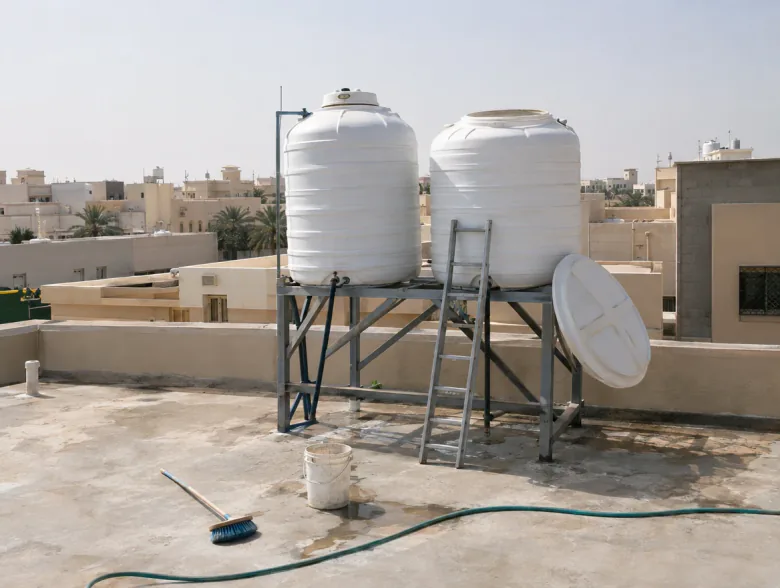
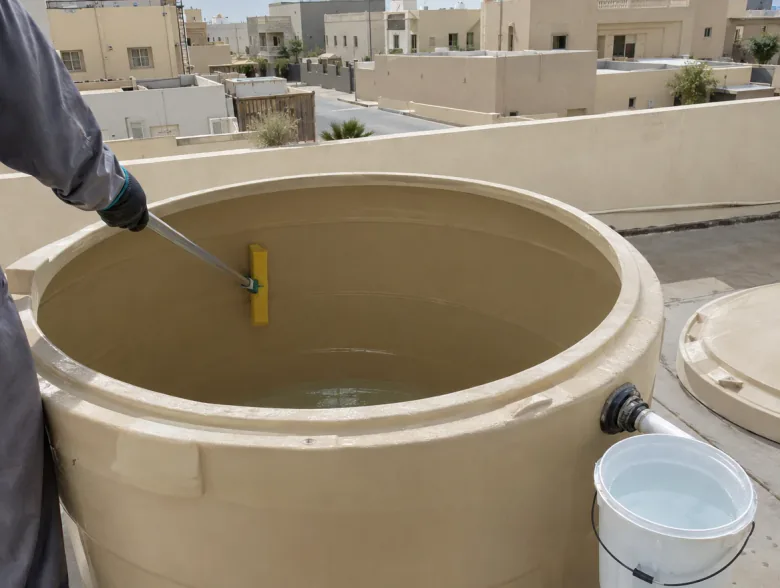
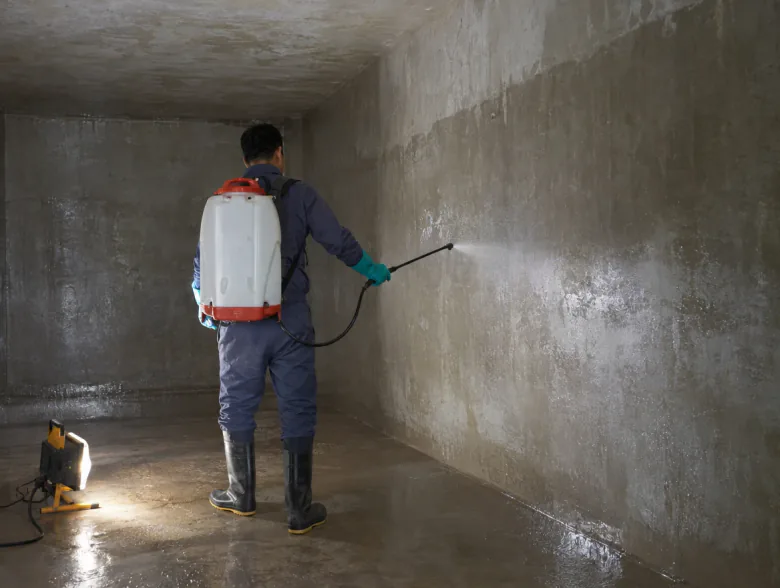
Tank cleaning & waterproofing in nearby areas
