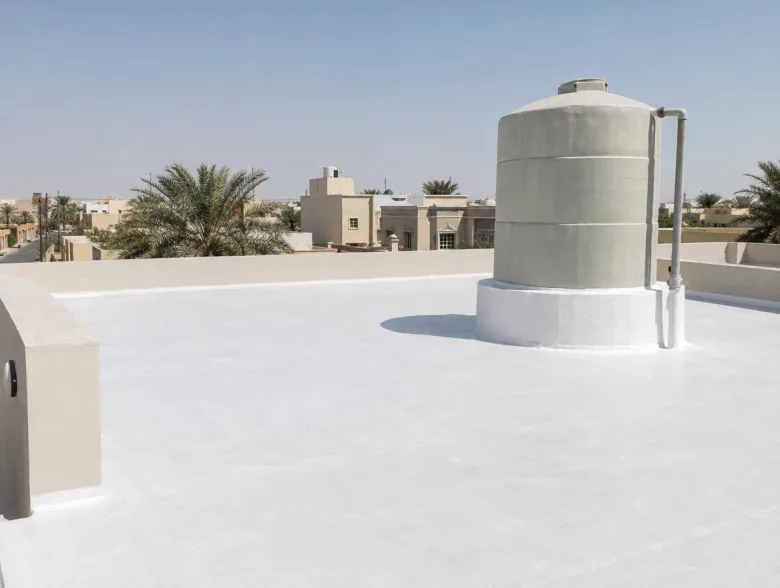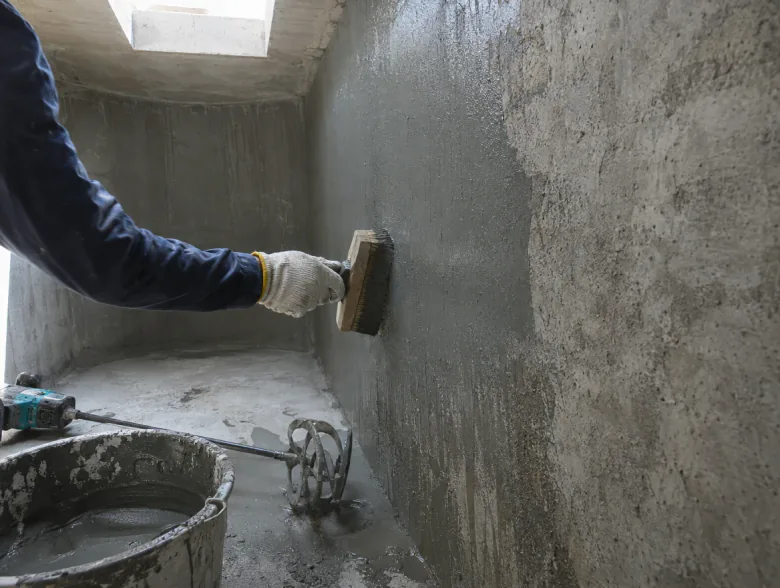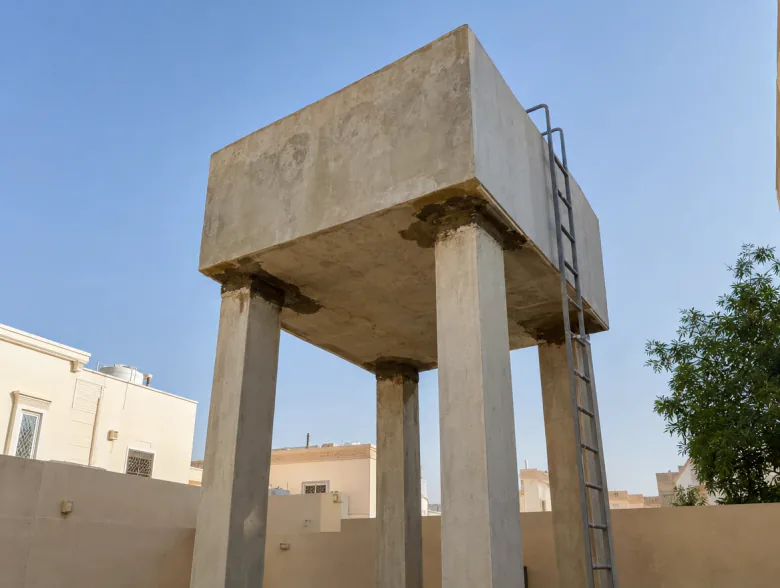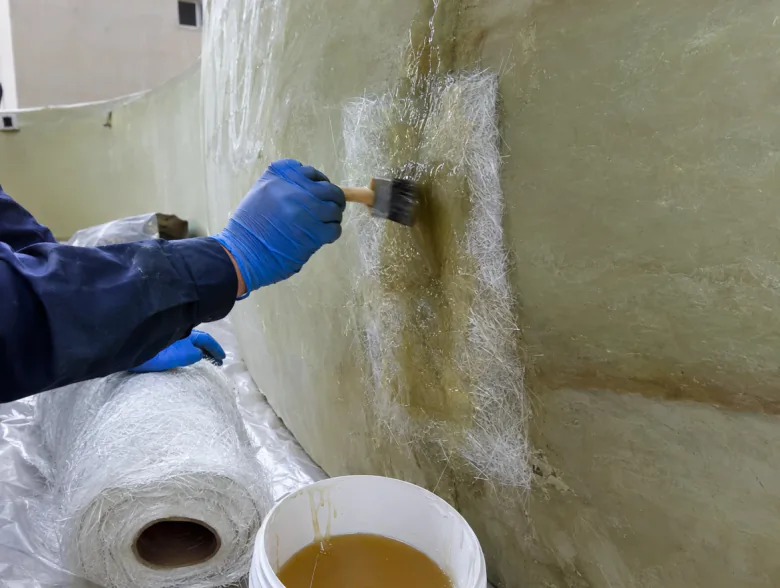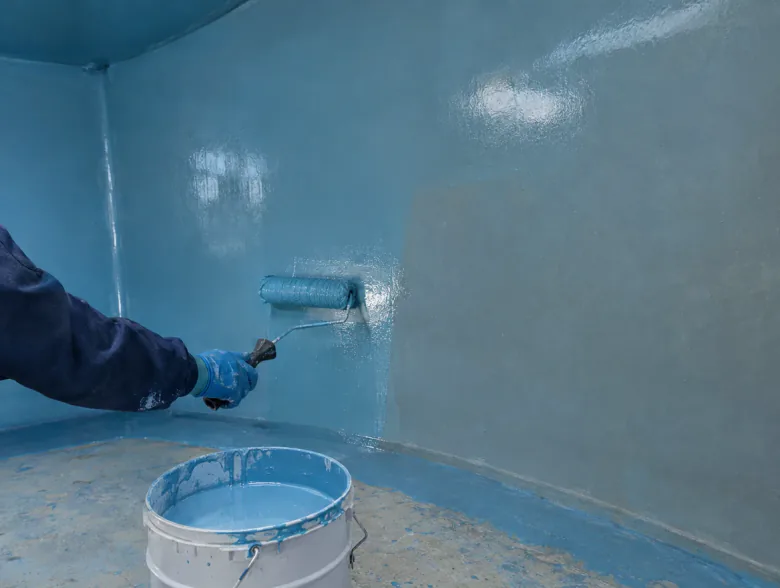
What epoxy tank lining includes
- Checking the inner walls and base to identify cracks and damaged areas before starting
- Emptying the tank and removing sediment and flaking old layers from the entire inner surface
- Treating cracks and joints in the walls and base before the epoxy coat is applied
- Verifying the surface is dry and even before coating so the layer bonds properly
- Applying epoxy to the inner walls and base so it hardens into a smooth, continuous film
- Reviewing the finished layer after hardening and confirming it covers the entire inner surface
From your message to a finished lining
- 1
Describe your tank
Call or message us on WhatsApp and tell us the type of tank, where it sits, and what you notice inside or around it, whether damp marks or cracks.
- 2
Emptying and cleaning
The tank is fully emptied and any sediment or flaking old layers are removed from the walls, because epoxy will not bond to a dirty or loose surface.
- 3
Repairing cracks and preparing the surface
Cracks and joints are repaired before coating, and the surface is checked to be dry and even, because the epoxy layer is only as good as the surface beneath it.
- 4
Applying the epoxy
The epoxy is applied to the inner walls and the base and hardens into a smooth, continuous film that seals the pores and separates the surface from the water.
The tank will be sealed from inside
- Epoxy seals the concrete pores and smooths the surface
- A smooth surface stops sediment sticking to the walls
- We treat cracks before coating, not over them
- Suitable for ground tanks and overhead tanks alike
- We take your request by phone call or WhatsApp message
The service in Ash Shuruq
Water tanks in homes in a district like Ash Shuruq face unique challenges: cracks from salty soil movement, and rising damp from soil if the tank is buried or low. Technicians first inspect the walls, base, corners and joints, looking for leak marks or salt stains. Then the inside surface is fully cleaned of dirt, deposits and mould, then epoxy is sprayed to seal the pores. The new film protects against leaks, salts and bacteria.
Ash Shuruq is a district in Al-Ahsa governorate in the Eastern Province, close to Al Muruj, Al Yasmin and Ar Rabie.
The lower areas of the tank and its base are the first places where damage from damp and salts appears.
Our portfolio















What our customers say
- ★★★★★
شكرا على التواصل السريع
- ★★★★★
شكراً لخدمتك الجميلة
- ★★★★★
شغلهم نظيف وسريعين ومحترمين الله يعطيهم العافيه
Reviews are shown as the customers wrote them, in Arabic.
Questions about Epoxy tank lining in Ash Shuruq
Yes, the base is part of the inner surface and it cannot be left untreated while the walls are coated. Water sits on the base and presses into its pores, and a continuous lining stops a leak wherever it tries to get through.
Ordinary paint is a surface coat that peels with constant water contact and does not seal the concrete pores. Epoxy is a resin that reacts, hardens and bonds to the surface, forming a solid film that actually separates the concrete from the water and does not break down easily.
Epoxy bonds to a range of surfaces and is used in concrete, metal and other tanks when the surface is prepared, clean and dry. What changes is how the surface is prepared according to the material, not the principle of applying the coat.
Epoxy bonds to a solid surface, not to water sitting in the concrete pores. If the surface is damp, a gap forms between the coat and the wall that weakens adhesion and leaves the lining prone to blistering and peeling later. Dryness is a requirement, not a precaution.
Yes, the size of the tank does not change how the work is done. Small roof tanks go through daily temperature swings that stress the walls and open fine pores and cracks. An epoxy lining on the inner walls seals those pores and protects the surface whatever the size of the tank.
Epoxy seals the surface and stops water seeping through cracks and pores. But the first inspection determines whether there are other structural problems needing treatment before epoxy.
Tell them roughly how old the tank is, whether you feel damp around or under it, if the water looks cloudy or smells strange, and whether there have been leaks before.
More services in Ash Shuruq