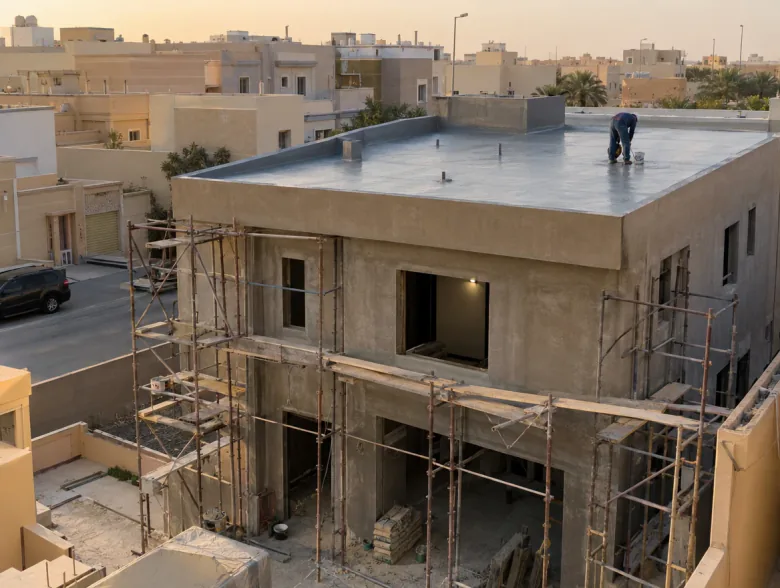
What full-building waterproofing includes
- Assessing every surface that needs waterproofing before finishing work begins and identifying potential water entry points
- Treating joints and edges at the roof parapet and drainage outlets before the main layer is applied
- Waterproofing bathroom and kitchen floors under the tiles with a material that handles pooled moisture
- Waterproofing tanks from the inside with a material that resists constant contact with water
- Treating the ground floor where moisture rises from the soil beneath, where relevant
- Checking that all surfaces, joints and edges are fully covered before tiling or painting begins
From your call to completed waterproofing
- 1
Describe the building
Call or message us on WhatsApp and tell us the current stage of the build and which areas you want waterproofed: the roof, tanks, bathrooms and so on.
- 2
We identify the weak points
Every area has potential water entry points: the joints at the walls, drainage outlets, tank edges, the roof parapet. Identifying them is the foundation of the job.
- 3
We treat each area with its material
The roof needs a material that handles heat and movement, a tank needs one that resists constant contact with water, and bathrooms need waterproofing that works under the tiles. Each area has its own requirements.
- 4
We check before the finishes go on
Before tiling or painting begins, the layers are checked to confirm that the surfaces, joints and edges are fully covered.
A new building deserves a sound start
- We waterproof the roof, tanks and bathrooms in one scope
- Joints, edges and drains are treated before the finishes go on
- We choose the right material for each area of the building
- A prepared surface is the foundation of a sound waterproofing layer
- We take your request by phone call or WhatsApp message
The service in Ash Shi’bah
In a district like Ash Shi'bah, where residential and family units are built with flat roofs and tanks, full waterproofing covers the roof, tank and high-moisture areas. The ground is often damp from salts and nearby groundwater, so foundations and floors need sealing before concrete and tiles. The building is surveyed first for cracks, joints and weak spots, then bitumen, epoxy and foam layers are applied by location. The goal is a water barrier before finishes and furnishings enter.
Ash Shi'bah is a district in Al-Ahsa governorate in the Eastern Province, close to Al Qurayn, Julayjilah and Ash Shuqayq.
Cracks in new concrete and joints between different sections let water in if not treated before finishing.
Our portfolio















What our customers say
- ★★★★★
شغلهم نظيف وسريعين ومحترمين الله يعطيهم العافيه
- ★★★★★
شغلهم كويس وناس ممتازه في اسرع وقت
- ★★★★★
شكرا على التواصل السريع
Reviews are shown as the customers wrote them, in Arabic.
Questions about Full-building waterproofing package in Ash Shi’bah
Waterproofing begins before any finishing work: before tiling in bathrooms, before wall paint and before the slab is poured over tanks. At this stage the surfaces are exposed and the joints and edges can be treated easily. Those are usually the points where water enters years later.
When areas are waterproofed at different times, transition points between them can be left untreated, such as the shared wall between a bathroom and the next room, or the joint between the roof and a tank. Doing everything in one scope allows those crossing points to be covered before they are buried by the finishes.
Yes. The ground floor deals with moisture rising from the soil, and the material needs to resist pressure from behind. The roof handles rain, heat and movement. Bathrooms deal with water pooling on the floor. Each area has its own conditions, and identifying them early makes the work during construction more precise.
Because these are where two materials or surfaces meet, and they are the first to move when the building expands with heat or settles. A continuous layer on an open surface means little if the edge at the parapet or the tank joint is left untreated. So these points receive attention before anything else.
Tell us the current stage of construction, whether any finishing work has already started in any part of the building, and which areas you want waterproofed: the roof, tanks, bathrooms, the ground floor or all of them. These details help us assess the scope of the work and tell you what suits your situation. Reach us by call or WhatsApp.
It starts from foundations and floors, then the roof and tank, before tiles and paints go in. The sequence depends on building stages and the first survey.
Yes, cracks and joints are treated before waterproofing layers are applied, because water and damp enter there first. The survey determines crack size and whether repairs are needed before sealing.
Full-building waterproofing package in nearby areas
