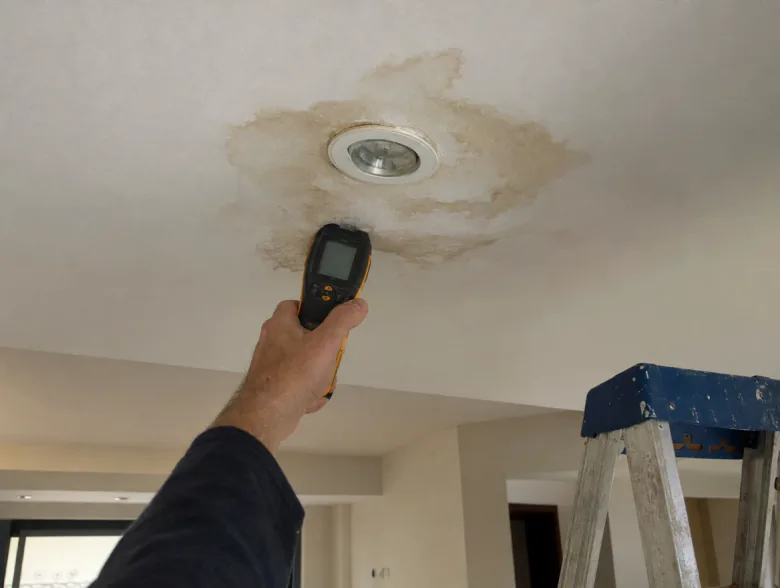
What bathroom ceiling leak detection includes
- Checking the bathroom ceiling with a thermal camera to detect damp areas and temperature differences in the slab
- Checking the slab above with electronic detectors to trace the water's path and locate it
- Checking supply pipes near the stain area, inside or beside the slab
- Checking drain lines running through the slab to tell a supply leak from a drain leak
- Establishing whether the source is in the floor above, in the roof or in a pipe inside the slab
- Recording the inspection result in a certified report that identifies where the water is in the slab and why it reached the bathroom ceiling
From your call to finding the source
- 1
Tell us what you see
Call or WhatsApp us and describe where the stain is on the ceiling, whether water drips or stays as a dry patch, and whether it grows after the bathroom above is used.
- 2
We check the ceiling and slab with instruments
We pass the thermal camera and electronic detectors over the bathroom ceiling and the slab above to see where water gathers and which direction it travels.
- 3
We identify the source: floor, pipe or drain
We tell apart a floor waterproofing leak, a supply pipe leak, a drain line leak and a leak coming from the roof, because each needs a different repair.
- 4
You receive a certified report after inspection
We give you the result in writing: where the water is in the slab or the floor above, and what caused the leak, so whoever carries out the repair knows exactly where to begin.
The source can be found without demolition
- We find the leak without breaking tiles or the floor
- We check the bathroom ceiling and the slab above with a thermal camera and detectors
- We tell apart a floor leak, a pipe leak and a drain leak
- Certified report after inspection with the leak's location and cause
- We take your request by phone call or WhatsApp message
The service in Al Wurud 3rd District
Bathrooms in homes in a district like Al Wurud 3rd have water and drainage pipes that rise from below or drop from upper tanks, often passing through the ceiling without insulation. In areas with salty water and high humidity like Al-Ahsa, joints and old pipes corrode. The first inspection uses moisture and sound sensors from inside the bathroom to pinpoint the leak exactly, so there is no need to break tiles or remove plaster.
Al Wurud 3rd District is a district in Al-Ahsa governorate in the Eastern Province, close to As Suqur District, Al Hada District and Al Matar District.
Corroded metal joints and cracks in concrete around pipes are the most common causes of leaks in bathroom ceilings in Al-Ahsa.
Our portfolio















What our customers say
- ★★★★★
شكرا على التواصل السريع
- ★★★★★
ممتاز والخدمة ان شاء الله تكون قد التوقعات
- ★★★★★
شكراً لخدمتك الجميلة
Reviews are shown as the customers wrote them, in Arabic.
Questions about Bathroom ceiling leak detection in Al Wurud 3rd District
If the stain grows after the bathroom above is used, the source is likely there. If it appears or gets worse after rain without any use, the source tends to be the roof. In either case, instrument inspection pinpoints the exact source, because both can be present at once.
Water travels along the slab in the direction of its slope and can cover some distance before it finds a gap or weak point to drop through. The stain on the ceiling is therefore often beside the source rather than directly below it, and that is what instruments reveal by tracing the water's path across the slab.
Yes, in most cases. The thermal camera shows the temperature difference between the wet area and what surrounds it, and the electronic detectors measure moisture in the slab. That is usually enough to locate the leaking pipe before anything is opened.
Yes. Continuous moisture inside the slab speeds up the oxidation of the reinforcing steel, which expands and cracks the concrete from within. The damage may not be visible at first, but it builds up. Early detection reduces what needs treatment later.
Tell us where the stain is on the ceiling and roughly how large it is, whether water drips or leaves only a dry mark, and whether it gets worse after the bathroom above is used or after rain. These details help us decide where to start the inspection.
No, correct detection is done from inside the bathroom with specialized instruments that measure moisture and sound, pinpointing the exact leak without breaking or drilling.
It usually means a pipe or joint above is leaking, or a tank on the roof has a crack letting water seep down through the concrete. The first inspection determines exactly which scenario applies.
Bathroom ceiling leak detection in nearby areas
