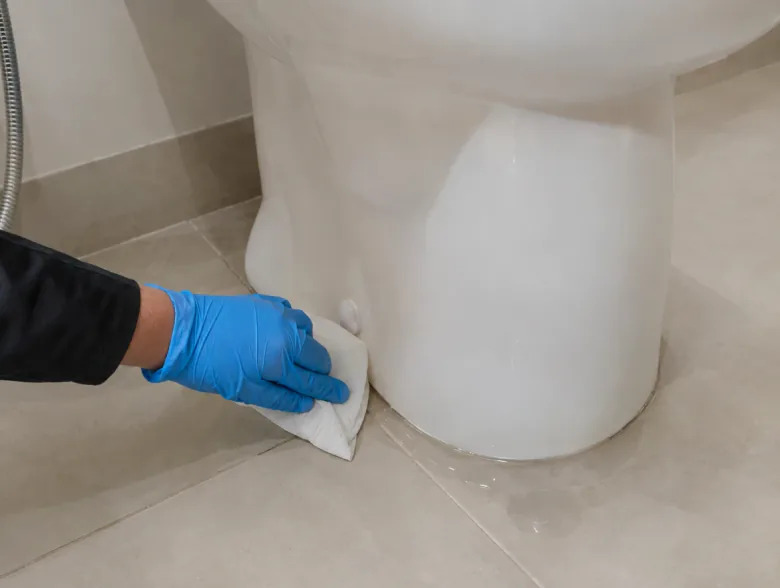
What toilet base leak detection includes
- Checking the toilet base and the seal between the toilet and the drain opening with instruments
- Checking the supply hose and the water inlet connection to the cistern
- Checking the cistern-to-pan connection and the gaskets between them
- Checking the floor around the toilet for leaks under the tiles
- Telling a leak apart from condensation on the cistern body and the supply hose
- Writing down the leak's location and cause in a certified report after inspection
From your call to finding the source
- 1
Tell us what you see
Call or message us on WhatsApp and describe where the water is around the toilet, when it appears and whether you notice a smell or movement in the tiles.
- 2
We check with instruments
We pass detection instruments over the toilet base, the supply hose, the cistern connection and the surrounding floor, without lifting the toilet or breaking anything.
- 3
We tell the sources apart
We separate a base seal leak from a supply hose leak and from condensation on the cistern body, because each needs a different repair.
- 4
You receive a certified report
After inspection you get the result in writing with the leak's location and cause, so you know what needs fixing before you call a plumber.
Relax, the source can be identified
- We check the base, connections and drain with instruments
- We tell a leak from condensation before any decision is made
- We detect the leak without lifting the toilet or breaking tiles
- Certified report after inspection with location and cause
- We take your request by phone call or WhatsApp message
The service in Al Wurud 3rd District
In a home in a district like Al Wurud 3rd, water pipes to the toilet and its fittings and the drain run under the floor or in walls, and small cracks or weak joints cause slow leaks. Damp appears around the base or under nearby tiles or on the ceiling if the bathroom is on an upper floor. The first check pinpoints the water source: inlet pipe, drain line or a leak at the joint itself. The visible pipes, fittings, tiles and sealant around the base are checked for damage before any work begins.
Al Wurud 3rd District is a district in Al-Ahsa governorate in the Eastern Province, close to As Suqur District, Al Hada District and Al Matar District.
Damp around the base usually means a leak from the inlet pipe or the bathroom drain, not from the base itself.
Our portfolio















What our customers say
- ★★★★★
شركه ممتازه واشتغلنا معاهم اكثر من مره وجود عاليه ما شاء الله بارك الله فيهم واعمله
- ★★★★★
شغلهم ميه ميه يشكرو عليه
- ★★★★★
شغلهم كويس وناس ممتازه في اسرع وقت
Reviews are shown as the customers wrote them, in Arabic.
Questions about Toilet base leak detection in Al Wurud 3rd District
Condensation forms on the outside of the cistern when the water inside it is cold and the surrounding air is warm and humid, and it usually disappears in dry weather. A leak comes back in the same spot after wiping, in all weather conditions, and does not change with outdoor humidity. Watching the spot after wiping and noting when it appears helps tell them apart, and instruments settle the question.
This is a common sign of a worn rubber base seal between the toilet and the drain opening in the floor. When the toilet flushes, the pressure in the drain rises and water escapes where the seal has weakened. A crack in the pan body that opens under pressure can also cause this. Checking with instruments tells the two apart before the toilet is lifted.
Yes, a hairline crack in the lower part of the pan may be hard to see but it seeps water with every use. The water moves under the toilet base, then under the tiles, and can reach the ceiling of the floor below. Early detection with instruments locates the crack without breaking the surrounding tiles.
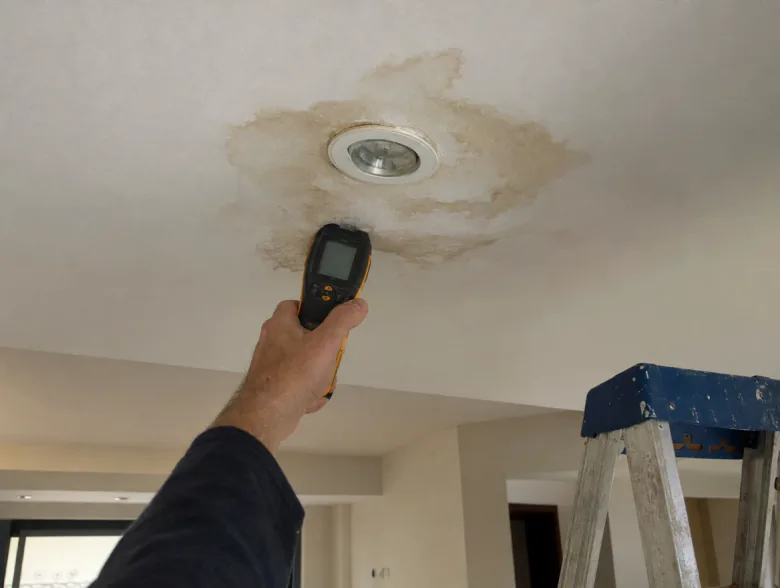
Yes, once water gets under the bathroom tiles it eventually reaches the concrete slab and then the ceiling of the room below. Damp stains or peeling paint on that ceiling often appear before the homeowner suspects the toilet at all. Instrument detection traces the water path back to its actual source.
Tell us exactly where the water appears, whether around the base, near the hose or under the cistern, and when it appears. Also tell us if you have noticed a smell, movement in the nearby tiles or a stain on the ceiling below the bathroom. The more detail you give, the easier it is to decide what to check first.
If the damp is directly around the toilet base or under the floor in front of it, and appears even when other bathroom drains are closed, the source is likely the toilet. Instrument testing confirms it precisely.
Say where the damp first appeared, around the base, under the tiles or on the ceiling below, whether the bathroom is on the ground floor or above, and send a photo of the damp area on WhatsApp if you can.
Toilet base leak detection in nearby areas
