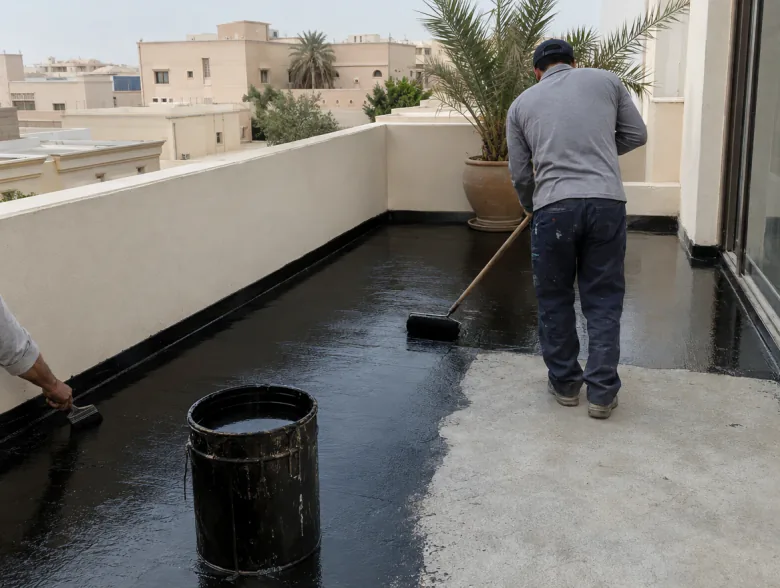
What cold bitumen waterproofing includes
- Checking the surface to be waterproofed and identifying the cracks and joints that need preparation
- Treating open cracks and joints before any coat is applied
- Cleaning the surface and removing dust and residue so the material bonds properly
- Applying cold bitumen by brush or roller in a continuous unbroken coat
- Special attention to edges, corners and the perimeter of drains as the most common points of seepage
- Covering small roofs, bathrooms and areas where a flame would be a risk
From your call to the waterproofing
- 1
Describe what you see
Call or message us on WhatsApp and tell us where the damp is or which surface you want waterproofed and roughly what size it is.
- 2
Preparing the surface
A good coat starts with a clean, dry surface free of open cracks; cracks are treated and residue removed before any application.
- 3
Applying the cold bitumen
The material is brushed or rolled onto the floor, the wall, the joints and the edges in a continuous unbroken coat, with no flame used at any stage.
- 4
Joints and edges first
The joints between the wall and the floor and the edges around the drains are the most exposed points, so they receive special attention during application.
Why cold bitumen suits your situation
- No flame and no heat at any stage of application
- Suits bathrooms, confined spaces and small surfaces
- Reaches the joints and edges that rolls cannot cover
- We check and prepare the surface before coating
- We take your request by phone call or WhatsApp message
The service in Government Departments Complex 2nd District
Roofs, open areas and exposed zones in a district like Government Departments Complex often need waterproofing without disrupting activities. Cold bitumen is safe and practical because it needs no flame or high heat, so it suits occupied and sensitive areas. The surface is first inspected for cracks, damp and the base material, then cleaned and cracks repaired, and coats are applied as shown by the first inspection.
Government Departments Complex 2nd District is a district in Al-Ahsa governorate in the Eastern Province, close to Al Hamra 1st District, Al Aziziyah 1st District and Al Hamra 2nd District.
Water seeps through fine pores and small cracks that may not be visible, so thorough inspection is essential.
Our portfolio















What our customers say
- ★★★★★
شركة ممتازة تستحق التعامل معها بشكل مستمر
- ★★★★★
شكرا على التواصل السريع
- ★★★★★
شركه ممتاز شغلهم كويس ويعطيهم العافيه
Reviews are shown as the customers wrote them, in Arabic.
Questions about Cold bitumen waterproofing in Government Departments Complex 2nd District
Bitumen rolls are heat-welded with a direct flame and are mostly used on large open roofs. Cold bitumen is a liquid material brushed or rolled on with no flame, which makes it the better choice in confined spaces, bathrooms and surfaces where a flame is a risk or simply not practical.
Cold bitumen bonds well to concrete, brick, tiles and some metal surfaces once they are prepared. It does not suit very smooth or moving surfaces such as timber that expands and contracts widely, as it may not keep continuous contact with the surface in those cases.
Yes, and it is one of its common uses. The material is applied to the floor and the lower part of the wall with special care at the joints and corners, and left to dry before tiling. The surface must be clean and free of open cracks before work begins.
Yes, and that is its main advantage. In enclosed spaces, near flammable materials or where electrical runs are exposed, cold bitumen is the safer choice because it needs no heat source or flame at any stage of its application.
Tell us the type of surface you want waterproofed, whether it is a bathroom floor, a small roof or a wall, and whether there is visible damp now or you are waterproofing before construction. Describe the approximate area and any cracks or joints you think are the source of the problem. The clearer your description, the easier our assessment.
Yes, especially if you want to avoid heat, smoke and disruptive activity. Cold bitumen applies easily and protects from water leaks, and inspection determines how many coats are needed.
Say whether the roof is damp or leaks, and whether stains are visible on the ceiling below, and mention the roof type if possible, and send a photo on WhatsApp.
More services in Government Departments Complex 2nd District
Cold bitumen waterproofing in nearby areas
