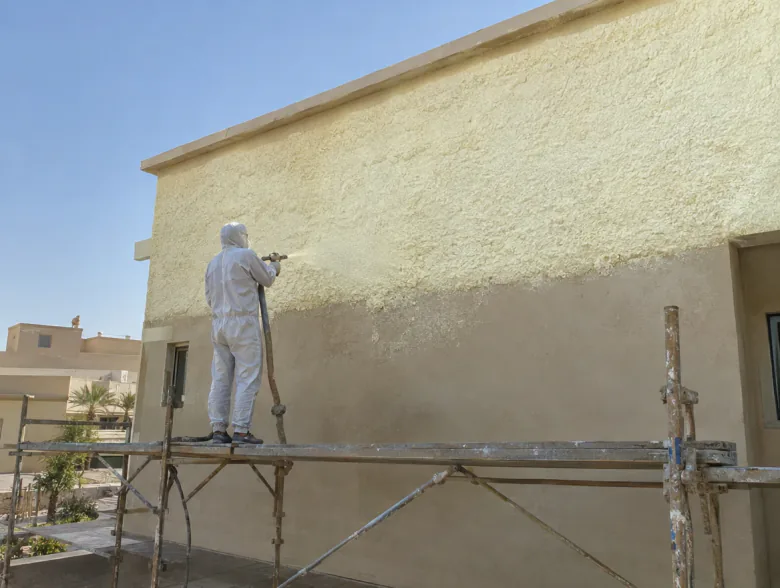
What wall foam insulation includes
- Checking the wall's condition and identifying cracks and damp before spraying begins
- Treating visible cracks, cleaning the surface and preparing it to receive the foam properly
- Spraying polyurethane foam onto the wall so it expands into a seamless layer with no joints
- Covering neighbouring areas that should not receive foam during spraying
- Applying an external finish coat over the foam to protect it from ultraviolet light
- Answering your questions about wall foam insulation before the work starts
From your call to an insulated wall
- 1
Tell us what you see
Call or message us on WhatsApp; describe which walls feel hot from inside and whether there is any cracking or damp.
- 2
Preparing the wall surface
Before spraying, surfaces are cleaned, cracks are treated and areas not being sprayed are covered. Foam cannot substitute for a sound surface, and the layer will not hold on a failing wall.
- 3
Spraying the foam onto the wall
Polyurethane foam is sprayed onto the wall; it expands in the air and covers the surface in a seamless layer with no joints, blocking heat from travelling through the wall.
- 4
The finish coat over the foam
Foam is naturally vulnerable to ultraviolet light and needs protection. A finish coat such as render or external cladding is applied over it to protect the material and preserve the wall's appearance.
Wall insulation done with care
- We prepare the wall before spraying, not after
- The foam covers the wall in a seamless layer with no joints
- Visible cracks are treated before the insulation goes on
- A finish coat is applied to protect the foam from the sun
- We take your request by phone call or WhatsApp message
The service in Al-Hofuf
Homes in a city like Al-Hofuf usually face walls directly to the sun, and in the long summer the walls heat up and release that warmth into the rooms inside. If the walls are older, small cracks or damp patches may be there from rare rainfall or salt in the ground. Work starts by checking the wall and the ground around it, and cleaning the spray area, then foam is sprayed as one continuous layer. Damp and cracks are treated before spraying, because foam needs a clean, dry surface.
Al-Hofuf is a city in Al-Ahsa governorate in the Eastern Province, close to Al Shagaibiyah District, Historical Center Hafuf District and As Salhiyah District.
A wall facing west or south absorbs the most heat, because the sun reaches it for the longest part of the day.
Our portfolio















What our customers say
- ★★★★★
شكراً لخدمتك الجميلة
- ★★★★★
ممتاز والخدمة ان شاء الله تكون قد التوقعات
- ★★★★★
شكرا على التواصل السريع
Reviews are shown as the customers wrote them, in Arabic.
Questions about Wall foam insulation in Al-Hofuf
Yes, spraying foam on a wall from the inside is technically possible and reduces heat reaching the room. Outside insulation is usually more effective, though, because it intercepts heat before the wall absorbs it at all, not after. The choice between the two sides depends on the wall's condition and the building's layout.
Insulating the wall most exposed to direct sun gives a noticeable improvement, because that wall is often the main heat source. The more walls you insulate, the greater the effect on the room temperature. Just tell us which wall bothers you most.
Polyurethane foam is naturally water-resistant, so it also stops moisture penetrating through the wall alongside its heat-insulating property. However, a wall that already has cracks or damp must be treated before spraying, because the foam does not fix a problem that exists beneath it.
Ultraviolet light damages exposed foam over time: the surface crumbles and the material loses its shape and its properties. A finish coat such as external render or cladding protects the foam from the sun and makes the wall resistant to the elements. This coat is not just decorative; it is an essential part of the system.
Tell us which side of the building the wall faces and whether it is external or internal, whether you notice any cracks, damp or stains in it, and how many rooms feel hot. The more detail you give us, the more clearly we can guide you.
The outer walls facing the sun can be insulated, as these heat the rooms. Inner walls and walls between homes do not need the same level of thermal insulation.
Say which walls heat up most, whether you see damp patches or visible cracks, and send a photo of the outer wall on WhatsApp if you can, so the technicians can plan properly.
More services in Al-Hofuf
Wall foam insulation in nearby areas
