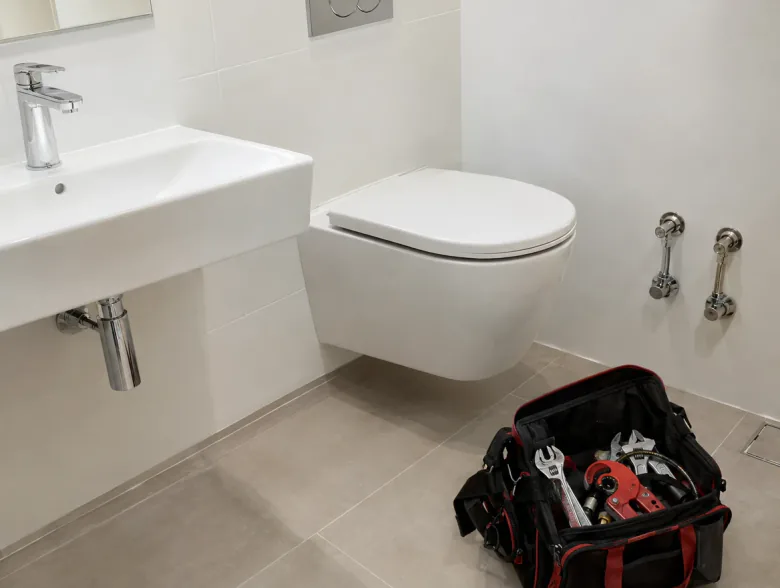
From your call to the repair
- 1
Describe what you see
Call or message us on WhatsApp and tell us where the problem is and what you notice, whether low pressure, a weeping joint or a sound in the pipes.
- 2
We identify the fault type
We tell a fault in the sanitary ware apart from one in the supply line or the drain, because the causes and the treatment differ between them.
- 3
We arrive and inspect
We check the visible pipework, the joints, the valves and the sanitary ware involved, and measure pressure at different points when needed.
- 4
We treat and direct
We repair what falls within plumbing, and direct you to the right detection service if the fault proves to be inside the structure rather than in the visible pipework.
Know the cause before any repair
- We tell a plumbing fault from a structural leak
- We check supply lines, drains and sanitary ware
- No repair before the source is identified
- We take your request by phone call or WhatsApp message
- Easy contact by phone or WhatsApp
The service in Ash Shuruq
In a home in a district like Ash Shuruq, sanitary pipes run through walls, ceilings and foundations, connecting the tank to kitchen, bathrooms and courtyard. Low pressure, dripping water or damp patches point to a network fault, blockage, leak or faulty tap. The first check pinpoints the affected point by measuring pressure and tracing sound and moisture. Once the fault is found, the real problem is fixed, whether a leaking joint, a blocked line or a worn tap.
Ash Shuruq is a district in Al-Ahsa governorate in the Eastern Province, close to Al Muruj, Al Yasmin and Ar Rabie districts.
Pipes buried under floors are the hardest to check, because leaks may only show as pressure drops or foundation damp.
Our portfolio















What our customers say
- ★★★★★
شركة ممتازة تستحق التعامل معها بشكل مستمر
- ★★★★★
شكراً لخدمتك الجميلة
- ★★★★★
شركه ممتازه
Reviews are shown as the customers wrote them, in Arabic.
Questions about Plumbing & sanitary fitting in Ash Shuruq
A plumbing fault is usually visible or audible: a dripping tap, low pressure, a running toilet or a sweating joint. A leak inside a wall or ceiling shows as a damp patch with no obvious source and no faulty fitting you can see. That type needs instrument detection to pinpoint where the water is, without breaking anything.
The most common causes are sediment build-up inside the shower head or tap spout, or a fault in the nearby supply valve. If pressure is low at more than one point at the same time, the cause may lie deeper in the supply line itself. Only an on-site inspection tells which of these is the real source.
If the fault is in a visible fitting like a tap, mixer, joint or toilet, a plumber is the right start. If it is a damp patch on a ceiling or wall with no obviously faulty fitting, instrument detection finds the source without breaking anything or guessing. Both may be needed when the symptoms overlap.
Not necessarily. The sound can be normal water flow in the pipes during use, especially in metal or copper pipework that expands with heat. But if the sound comes with damp on the wall or a noticeable drop in pressure, that calls for inspection to rule out a real leak.
In most cases yes, if the existing pipe positions suit the new ware's dimensions and drain outlets. But if a pipe is old, damaged or in a position that does not fit the new installation, some adjustment to the pipework will also be needed. A site assessment settles that before any purchase.
In a basin it is usually soap and hair build-up in or near the trap, which is the most common cause. In a toilet the fault is sometimes in the flush mechanism itself or at the start of the drain pipe. Slow draining in more than one place at the same time may point to a deeper problem in the main drain line, which needs a separate inspection.
Tell us where in the house the problem is and exactly what you see: a drip, low pressure, a sound or damp on a surface. Mention if it is in a specific fitting like a tap, toilet or joint, and whether it shows constantly or only during use. These details help us decide the right next step from the start.
Water sound under the ground may be from a leak in a buried water line, or normal flow when a tap is opened. Equipment testing clarifies whether a leak exists.
No set period, but if you notice pressure drop, dripping or damp patches, call immediately. Early checking prevents greater damage from silent leaks.
More services in Ash Shuruq
Plumbing & sanitary fitting in nearby areas
