How the waterproofing job goes
- 1
Tell us what you see
Call or WhatsApp us and describe the pool: is it new and not yet tiled, or existing and tiled, and where the problem appears.
- 2
Locate the fault
We check the shell, the joints and the pipe openings to find where the leak is before choosing a material or method.
- 3
Prepare the surface and treat it
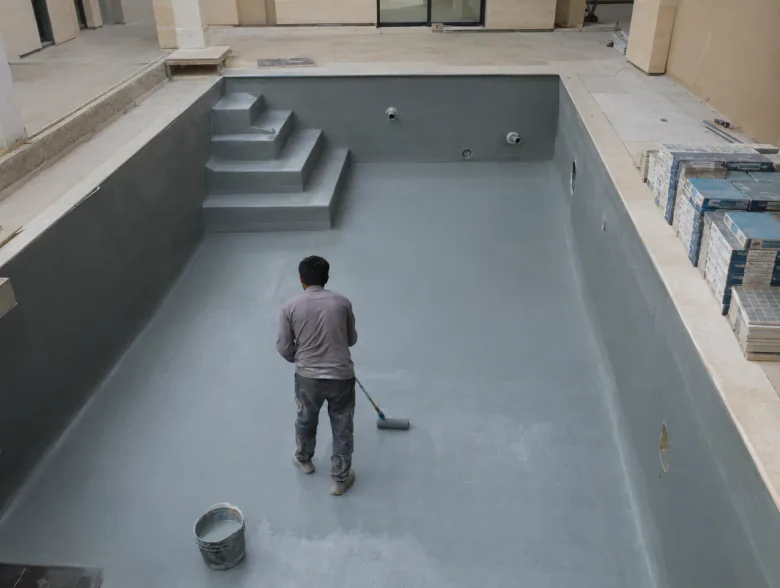
The surface is cleaned and prepared, and cracks and joints are sealed before the waterproof layer goes on, because the layer only works on a ready surface.
- 4
Complete the work and refill
After the waterproof layer is complete on the walls, floor, joints and openings, the pool is refilled with water.
This fault can be treated
- We waterproof pools from the inside without demolition
- We treat the concrete shell, joints and pipe openings
- We locate the fault before choosing a material
- We take your request by phone call or WhatsApp message
- We work on new pools and existing pools alike
The service in Ash Shi’bah
Districts like Ash Shi'bah usually have homes with small private pools. Lost water may come from the pool floor, walls, or the joints between floor and wall tiles. Inlet and drain pipes around the pool may also be the source. The environment in Al-Ahsa has salt and moisture in the ground, so damp may also enter from beneath the pool. An initial inspection locates the leak precisely, then the appropriate treatment is chosen.
Ash Shi'bah is a district in Al-Ahsa governorate in the Eastern Province, close to Al Qurayn, Julayjilah and Ash Shuqayq.
The joints, interior corners of the pool and the point where inlet pipes enter are the spots most prone to leaking.
Our portfolio















What our customers say
- ★★★★★
شركه ممتازه
- ★★★★★
ممتاز والخدمة ان شاء الله تكون قد التوقعات
- ★★★★★
شكرا على التواصل السريع
Reviews are shown as the customers wrote them, in Arabic.
Questions about Pool waterproofing in Ash Shi’bah
Not necessarily either. Loss can come from a crack in the concrete shell, an expansion joint, a pipe opening in the wall, or a buried pipe line. A simple test such as marking the water level and stopping the pump helps narrow down the possibilities before inspection.
Before tiling, the concrete shell is open and the waterproof layer goes directly on the concrete before the tiles come on top. After tiling, the original layer under the tiles has failed, and the treatment options differ depending on whether the tiles need to come off. Each case has its own dedicated service with full details.
The main signs are a regularly falling water level without a clear reason for evaporation, damp patches on the outer pool wall, cracking or detaching tiles, or white deposits on the inner surface showing that water is moving through the concrete and carrying its salts with it.
In some cases yes: joints between tiles can be treated, visible cracks sealed and a waterproof coat applied over the existing tiles. But if tiles are detached from the layer beneath or damaged, removing them becomes necessary to reach and treat the concrete shell. That is determined after inspection.
Concrete expands and contracts with temperature change, and joints are where the pool is designed to move; if they are not treated with a flexible material they crack. Pipe openings are weak points because the concrete around them is never fully bonded to the pipe, so water finds its way through if they are not properly sealed.
Common materials include cementitious waterproof coatings, suitable for application on concrete before and after tiling; epoxy coatings, a resin that hardens into a rigid barrier resistant to water and chemicals; and polyurethane foam in specific cases. The choice of material depends on the shell's condition, the pool's age and whether it is tiled or not.
Tell us whether the pool is new and not yet tiled or existing and tiled, and whether you notice a falling water level, damp on the outer wall or visible cracks in the tiles or concrete. If the pool is in use, give us an idea of its size. These details help us identify which option suits your case.
If water level drops steadily even at night or on cool days, it is a pool leak. Evaporation is slower and does not leave external dampness. If you see wet patches around the pool, there is a leak.
Say how long you have noticed the leak, exactly where damp appears around the pool, and whether the tiles are old, new or chipped. Photos of wet areas and the leak on WhatsApp help with inspection.
More services in Ash Shi’bah