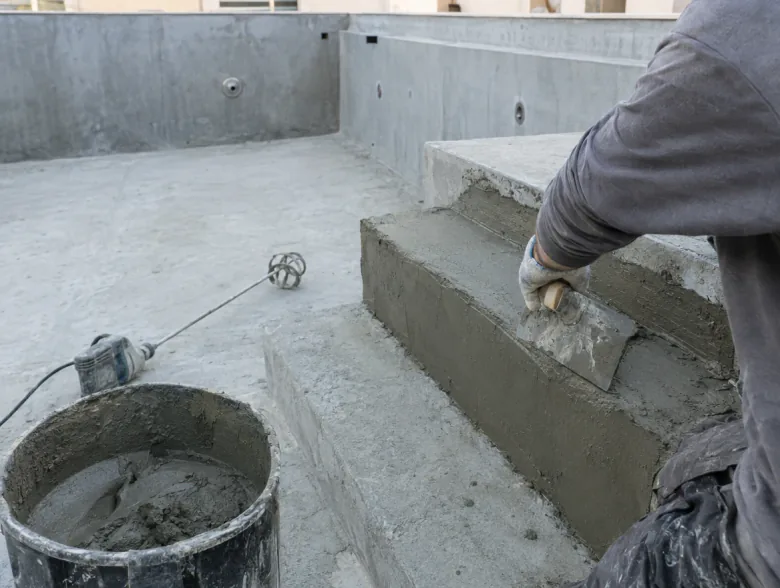
Cementitious pool waterproofing in Al Wurud 3rd District
Cementitious pool waterproofing in Al Wurud 3rd District protects the concrete shell from water and the cracks that appear over time. Al Raya applies a flexible cementitious coat to the inner surface, whether tiles are in place or not.
What cementitious pool waterproofing includes
- Checking the pool walls and floor and identifying the cracks and joints that need treatment before coating
- Treating cracks and joints with suitable materials before the cementitious coat is applied
- Cleaning and preparing the surface so the cementitious coat bonds properly with the concrete
- Applying the flexible cementitious coat to the walls, floor and pool edges
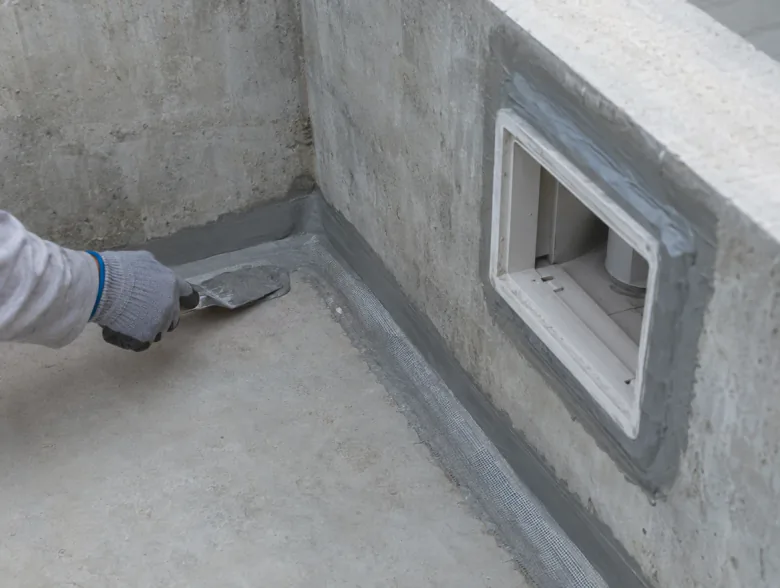
- Sealing around pipe entries and penetrations through the concrete shell
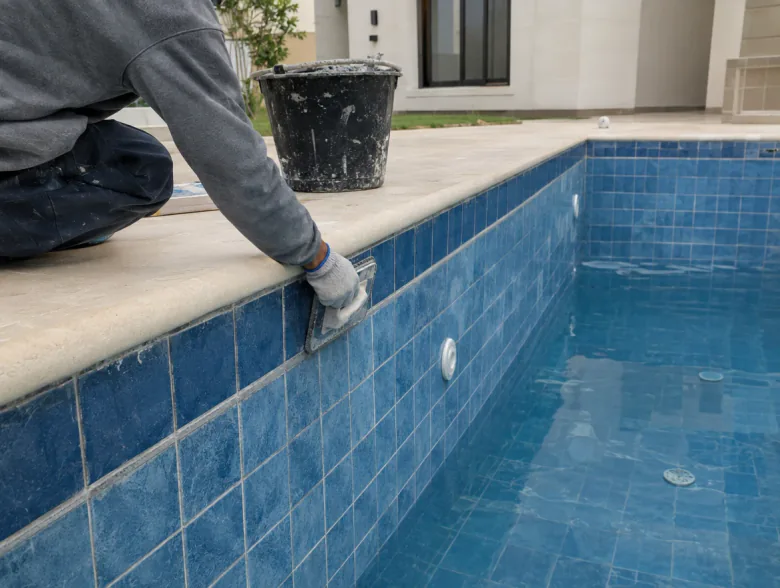
- Finishing the surface after the coat is complete so it is ready for tiling or direct use
From your call to a finished coat
- 1
Describe the pool to us
Call or message us on WhatsApp and tell us whether the pool is new or in use, whether it has tiles, and where you notice the problem.
- 2
Checking the surface and weak points
The work begins by checking the walls, floor, joints and pipe openings, because preparing every weak point is a condition for the coat to hold.
- 3
Treating cracks and preparing the surface
Cracks and joints are treated before coating, and the surface is cleaned and dampened correctly, because a cementitious coat needs clean, moist concrete that is not saturated.
- 4
Applying the cementitious coat
The coat is applied to the walls, floor, pool edges and around every entry and exit point, with particular attention to the corners and joints where weakness concentrates.
A prepared surface does not let the coat down
- A coat that penetrates the concrete pores and bonds with them
- Cracks and joints treated before the coating, not after
- Suited to walls, floor and the area around pipe openings
- Accepts tiling on top once the coat is complete
- We take your request by phone call or WhatsApp message
The service in Al Wurud 3rd District
In homes like those in Al Wurud 3rd District, pools at heart contain a concrete shell exposed to constant water, sun and seasonal change. Bare concrete absorbs water and cracks, especially at joints, the pool floor and around features. Before work, the inner surface is inspected for cracks, damp and salts, then the concrete is prepared and coated with the flexible layer that stops water seeping through.
Al Wurud 3rd District is a district in Al-Ahsa governorate in the Eastern Province, close to As Suqur District, Al Hada District and Al Matar District.
Joints between concrete sections and low spots on the pool floor are where water enters the structure first.
Our portfolio















What our customers say
- ★★★★★
شغلهم نظيف وسريعين ومحترمين الله يعطيهم العافيه
- ★★★★★
شركة ممتازة تستحق التعامل معها بشكل مستمر
- ★★★★★
ممتاز والخدمة ان شاء الله تكون قد التوقعات
Reviews are shown as the customers wrote them, in Arabic.
Questions about Cementitious pool waterproofing in Al Wurud 3rd District
It suits many cases, but the cracks need individual treatment before the general coat. A cementitious coat alone does not fill a deep crack, so the first step is to assess each crack and decide how to treat it, then apply the coat after the surface is ready.
Yes, and that is one of the main advantages of this system. The cementitious coat is compatible with standard pool tile adhesives, and the tiles go on once the coat is complete and the surface is ready. That is what makes it the common choice for new pools.
A standard cementitious coat is rigid and may crack when the concrete expands or contracts with temperature change. The flexible type contains polymers that allow the coat to absorb surface movement without cracking. In pools exposed to temperature variation, as is usual, the flexible type is often the better fit.
Common signs are tiles that lift or separate from the surface, damp appearing on the outer pool wall or the surrounding floor, and a noticeable water-level drop not explained by evaporation alone. These signs together usually point to a problem in the waterproof layer rather than in the tiles themselves.
A cementitious coat can hold for a long time when it is applied to a well-prepared surface with cracks and joints treated beforehand. New cracking in the concrete or wear in areas of heavy contact may need those spots treated again. Checking the surface periodically reveals areas that need attention before a leak appears.
We look for cracks in the walls, floor and joints between sections, any current damp or seeping, and salt marks on the surface, because the initial inspection determines how to prepare and coat it.
Yes, the flexible coat is applied to the concrete surface whether tiles remain or are removed first, depending on the surface condition and tile state that the inspection determines.
More services in Al Wurud 3rd District
Cementitious pool waterproofing in nearby areas
