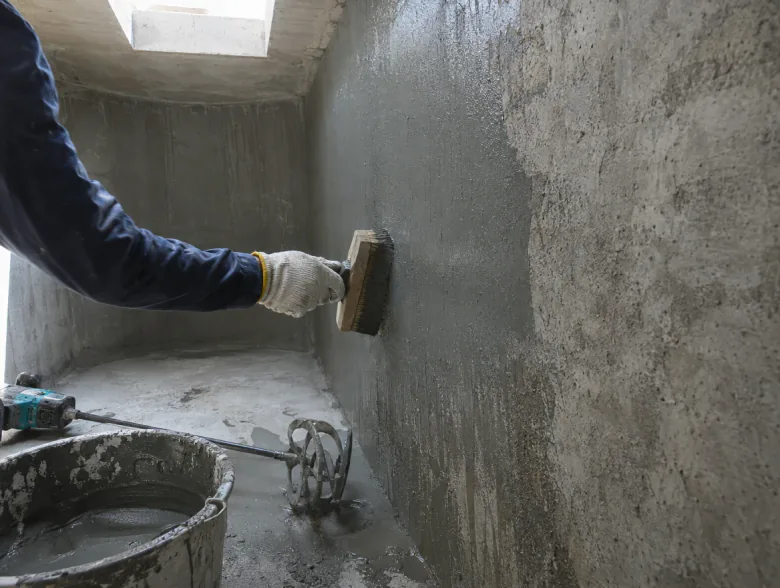
What cementitious tank waterproofing includes
- Checking the concrete tank walls to find cracks, pores and leak points
- Cleaning the inner surface of dust, algae and residue from old coatings
- Roughening the surface so the cementitious coat grips the concrete wall firmly
- Treating fine cracks and structural joints before the waterproofing coat is applied
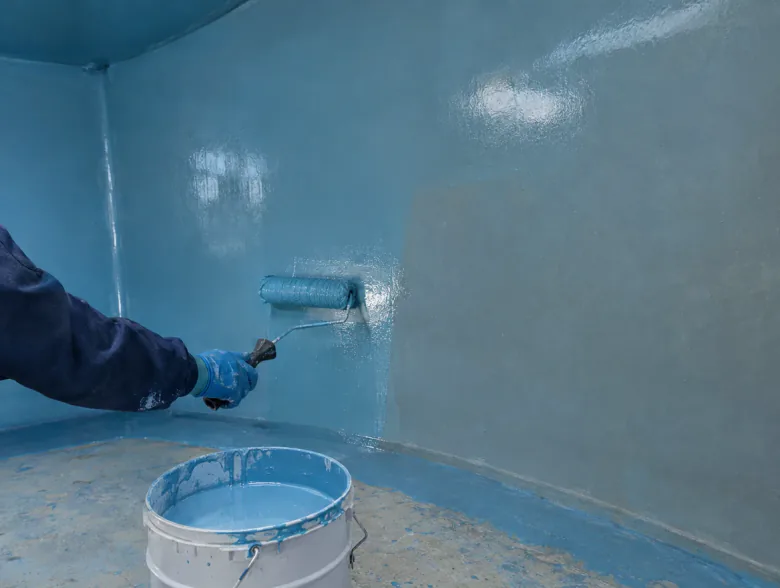
- Applying the cementitious coat to the dampened wall with care at corners and edges
- Reviewing the surfaces after application to confirm the coat covers the full wall area
From your call to a sealed wall
- 1
Tell us about your tank
Call or message us on WhatsApp, and describe the tank size, its location and what you notice: any damp or cracks in the walls.
- 2
Preparing the concrete surface
The walls are cleaned of dust, algae and old coating residue, then the surface is roughened so it takes the cementitious coat well.
- 3
Treating cracks and joints
Fine cracks and structural joints are treated first, because the waterproofing coat alone cannot close an existing crack.
- 4
Applying the cementitious coat
The cementitious material is applied to the prepared and dampened wall so it absorbs into it, and is worked again over edges and corners for full contact.
Concrete and cement work together
- The coat bonds with the concrete tank wall
- Works on damp walls that are hard to dry fully
- Seals pores and penetrates the concrete from within
- We treat cracks and joints before the coat goes on
- We take your request by phone call or WhatsApp message
The service in As Sunaidah District
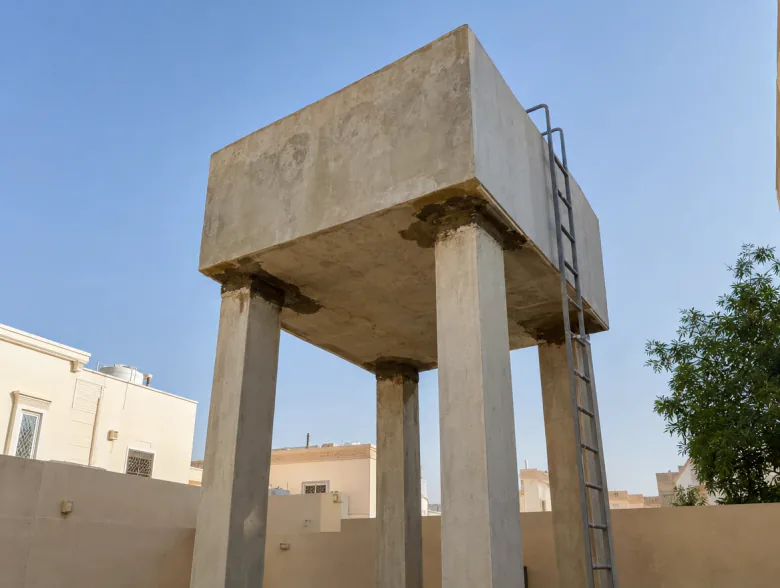
Family homes in a district like As Sunaidah usually have concrete tanks on the roof or in the lower floor. The dampness and salts that flow with well water in Al-Ahsa cause cracks in walls and water to seep through tiny pores. The team first inspects the tank to see cracks, damp and salt stains on the outer surface, then prepares the wall by scraping and cleaning away damaged material, and applies the cementitious coat in several connected layers.
As Sunaidah District is a district in Al-Ahsa governorate in the Eastern Province, close to Munifah District, Ar Rafiah District and Al Marbidia District.
The tank's outer wall is where cracks and salt stains first appear, and that is where the inspection starts.
Our portfolio















What our customers say
- ★★★★★
شغلهم ميه ميه يشكرو عليه
- ★★★★★
شكرا على التواصل السريع
- ★★★★★
شغلهم كويس وناس ممتازه في اسرع وقت
Reviews are shown as the customers wrote them, in Arabic.
Questions about Cementitious tank waterproofing in As Sunaidah District
The cementitious material needs moisture in the surface to absorb into it and bond with it rather than drying out on top. If applied to a fully dry wall in the heat, the coat dries before it can penetrate the concrete and the result is weaker.
Yes, cementitious waterproofing systems are designed to resist water pressure from both sides, inside and outside. That is the main difference between a true waterproofing material and a plain cement paint. The surface must be clean and free of old coatings that block bonding.
It depends on the state of the old lining. If it is sound and not peeling it may be assessed for keeping, but if it is loose or flaking it must be removed first, because the cementitious coat needs direct contact with the concrete, not with a failing old lining.
The tank must be emptied, cleaned and prepared before waterproofing in any case. The main advantage of a cementitious material is that it works with damp concrete and does not require the complete dryness that some resin-based materials need.
Tell us whether the tank is a ground tank or an overhead tank, what you can see such as seepage in the wall, damp at the base or a peeling old coat, and whether the tank is currently in use or empty. This helps us assess what the surface needs before the cementitious coat.
If you see damp patches on the tank's outer wall, smell dampness near it, or notice white salt deposits on the walls, the tank needs waterproofing. The initial inspection will show how much work is needed.
Tell them where the tank is (roof or basement), whether you see damp or cracks on the wall, and send a photo of the outer wall on WhatsApp if possible.
More services in As Sunaidah District
Cementitious tank waterproofing in nearby areas
